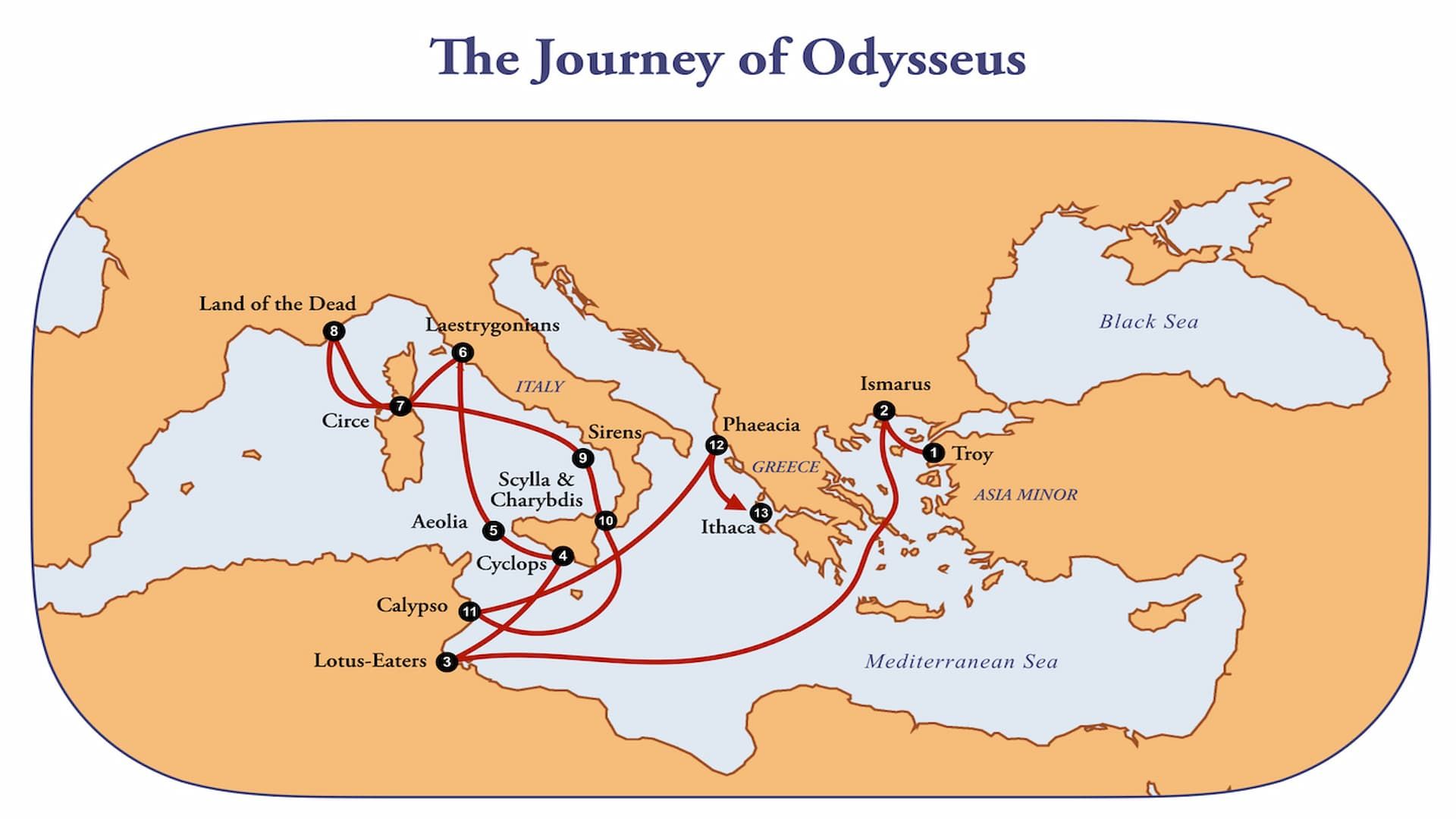
In Book XII of the Odyssey, Odysseus’ men bind him to the mast of the ship, beeswax in their ears, as he listens to the song of the Sirens. No man, they say, has heard the tune and lived to tell the tale. But this is Odysseus; he has already outwitted the Cyclops Polyphemus, survived Poseidon’s relentless pursuit, and watched Circe turn his men into pigs. Tossed across the wine-dark sea, he is still listening, looking towards the next shore, trying to find his way home.
The Odyssey has survived centuries of reading and retelling, partly because Odysseus is so complex, his desires so muddled. He longs to return to the wife, son, and homeland he loves, yet he also wants to emerge from every trial a hero whose name will outlast him.
James Joyce called him “the complete man” – warrior and wanderer, husband and father, strategist, comrade, and survivor. He is capable of immense cunning and immense grief; proud enough to provoke the gods, human enough to weep for home, and stubborn enough to keep going when almost everything has been taken from him.
The Sirens’ song is so dangerous because it gives voice to something profoundly human: the desire to know what lies beyond the horizon. Odysseus hears it and survives. And we hear it too – in the pull of new shores, in the promise of seeing the world differently and, within it, seeing ourselves differently too.
As we eagerly await the release of Christopher Nolan’s The Odyssey on 17 July, we have rounded up our favourite Greek destinations to inspire an Odyssey of your own (preferably with fewer shipwrecks, enchantresses, and many-headed sea monsters).
The Peloponnese
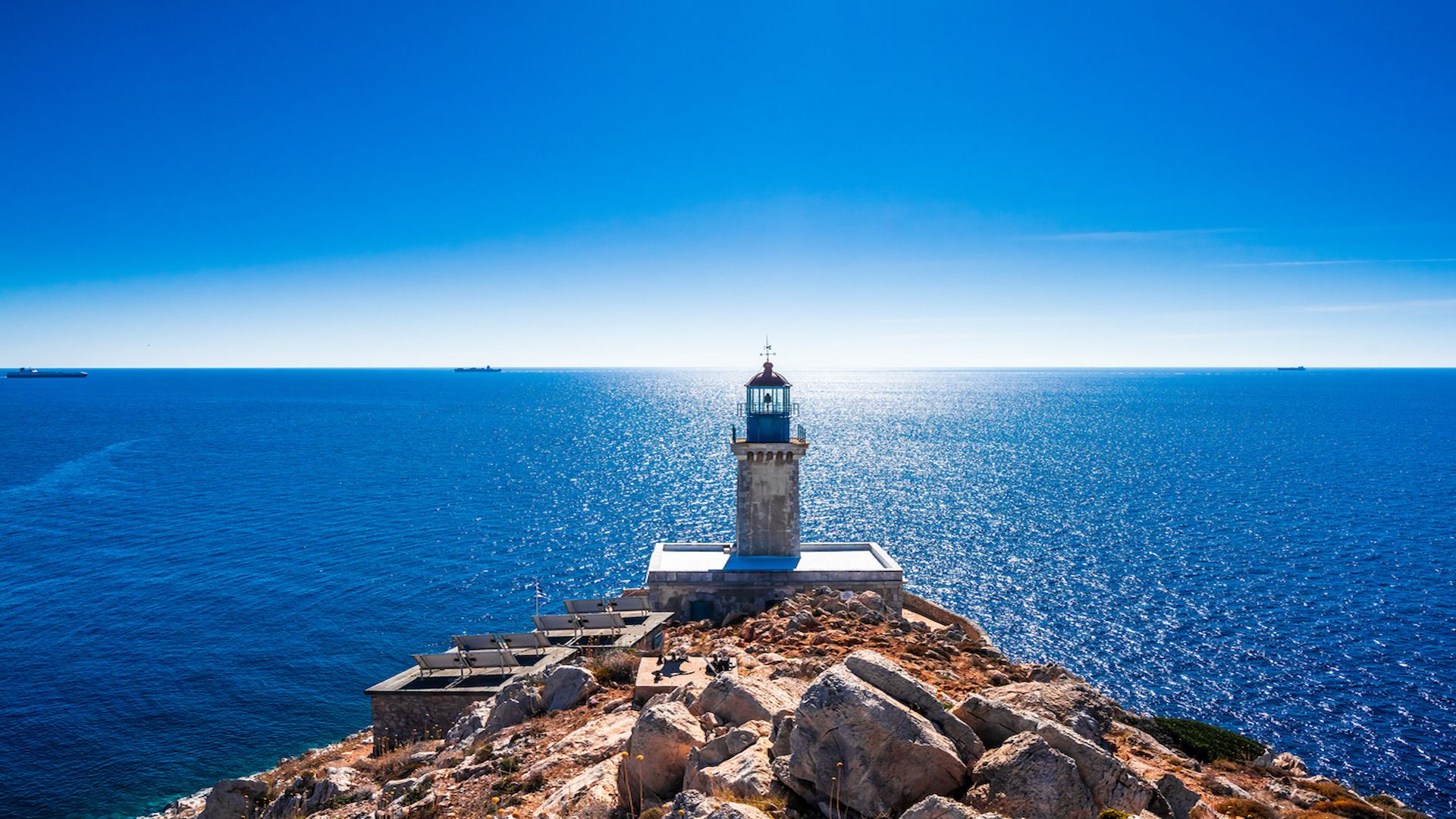
Cape Tainaron Lighthouse in Mani, at the southernmost point of mainland Greece
At the start of The Odyssey, Odysseus’ son, Telemachus – played by Tom Holland in the film – leaves Ithaca in search of news of the father who has been missing for ten years, following another ten spent fighting at Troy.
His journey takes him to the Peloponnese, where the war is over but far from forgotten. In the houses of those who returned, Telemachus listens to stories of Odysseus and, in discovering the man his father was, begins to understand the man he himself might become.
It is a fitting place to begin our Odyssey.
Where to stay in the Peloponnese: Villa Antti
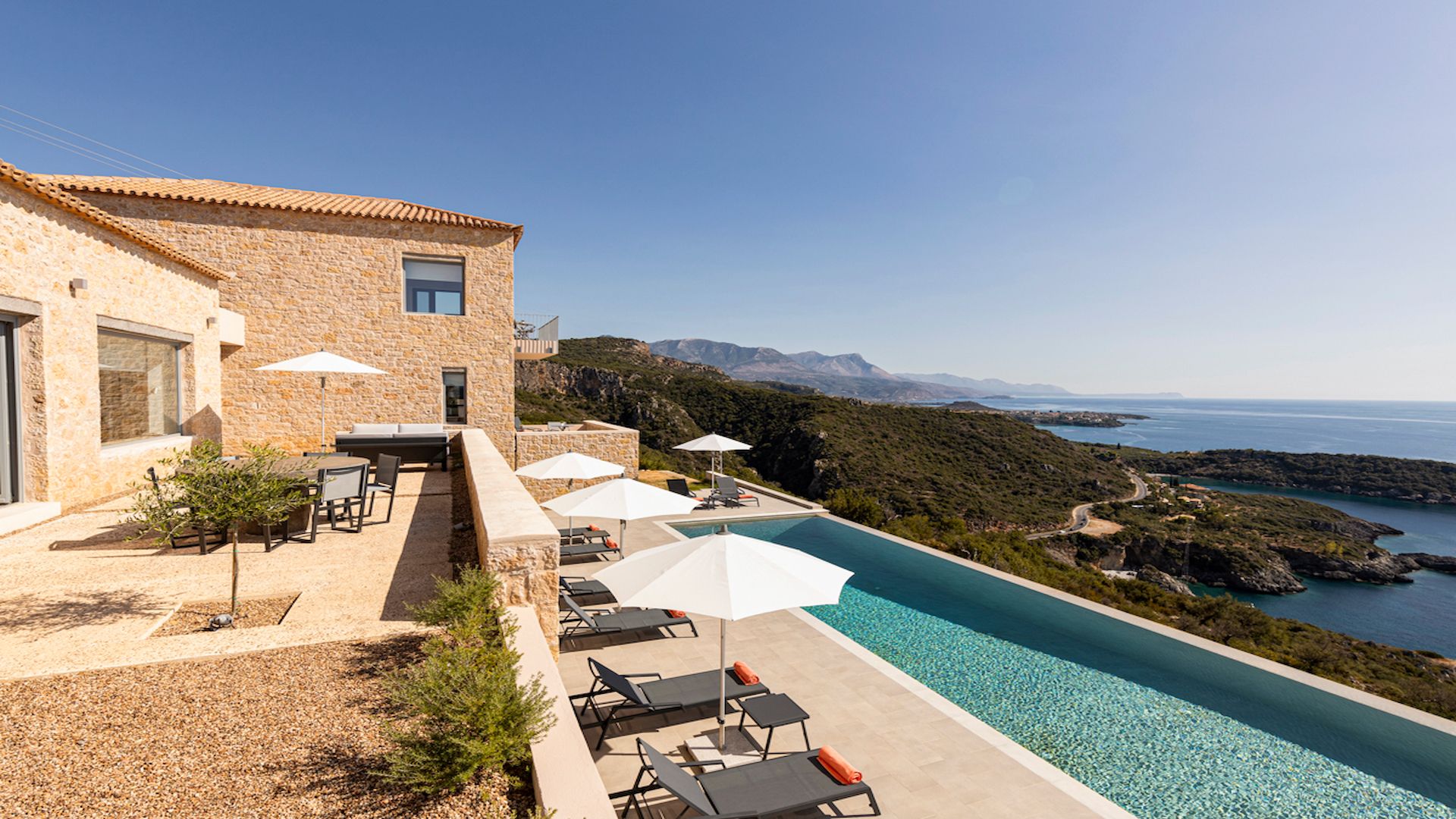
Villa Antti occupies a beautiful position above the Nandi Gorge, with the Taygetos Mountains behind it and the Messinian Bay widening below. The house itself is crisp and contemporary, sleeping eight across four bedrooms, with broad terraces, an infinity pool, and gardens planted into Mani’s older landscape of pale stone and silver-green olive trees.
Kardamyli is just four kilometres away, its old houses gathered beneath cypress-covered slopes and its waterfront lined with beaches and tavernas. Beyond the mountains lies ancient Sparta, where Telemachus is welcomed by Menelaus and Helen.
Helen, of course, is the beauty later said to have launched a thousand ships. By the time Telemachus meets her, she is home in Sparta, living with the memory of a war fought over her. She recalls the day Odysseus entered Troy to gather intelligence, disguised as a beggar, dressed in rags, smeared with dirt, and performing humility so convincingly that no one recognised him. No one, that is, except Helen. Beneath the disguise, she saw the intelligence and cunning of the man himself.
For Telemachus, the story offers a glimpse of a father he barely knows. The man he has travelled to find begins, for a moment, to emerge from the legend.
Villa Antti is decidedly less complicated. Glass doors open the rooms onto the pool and gardens, drawing the mountains and bay into almost every part of the house. Days might begin with a swim, continue along Mani’s walking trails or over lunch in Kardamyli, then return to the terrace as the evening light settles across the water – the distant wars of kings and heroes safely lost to time.
Crete
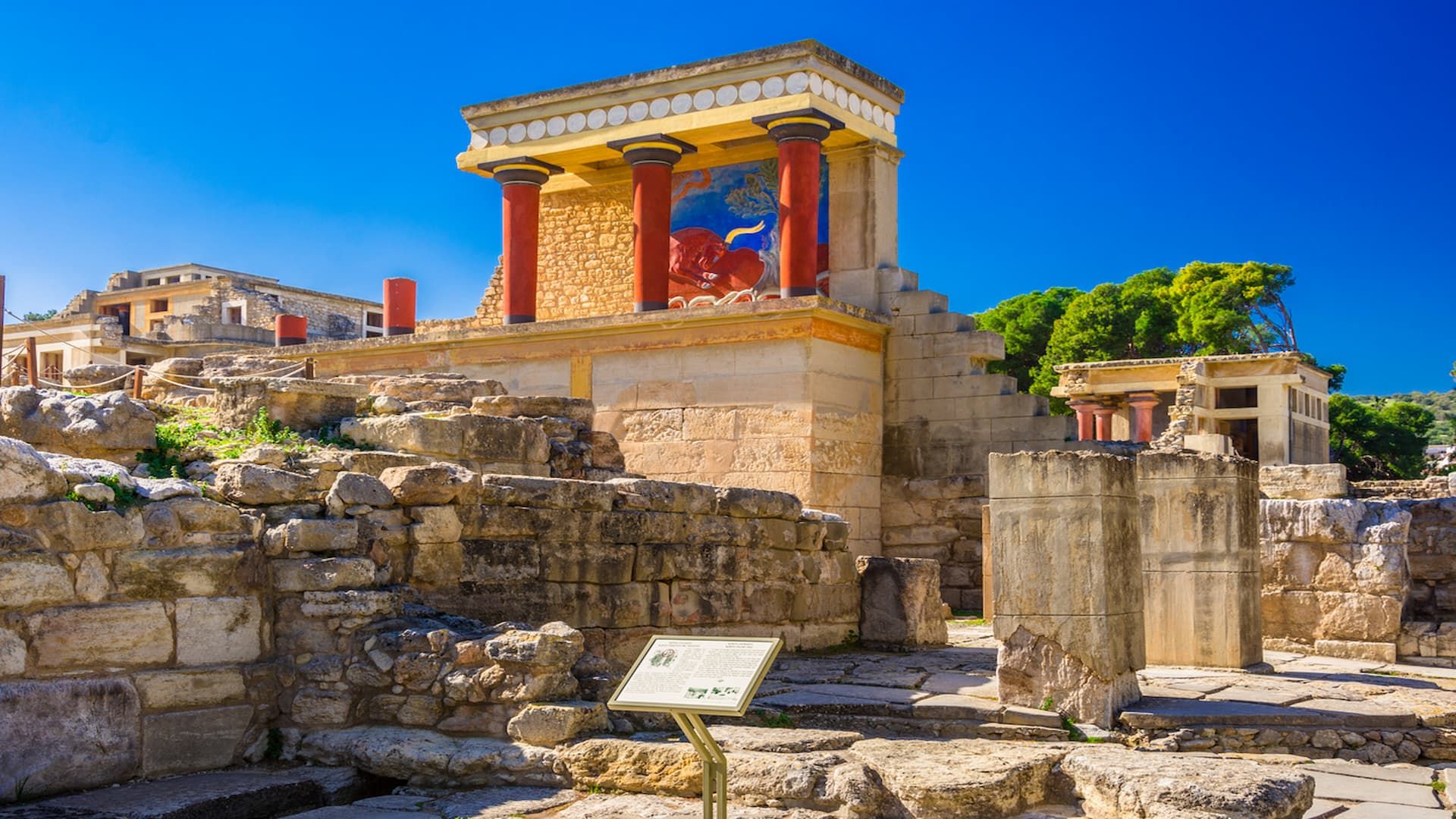
The North Entrance of the Palace of Knossos, one of Crete’s most famous ancient sites and closely linked to the legend of King Minos
Like Odysseus, Crete has had many identities. Homer describes it as a fair and prosperous island in the midst of the wine-dark sea, home to people beyond counting and ninety cities.
You could call Crete a trickster. No two corners of the island are identical; no two days happen in quite the same way. It is why Odysseus, in disguise, so often reaches for it as his homeland. Crete is so large and old, so full of people and places, that to call oneself Cretan is to sound entirely plausible while remaining almost impossible to place.
Its appeal has endured for much the same reason. There are Minoan palaces and Venetian towns; mountain villages that sit apart from long coastlines; one historical world over another. Crete is beautiful, certainly, but it is also fascinating in its multitudes. Odysseus, who spends much of the poem slipping between stories and selves, could not have chosen a better place to invent another life.
Where to stay in Crete: Villa Orea Thea
For an Odyssey of your own, where else could you stay but Heraklion?
This is one of Crete’s ancient centres, close to Knossos and the world of Minos. Bronze Age ruins lie beyond the city, Venetian walls run through it, and the harbour opens onto the wine-dark sea.
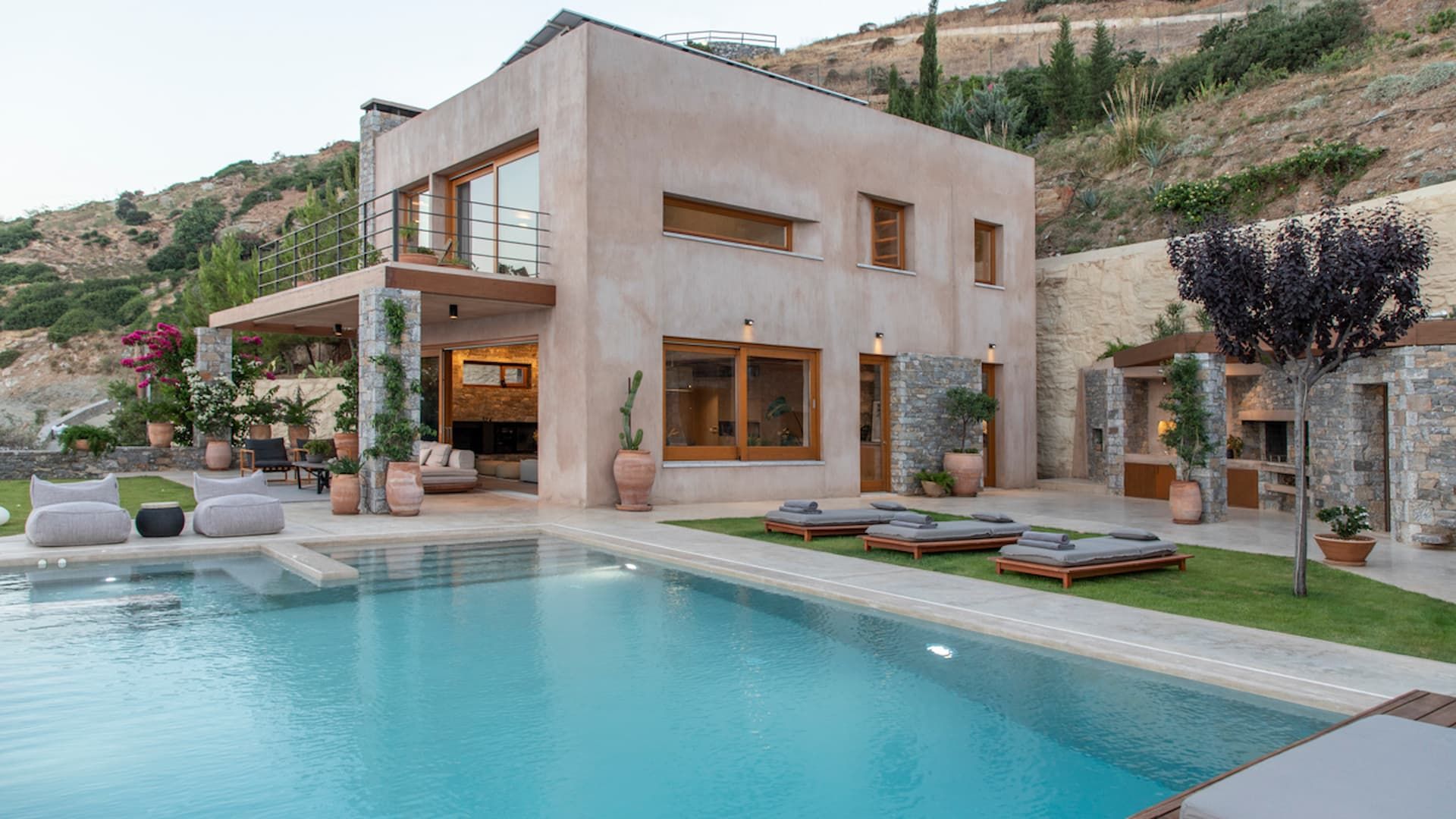
Villa Orea Thea lies just beyond, in the quiet bay of Palaiokastro. The house sleeps six across three bedrooms, with open-plan interiors, broad glass doors, and an infinity pool that keeps the Aegean always in view.
Agia Pelagia is nearby, with tavernas, a sandy beach, and clear water for snorkelling, while Heraklion brings the old city, Knossos, and several thousand years of Cretan history within easy reach.
Back at Villa Orea Thea, the island is quieter. Evenings are spent beside the pool as the lights appear across the bay. Of Crete’s ninety cities, this feels like a good place to start.
Spetses
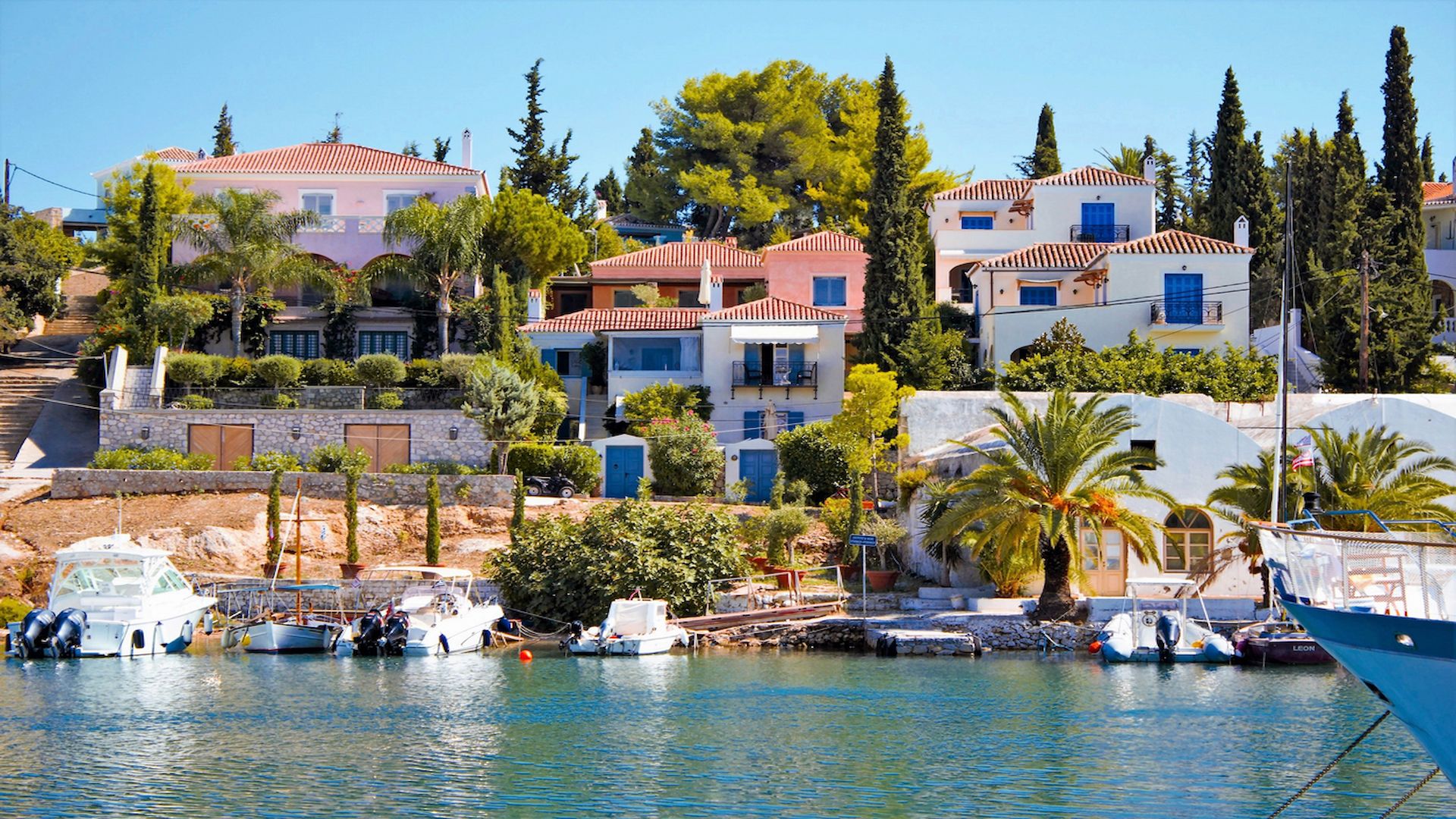
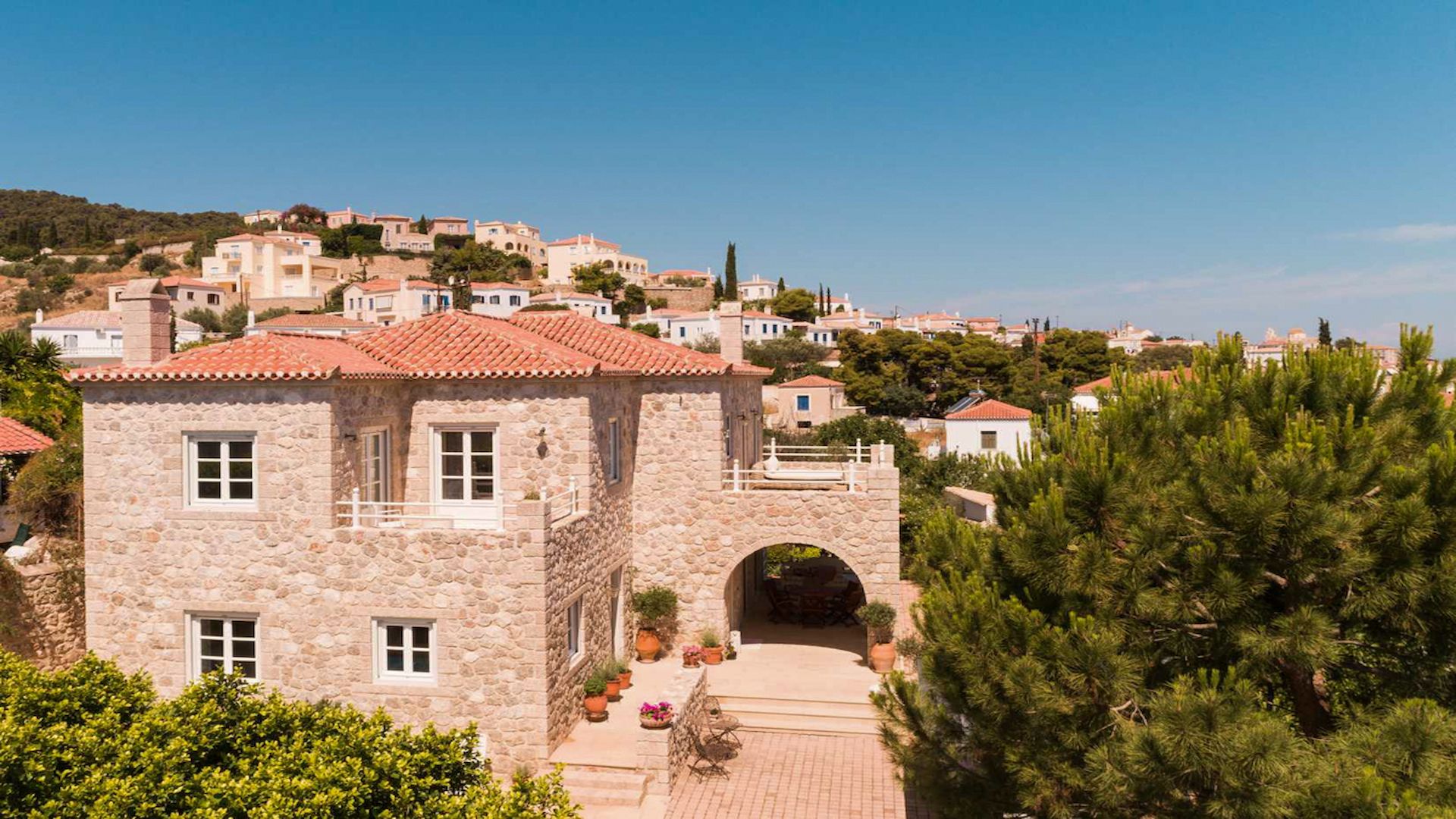
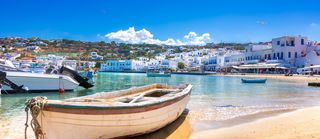
Small boats moored beneath pastel villas and pine-covered hills along the Spetses waterfront
Visit Athens in the spring and it is easy to see why the ancients imagined Helios carrying the sun across the sky in his flaming chariot. Looking over the Acropolis, the sky is set gradually alight, the marble of the Parthenon all aglow.
Something similar happens when you take the ferry from Piraeus – Athens’ port – to Spetses.
Spetses is an island that can only be reached by sea. It has no airport, few cars, and is mostly pedestrianised, save a few motorcycles. Pine trees cover the landscape, and all hilly roads lead to beaches and Dapia, the grand old port, which welcomes visitors from across the Aegean.
As you sail towards land, it is not hard to feel something of The Odyssey. In the middle of Poseidon’s wine-dark sea, there is a feeling that myth could rear its many heads anywhere. And as the boat slowly reaches the port, for a moment, there is no knowing what might be waiting.
Where to stay in Spetses: Villa Spetses
Fortunately for you, our dear traveller, the island of Spetses harbours no monsters or witches. It does, however, have Villa Spetses.
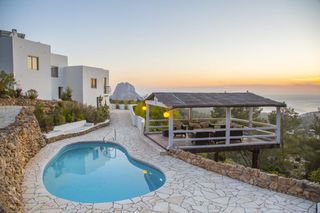
Built in pale stone and surrounded by Mediterranean gardens, this six-bedroom mansion sleeps twelve, with Spetses Town close enough to reach on foot and the sea always somewhere in view. Terraces wrap around the house, shaded by pergolas and opening onto bright, generous rooms.
The master bedroom has a balcony above the water, while a second lounge downstairs gives larger groups room to spread out. Outside, the pool takes centre stage on the terrace, with the harbour lights appearing below as evening settles over the island.
After crossing Poseidon’s wine-dark sea, Villa Spetses feels particularly welcoming.
Corfu
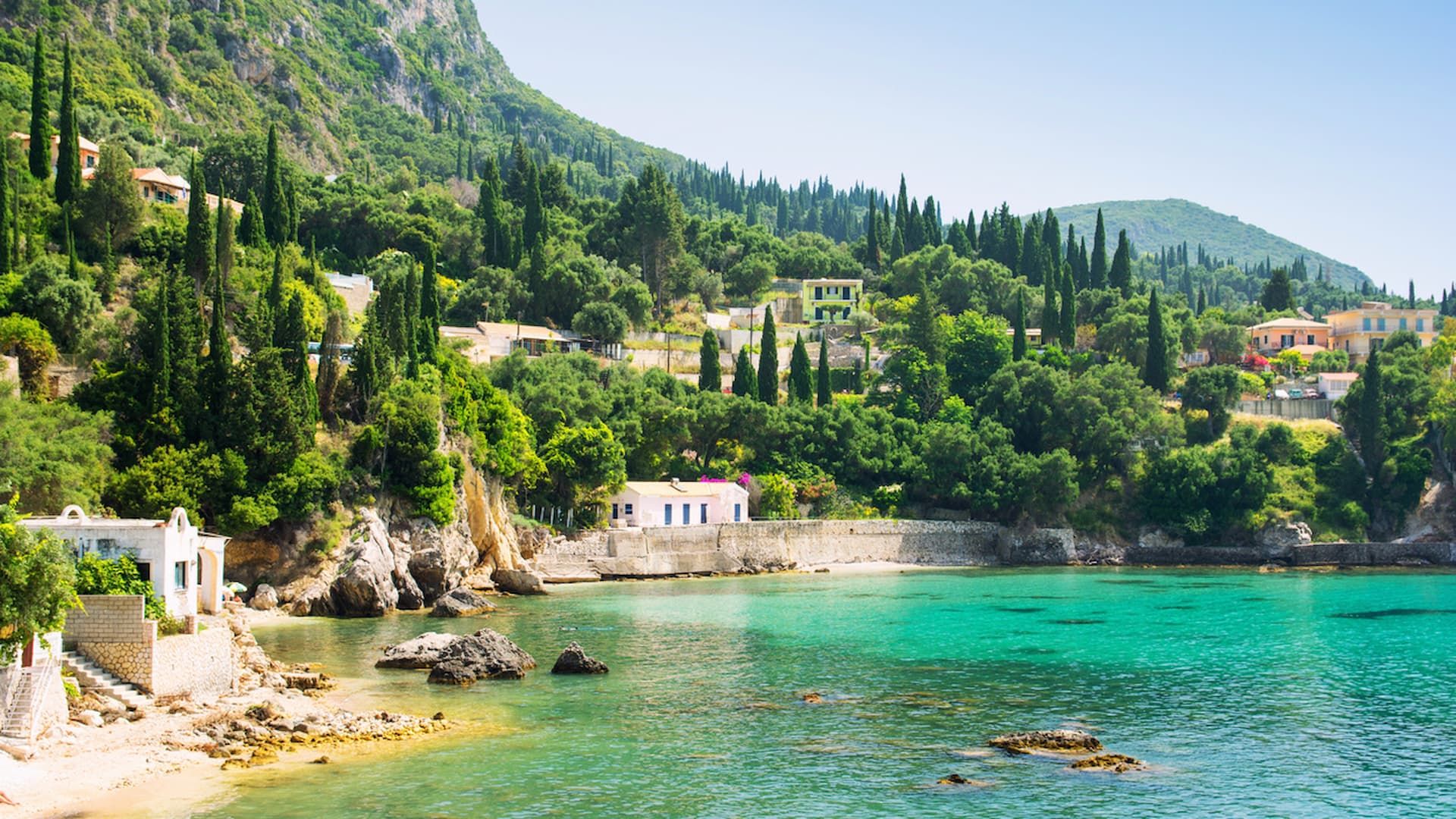
A cypress-lined bay on Corfu’s north-east coast
Modern-day Corfu is traditionally associated with Scheria – Homer’s land of the Phaeacians – and the setting for one of The Odyssey’s most tender passages.
Odysseus reaches its shores alone, weather-beaten, and stripped of almost everything, sleeping beneath a covering of leaves. When he emerges before Nausicaa, Homer says he is like a mountain lion driven from its shelter. It is, perhaps, not the most reassuring first impression.
Nausicaa does not yet know his name. She knows only that a stranger stands before her in need of help. What follows is one of the poem’s clearest expressions of xenia, the sacred obligation to give an unknown traveller food, shelter, and dignity before asking who he is. The Phaeacians feed Odysseus, clothe him, and offer him shelter before inviting him to tell his story. Moved by what they hear, they give him what he has sought for so long – safe passage home.
Corfu suits this striking generosity, and the island itself is full of it. The land is green almost to excess, with cypress trees above the roads and olive groves running towards the sea. Venetian stone gives the old town its gravity, while long tables are an emblem of that glorious Scherian hospitality.
After so much wandering, Scheria is the place where the poem remembers to treat Odysseus with kindness. Corfu is a beautiful place to find it for yourself.
Where to stay in Corfu: Villa Chic View
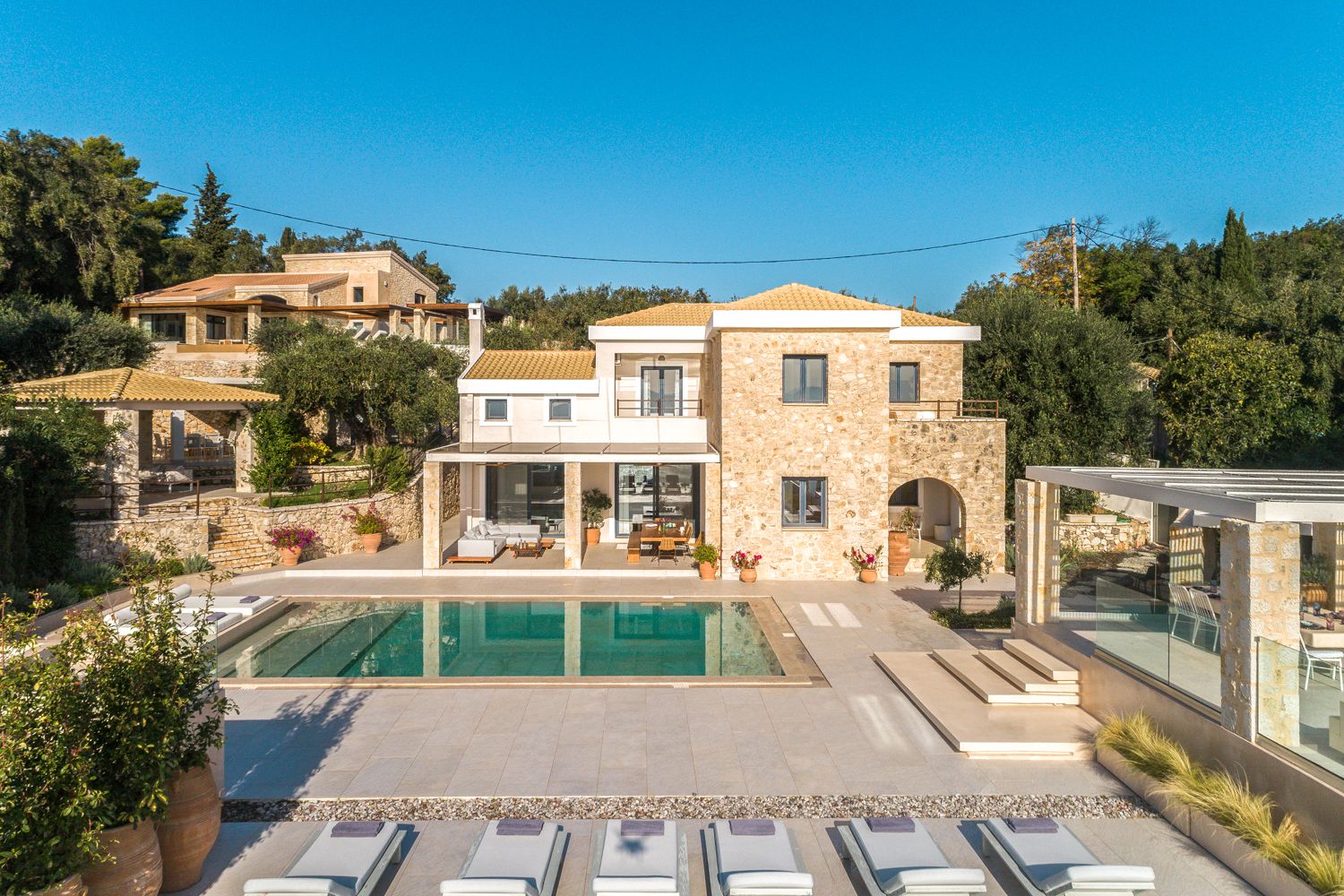
Villa Chic View understands the pleasures of a generous welcome. Built into the hills of Corfu’s west coast, the house looks across ancient olive groves to the Ionian Sea, with seven bedrooms divided between the main villa and a separate guest house – enough for a suitably Phaeacian feast, though perhaps not the lengthy account of shipwrecks afterwards.
Inside, floor-to-ceiling doors open the main living space onto the pool terrace, carrying the sea view through rooms of pale stone. Outside, a heated pool stretches towards the horizon, shaded pergolas offer comfortable places to read or eat, and an organic garden supplies herbs and vegetables for dinner.
A private chef can turn the day’s harvest into a feast worthy of the Phaeacians, best served beneath the pergola as the light begins to fall across the water.
Villa Chic View offers the kind of hospitality Homer understood well. After all, the measure of a welcome lies not merely in how beautifully you arrive, but in how reluctant you are to leave.
Ithaca
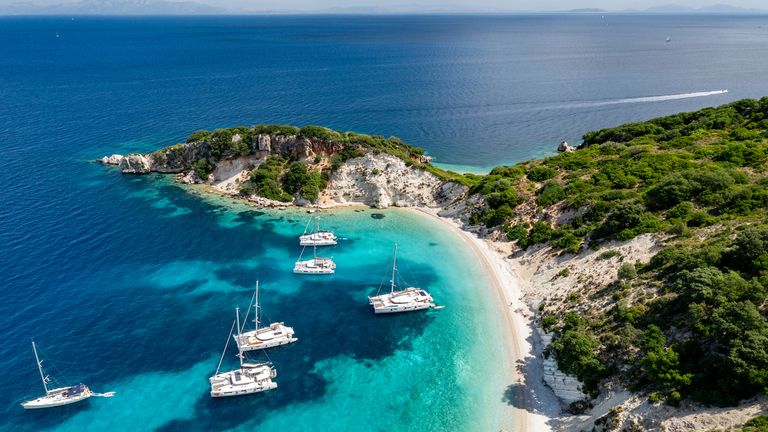
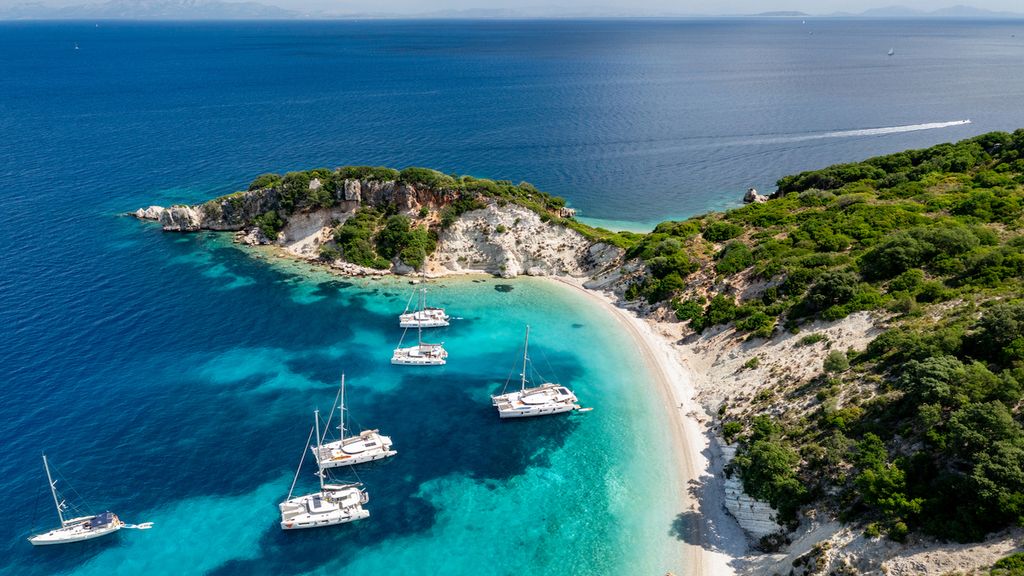
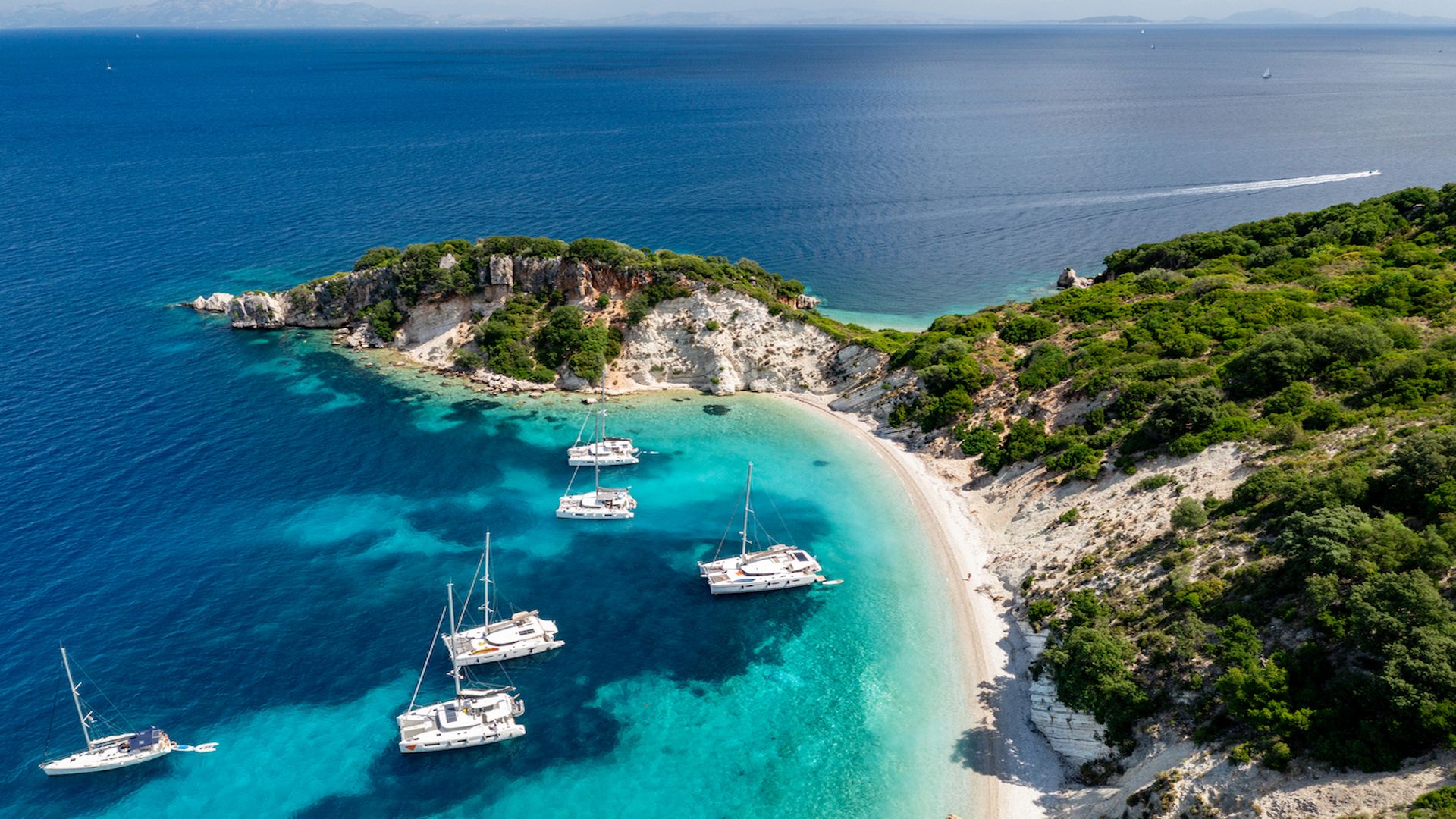
Sailing boats anchored in the clear waters of Gidaki Beach, Ithaca
Our Odyssey could hardly end anywhere but rugged Ithaca.
Odysseus’ island is wooded and modest beside the kingdoms and enchanted shores he encounters elsewhere. It has no palace to rival that of the Phaeacians, no ninety cities. It is important because it is his.
Ithaca is the emotional centre of The Odyssey. After crossing a world of gods and monsters, it is Odysseus’ home that feels like the greatest miracle. It is the return he has pursued through ten years at war and another ten at sea – despite several distractions along the way.
Perhaps that is what travel gives us at its best. It draws us beyond the familiar, into lives and landscapes larger than our own, then returns us with a deeper understanding of what we left behind.
Odysseus wants the world to know his name, but what he wants most is to cross the final stretch of sea and see Ithaca again. The horizon may call us away, but it is the homecoming that makes an Odyssey.
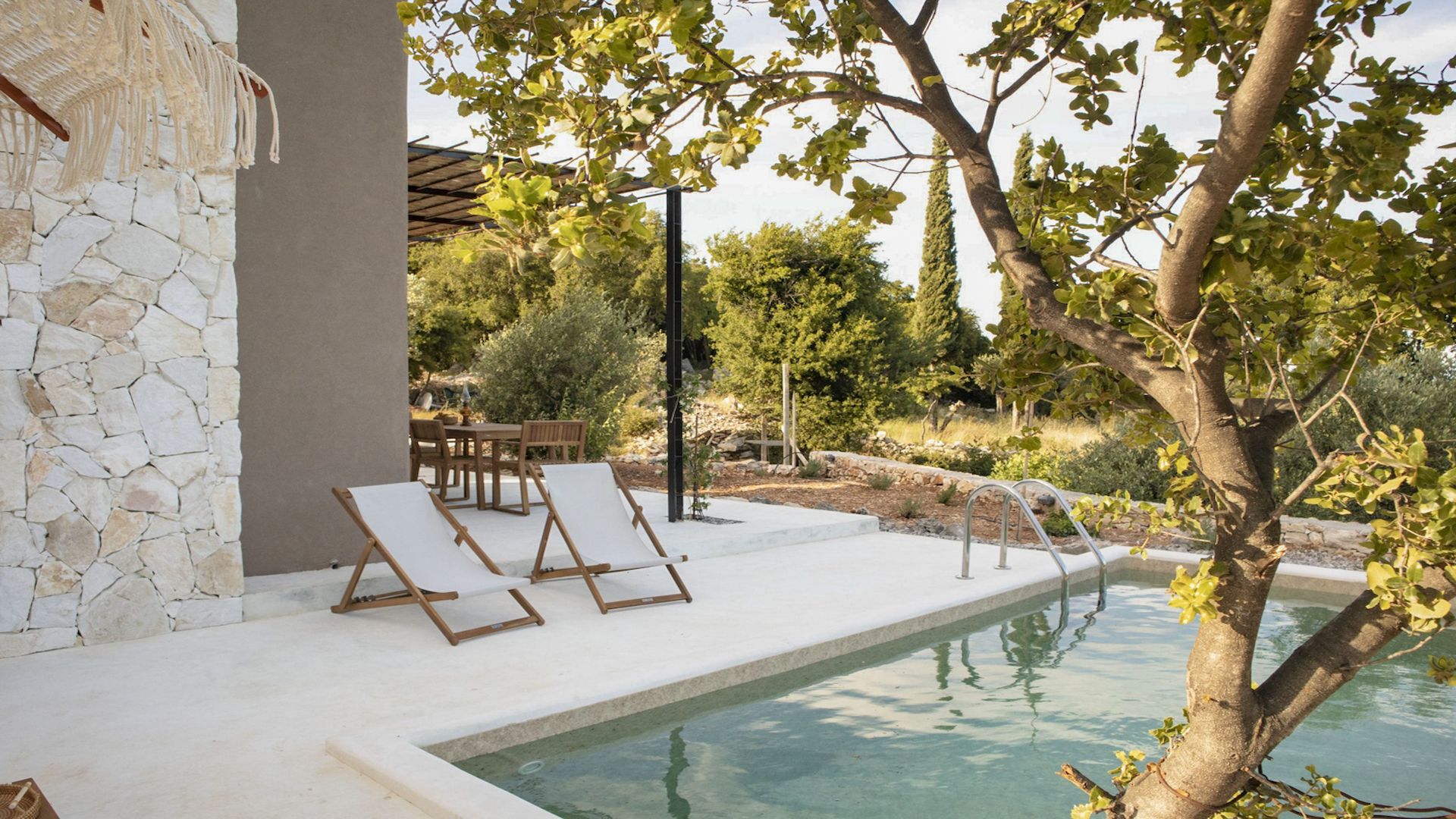
Where to stay in Ithaca: Villa Rhythm
Villa Rhythm sits near Vathi, Ithaca’s harbour town, and offers two guests a quiet place to stay. Bright interiors open onto a private garden and pool, while a partially separated bedroom, small kitchen, and fireside living space give the house the easy intimacy of somewhere you can settle at once.
Paralia Kaminia and Talaros Beach are a short drive away, though there is little pressure to go far. Mornings can begin beside the pool, afternoons on the coast, and evenings back on the terrace.
Odysseus spends much of The Odyssey moving through palaces, kingdoms, and shores he cannot trust. Villa Rhythm offers the opposite – one house, one peaceful garden, and nowhere else you need to be.
For an Odyssey of your own, it makes for a beautiful homecoming.
Christopher Nolan is bringing Homer’s epic back to the screen. Follow Greece’s wine-dark sea through the Peloponnese, Crete, Spetses, Corfu, and Ithaca, and begin planning an Odyssey of your own.
Previous
England’s Most Beautiful Towns for a UK Escape
Next
7 Days in… Mallorca
Popular Articles
The 10 Best Beaches in Cyprus
Cyprus has beaches for almost every kind of holiday, from soft, pale sands and shallow family bays to turtle-nesting shores, watersports hubs, and quiet coves beneath cliffs. Better still, the island makes it easy to combine time beside the sea with ancient ruins, mountain villages, and lunches in coastal tavernas. The best beaches in Cyprus […]
The 10 Best Beaches in Mykonos
Mykonos may be known for its whitewashed lanes, late-night parties, and famous beach clubs, but its coastline has more range than the headlines suggest. Long sandy bays curve around the south of the island, while the north coast feels wilder, more exposed to the Aegean wind. The best beaches in Mykonos cover almost every mood. […]
10 Best Villas in Ibiza
The fabled ‘White Island’ is a place of many faces. On the one hand, Ibiza is renowned as a prime clubbing destination with a vibrant nightlife that’s a magnet for partygoers. But there’s more to the island than exclusive clubs and dancing ’til dawn! Further inland, you’ll find there’s a much more laid-back atmosphere among […]
Annual leave is one of the year’s more finite pleasures. Used without much thought, it can quickly disappear into the occasional Friday and a handful of Mondays. Place it more strategically, however, and the same allowance can turn four days away from your desk into nine or even ten days elsewhere. In 2027, Easter falls […]
Sense and Sensibility: Where to stay for a Jane Austen-inspired escape
On 25 September, this year’s Sense and Sensibility will introduce Jane Austen’s razor-sharp wit and biting social commentary to a whole new generation of gooey-eyed romantics. Like Emma Thompson’s much-loved 1995 adaptation and the novel long before it, the new film promises fierce heroines, men whose charms cannot always be trusted and – of course […]
Venice Film Festival 2026: Where to Stay
Every September, Venice – a city already accustomed to grand entrances – becomes the stage for cinema’s most anticipated arrivals. First held in 1932, the Venice International Film Festival is the oldest in the world. Its 83rd edition runs from 2–12 September 2026 on the Lido, the long barrier island separating the Venetian Lagoon from […]
10 European City Breaks and Where to Stay
One of the great pleasures of living in the UK is its access to the rest of Europe. It is easy to forget quite how extraordinary it is until you hear it from someone who has crossed an entire ocean to get here. The distinctly American idea of “doing Europe”, which tends to mean a […]
7 Days In… Corfu
In the turquoise Ionian, just off the coast of Albania, lies Greece’s greenest island. Stand at the north-west of the peninsula at Paleokastritsa, and you will see the whole landscape open before you. Lush, green hills rise from every angle, their cypress trees fringing the rocky bay out into endless azure, the old monastery above […]
Solar Eclipse 2026: Best Places to Watch in Spain & Where to Stay
On 12 August 2026, the solar eclipse will sweep across Spain, coinciding with the peak of the Perseid meteor shower on the same summer night. Near sunset, the moon will pass across the sun, drawing a narrow band of darkness over the country. Hours later, beneath an almost moonless sky, the Perseids will reach their […]
Edinburgh Festival Fringe & International Festival 2026: What to See and Where to Stay
Every August, artists and visitors from around the world flock to the Scottish capital for the Edinburgh International Festival and the Edinburgh Festival Fringe. For a few weeks, the city gives over its lecture halls, churches, music venues, theatres and pub basements, turning them into stages for one of the year’s most interesting arts events. […]
7 Days in… Mallorca
The largest of the Balearic Islands has long worn its paradisiacal reputation with confidence. Along Mallorca’s south coast, there is white sand and calm, turquoise water. In the north, olive terraces and ochre villages climb towards the ridges of the Tramuntana, the mountain range that runs along the island’s north-west coast. Between them, pine-covered hillsides […]
England’s Most Beautiful Towns for a UK Escape
Take the train to St Ives and you see one of England’s most beautiful towns from above. The track runs high over the bay, carrying you past the pale sweep of Porthminster Beach and its turqouise waters, before the town appears in a jumble of whitewashed houses and cobbled streets. There is a feeling, in […]
Best Places to Stay in Crete for Couples: The Complete Guide
In Elafonisi, on the far western edge of Crete, the sand is pink. Crushed blush shells and coral stipple the shallows as the sea laps in, mixing white and pink with blue like a natural triptych. There is a yearning, too, in Chania at night. When the old lighthouse sends its glow across the harbour, […]