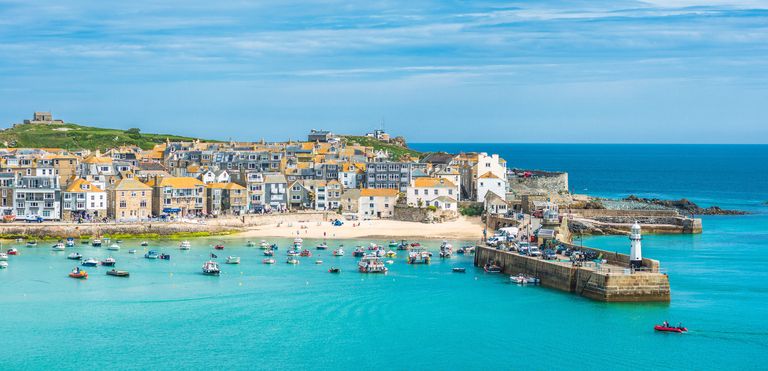
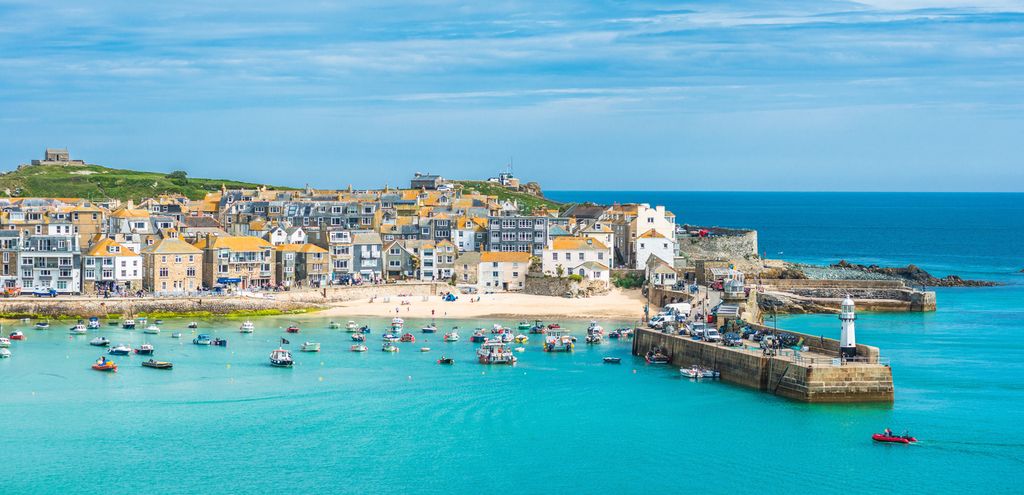
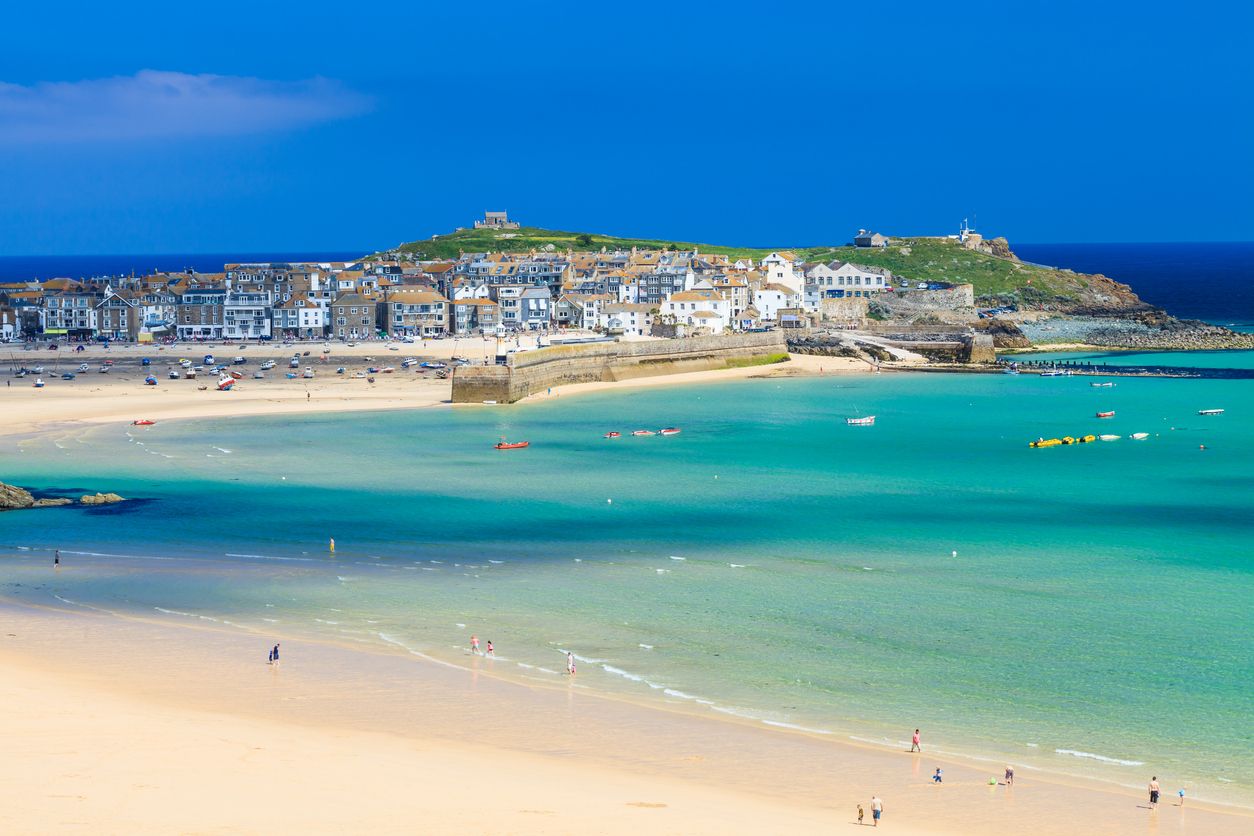
Take the train to St Ives and you see one of England’s most beautiful towns from above. The track runs high over the bay, carrying you past the pale sweep of Porthminster Beach and its turqouise waters, before the town appears in a jumble of whitewashed houses and cobbled streets. There is a feeling, in that first glimpse, of being suspended, somewhere between Old England and Southern Europe.
Bruton, too, has its own special kind of beauty. Walk through its quiet lanes and old honeyed stone and you might not expect to find world-class contemporary art or some of the country’s most interesting cooking in a Somerset town of such modest scale.
Choose St Ives for art, beaches and Atlantic light; Bruton for food, galleries and a stylish Somerset weekend; Wells-next-the-Sea for harbour life, salt marsh and big Norfolk skies; Chipping Norton for Cotswolds villages, farm shops and country houses; Woolacombe for surf, sand and active coastal holidays; and Rye for medieval streets, marshland and Camber Sands nearby.
Bruton: best for food, galleries and Somerset weekends
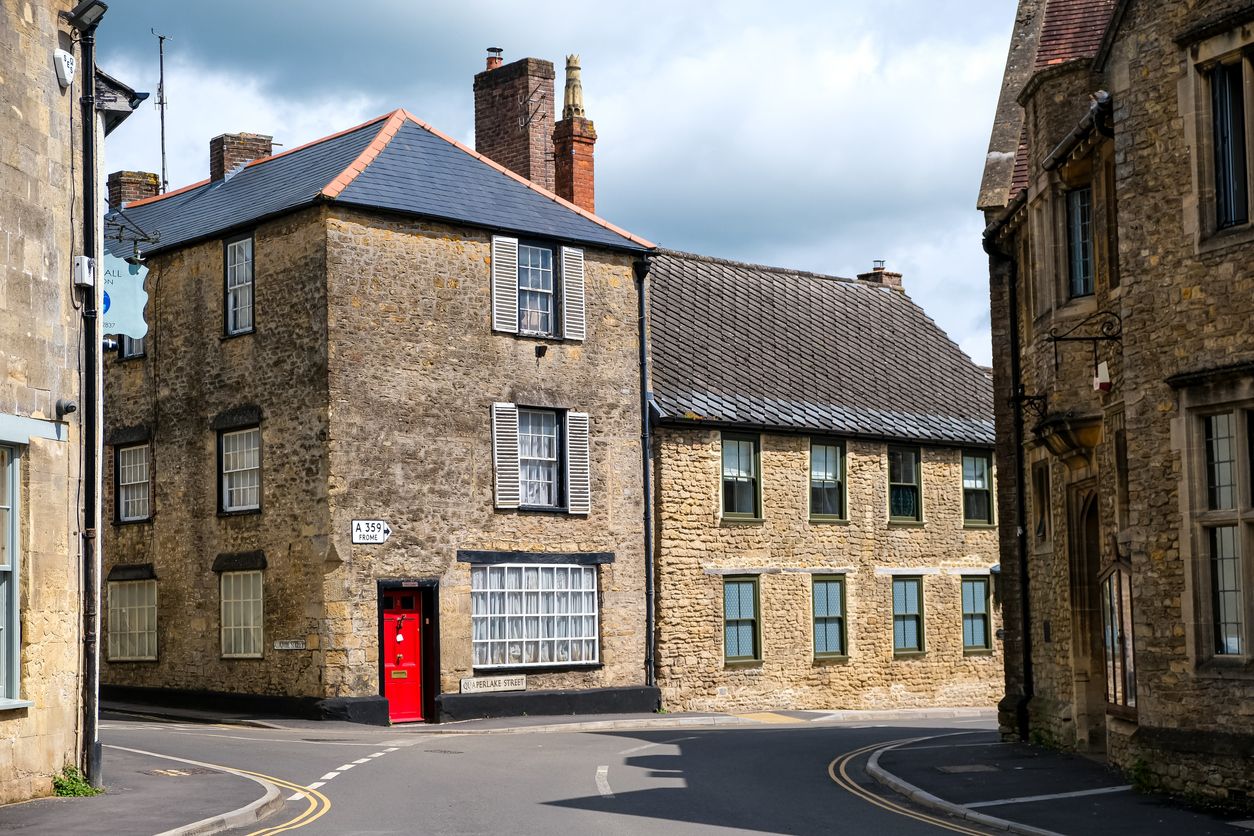
Bruton High Street, Somerset
Art in the Somerset Fields
At the end of Oudolf Field, Smiljan Radić’s pavilion sits on quarry stones and feels faintly Martian. It is part shelter and part relic, fringed by Piet Oudolf’s seedheads and perennials that soften the old farm buildings of Durslade Farm. This is Hauser & Wirth Somerset, one of Europe’s leading contemporary art galleries, and it tells you something you must know before you have even reached the town: Bruton is a place where countryside and culture have learned to behave rather well together.
Bruton itself is old and magnetic, imbued with a specific sort of Somerset mysticism. Its lanes are quiet, its stone is honey, and its modest scale makes the arrival of so much culture feel all the more improbable, hemmed as it is by such wonderful countryside.
Hauser & Wirth occupies a former farmstead just outside Bruton, with exhibitions, events, and residencies rooted in the surrounding landscape. The current summer exhibition, Angel Otero’s Agua Salada, brings memory, sea, family and Puerto Rican colour into the fields until 18 October 2026.
Where to Eat Near Bruton
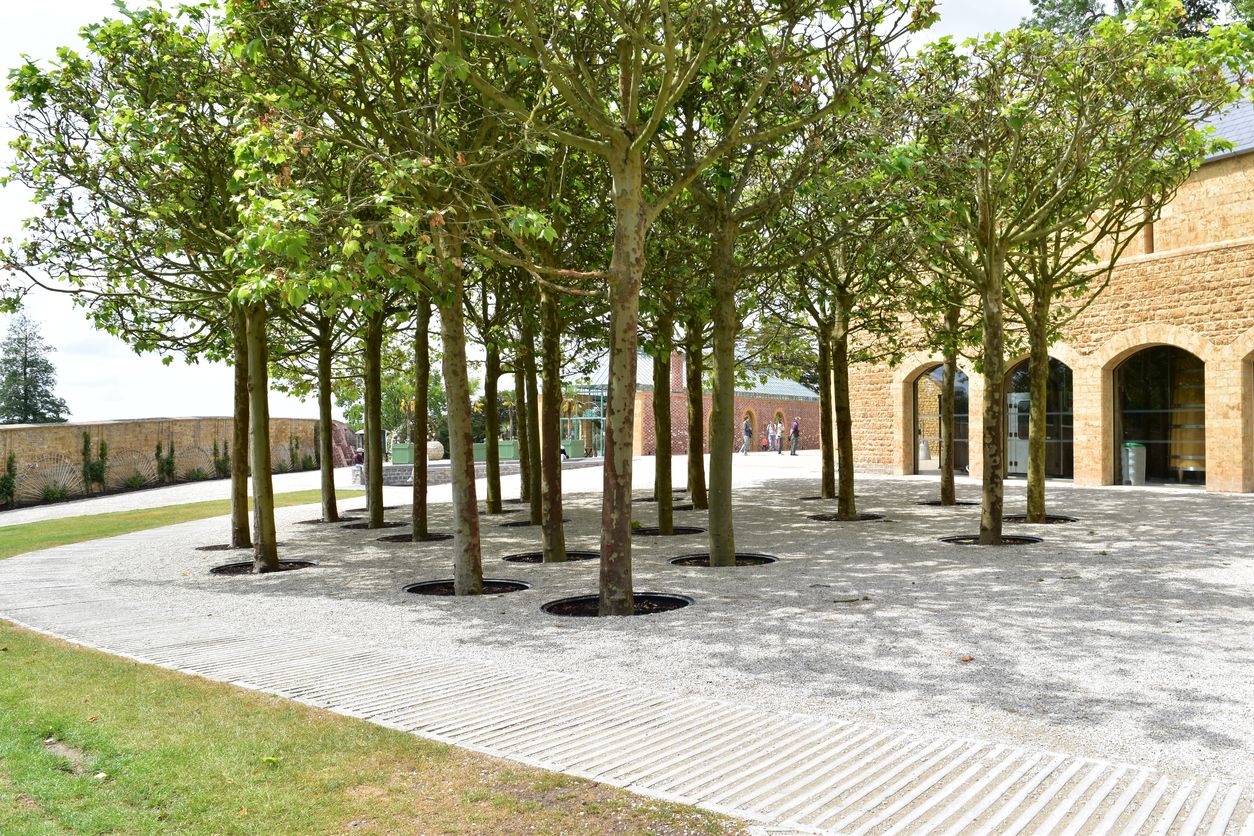
The Newt, a beautiful country garden and estate near Bruton
The food deepens the magic, as it perhaps could hardly do otherwise in such good growing country. Osip, Merlin Labron-Johnson’s Michelin-starred restaurant, cooks close to the land and season, while Briar brings a looser, more intimate brilliance to Bruton High Street. Add The Newt, with its gardens, cyder orchards, woodland and estate-to-table dining, and the whole area begins to feel like Somerset, edited by someone with very good taste.
Why Bruton Works for a Weekend
Though it is one of England’s most beautiful towns, Bruton feels much more than its prettiness alone. Its old lanes, farm buildings and soft, green hills give it the traditional pleasure of the West Country, but the art and food scene makes it feel unusually alive. You might come for lunch or a gallery visit and leave with the sense that the countryside has never been more intelligent, more stylish, or mysterious.
Where to Stay near Bruton
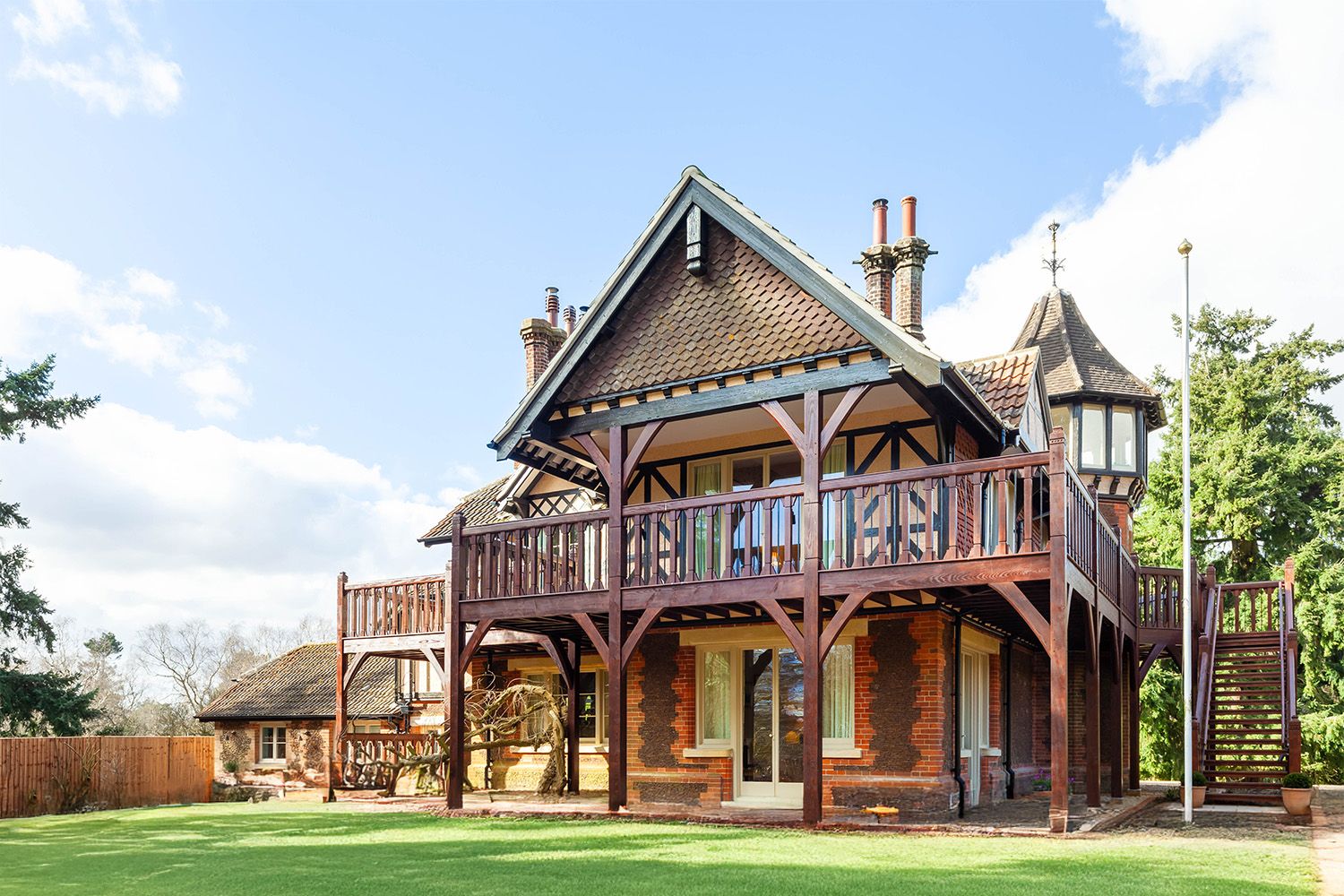
Bruton makes for a rather delicious weekend, and Aspall Houseis a beautiful house for the occasion.
Wells-next-the-Sea: best for harbour life and salt marsh
Harbour Life and Salt Marsh
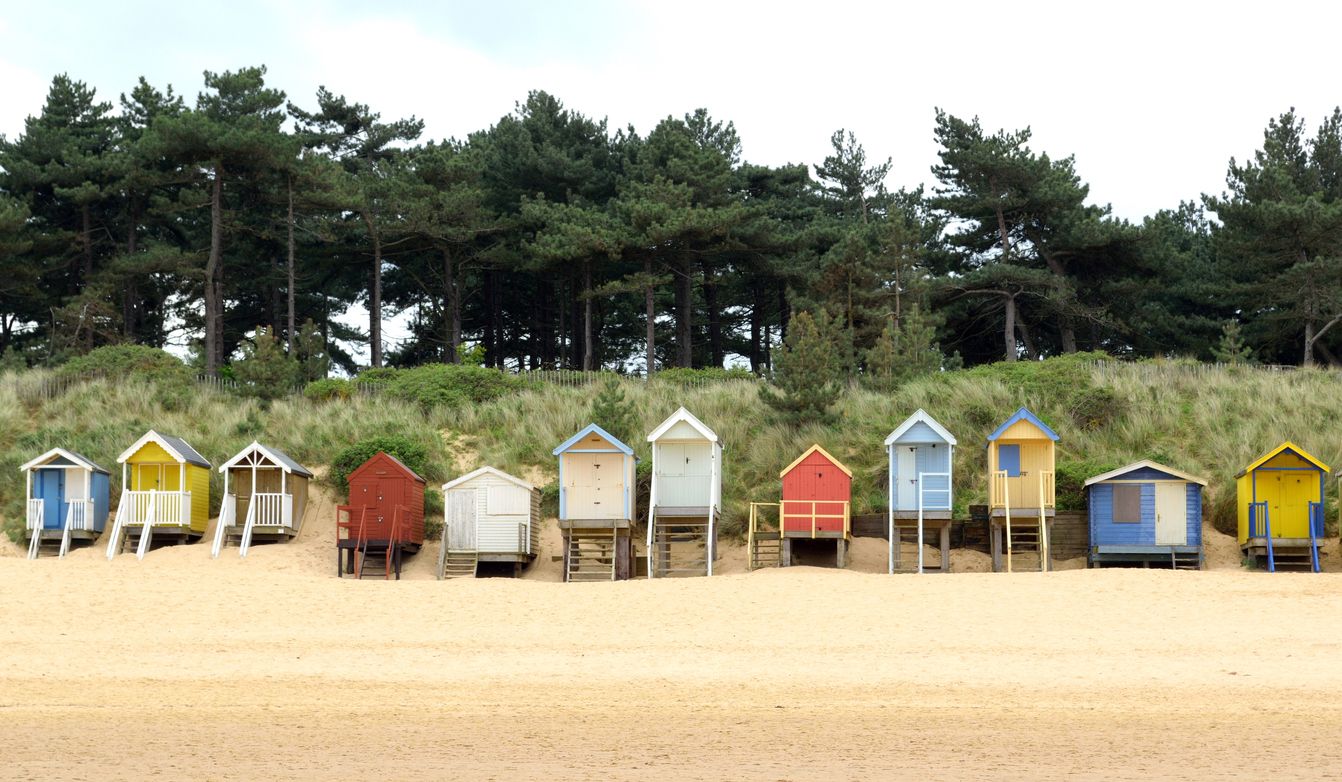
Beach huts at Wells-next-the-Sea in Norfolk, England
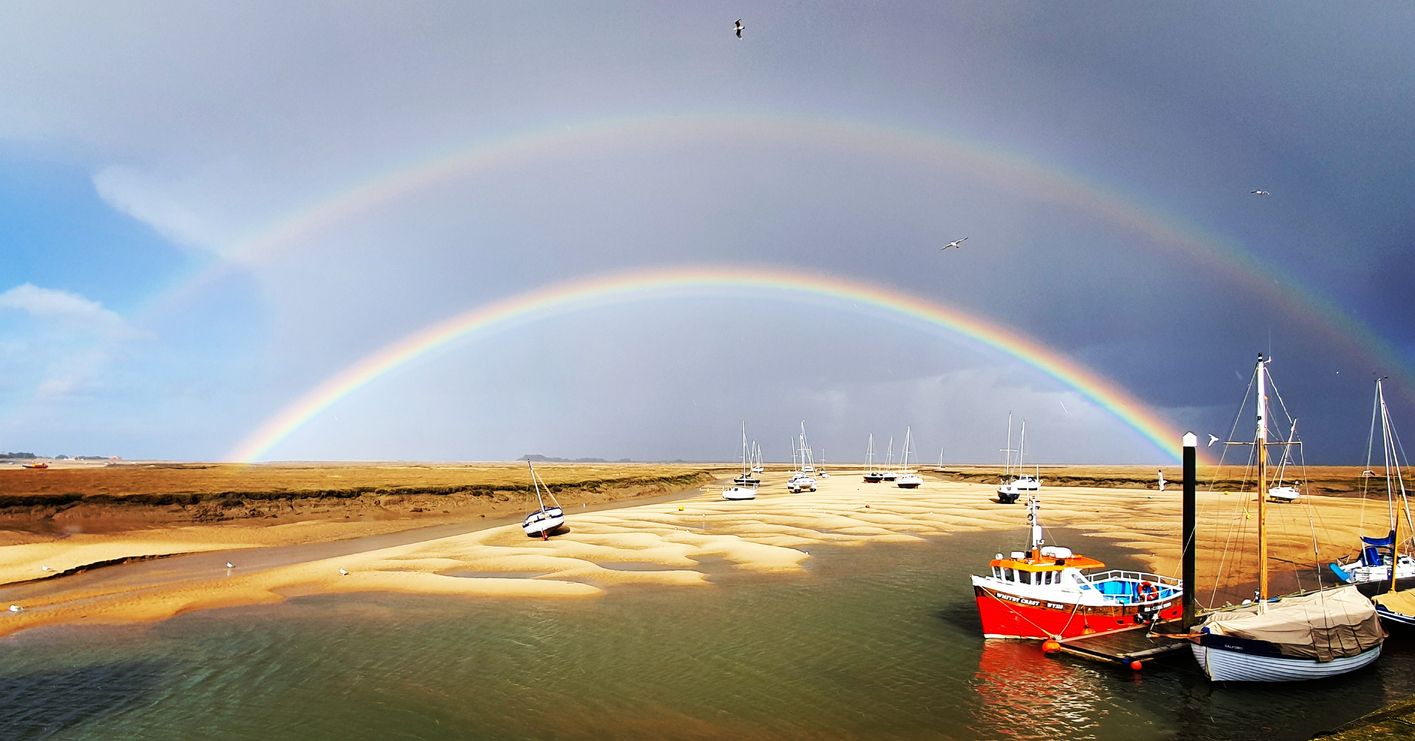
At low tide, Wells-next-the-Sea smells like salt and old rope. Boats settle into the harbour channel as the water draws back, exposing gulls, crab lines, and the mineral tang of marsh. This is the old logic of Wells, a harbour town whose sea has always had to be waited for, coaxed in and watched carefully. Once a working port, the tide still dictates everything – the North Sea held at a distance beyond salt marsh and Holkham’s pale beach until it turns, rushing in over the flats, swift and cold.
Wells’ beauty is the quay, the old harbour life, the way the wind moves through the rigging, presses through the pines, catches at coats and reddens cheeks on the walk to Holkham, leaving everything behind scoured and awake. Stop at The Lookout above the dunes for a view that is particular to Norfolk: the beach, sky, marram grass, and pale sand held together with the bright, salt-washed clarity of a Ravilious watercolour.
Beaches, Birdlife and Big Norfolk Skies
A double rainbow over the harbour at Wells-next-the-Sea in Norfolk, UK
The surrounding coast is full of that salt-edged beauty. Holme Dunes and the marshes around Stiffkey and Blakeney make this one of Britain’s great places for birdwatching and walking, birds rising from the reeds and seals lying out on the sandbanks. It is also a good coast to know from the water, by sail, paddleboard or kayak.
Nearby, Burnham Market has boutiques, interiors shops and galleries; Holt has Norfolk Natural Living, meanwhile Holkham Hall, Houghton Hall and Sandringham give the area a grander register.
Where to Eat Near Wells-next-the-Sea
The food, too, is rooted in the sea. The White Horse at Brancaster Staithe is the classic table with salt marsh in view, while The Gunton Arms brings contemporary art and open-fire cooking to a traditional pub on an historic 18th-century estate near Cromer.
Closer to Wells, The Hero, The Three Horseshoes in Warham, Suffield Arms, Socius and Meadowsweet make the coast feel spoilt, with Eric’s Fish & Chips, The Norfolk Cheese Company, and Drove Orchards supplying the simpler pleasures that are often the most necessary.
Why Wells-next-the-Sea Works for a Coastal Escape
Wells-next-the-Sea is one of England’s most beautiful seaside towns because it has all the pleasures of the British coast. There are fish and chips on the quay, gulls crying over the harbour, children with crab lines, boats lifting with the tide and wind coming in clean from the North Sea. It is salt-sprayed and windswept, traditional and wild – and all the more beautiful for being both.
How better to experience Norfolk than from the Sandringham Estate? The Follyand The Gardens Housegive you the royal treatment, with Wells, Holkham and the coast within easy reach.
Chipping Norton: best for Cotswolds villages and country weekends
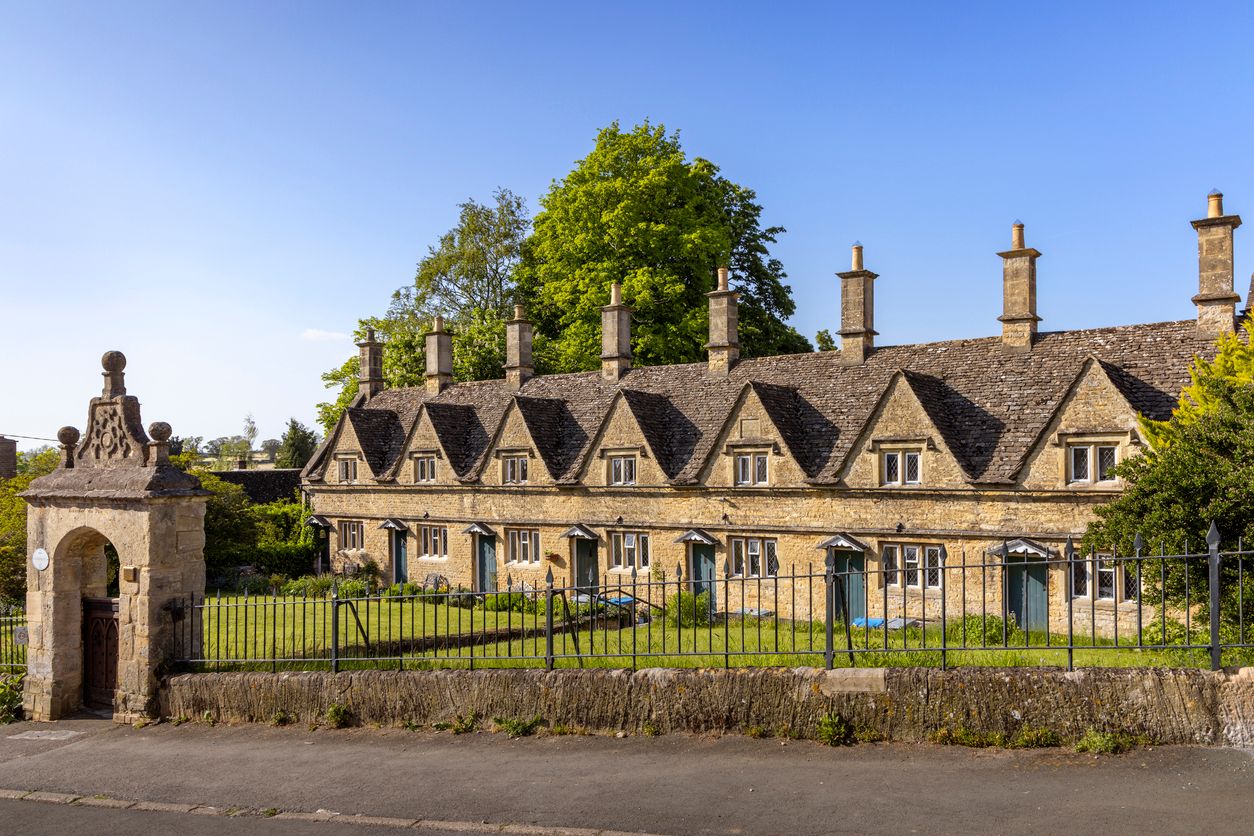
The gabled almshouses in Church Street, Chipping Norton
Wool, Markets and Cotswold Stone
When the sun drops over Chipping Norton, the Cotswold stone is all aglow. The town sits high on its hill – one of the highest in Oxfordshire – with streets that carry the memory of its market life.
The name comes from the Old English for market, and Chipping Norton has never lost that commercial spirit. The town grew wealthy through the medieval wool trade, and you can still feel that prosperity in St Mary’s, the great wool church above the town, whose Perpendicular Gothic nave was largely rebuilt in the late 15th century. There are older traces too: the remains of the motte-and-bailey castle, the memory of 13th-century markets high on the hill.
Daylesford, Soho Farmhouse and Modern Cotswolds Living
Today, old exchange has become something altogether more self-aware. Chipping Norton sits within easy reach of Daylesford, Kingham, Charlbury, Burford, Broadway, Woodstock and Stow-on-the-Wold, making it a gateway to the Cotswolds in its most modern, desirable form. Soho Farmhouse gave the countryside its members’ club; Daylesford made the farm shop feel like an aesthete’s point of view; and Diddly Squat Farm Shop, just outside nearby Chadlington, has added queues and the sparkling sheen of television to this side of the Cotswolds.
Where to Eat Near Chipping Norton
The Cotswolds has always been known for eating well, and Chipping Norton is no exception. At Daylesford, lunch begins before you are seated, in the warm fug of sourdough, organic dairy and the moral glow of buying good vegetables. Dinner takes you to the surrounding villages: The Wild Rabbit in Kingham, The Bull in Charlbury, The Feathered Nest at Nether Westcote, The Ox Barn at Thyme, and The Fox at Oddington, through rooms of stone floors and low beams, woodsmoke in your coat, and good butter never far away.
Blenheim, Broughton Grange and the Wider Cotswolds
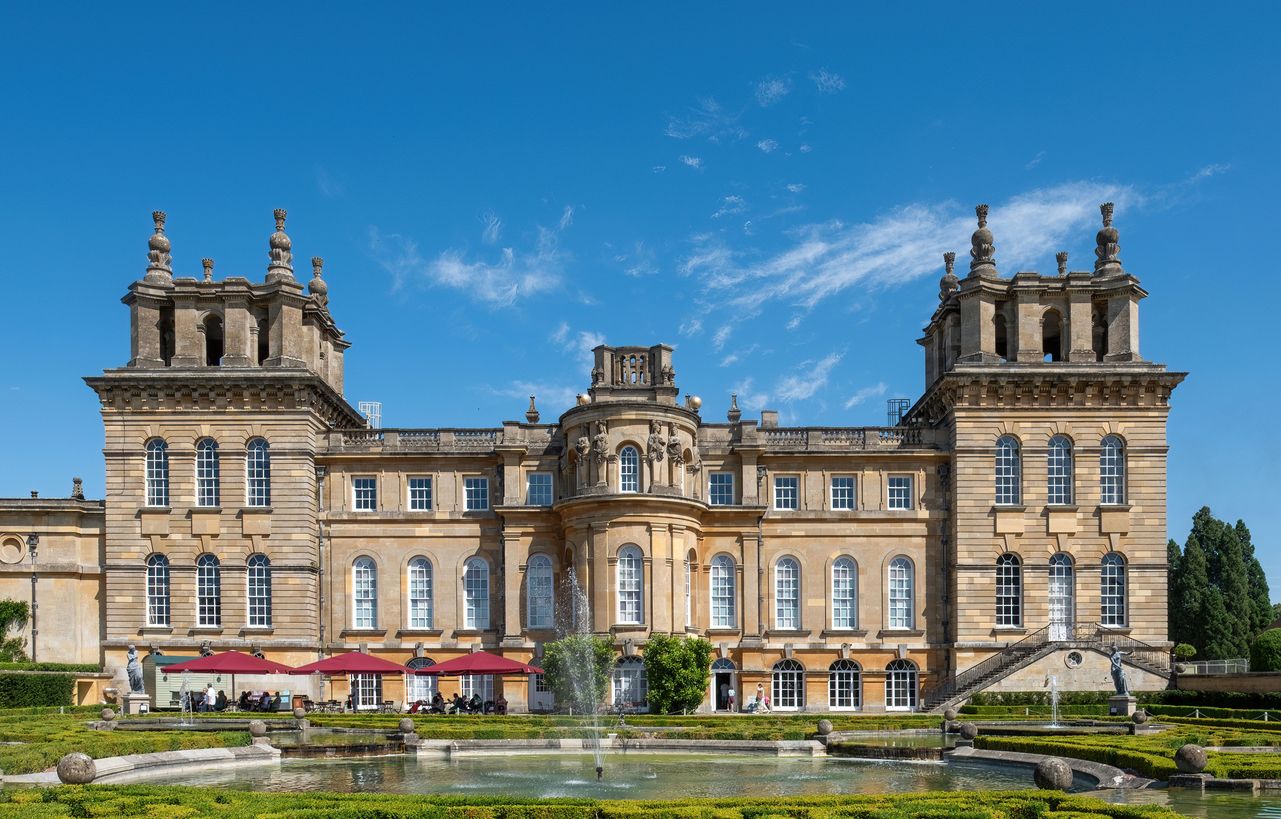
Blenheim Palace
Beyond the town, Blenheim Palace appears with all the confidence of its history, its parkland rolling out in lakes and lawns; Cornbury Park keeps the older hush of the private estate, all woodland and deer; and at Broughton Grange, the gardens feel held between discipline and dream, clipped lines and open country at odds with one another. Closer to town, antique shops and independent boutiques keep Chipping Norton anchored in the traditional pleasures of Cotswold life, while beyond them the lanes loosen into parkland, fields, and rolling country.
Why Chipping Norton Works for a Cotswolds Escape
Chipping Norton is one of England’s most beautiful towns because it understands what makes the Cotswolds so wonderful. It has the old history of wool churches, stone houses, and fields, but also the new pleasure of farm shops and private members’ clubs. It is beautiful, certainly, but it is also useful; this handsome hilltop town from which almost every Cotswolds pleasure is within reach.
Where to stay near Chipping Norton
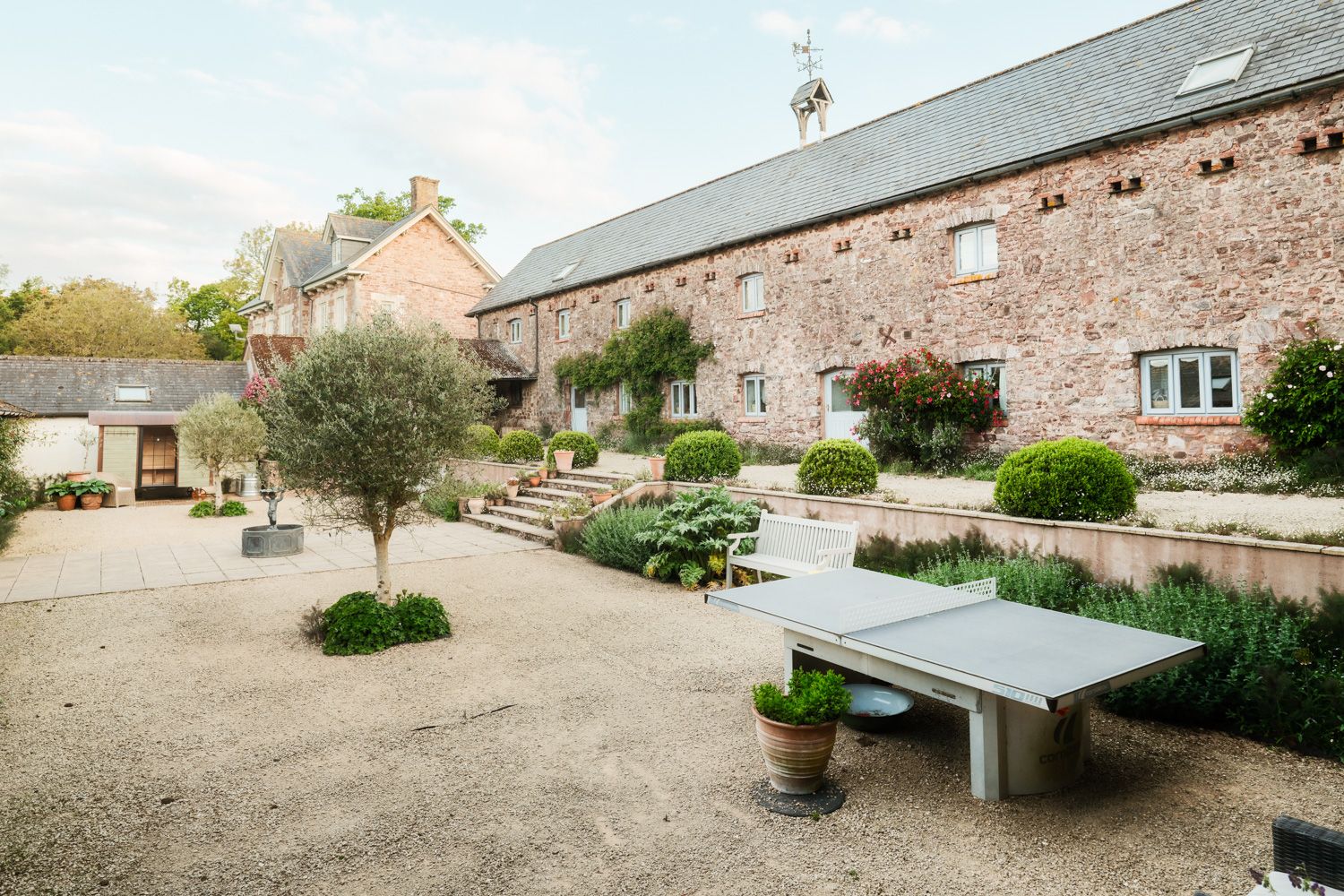
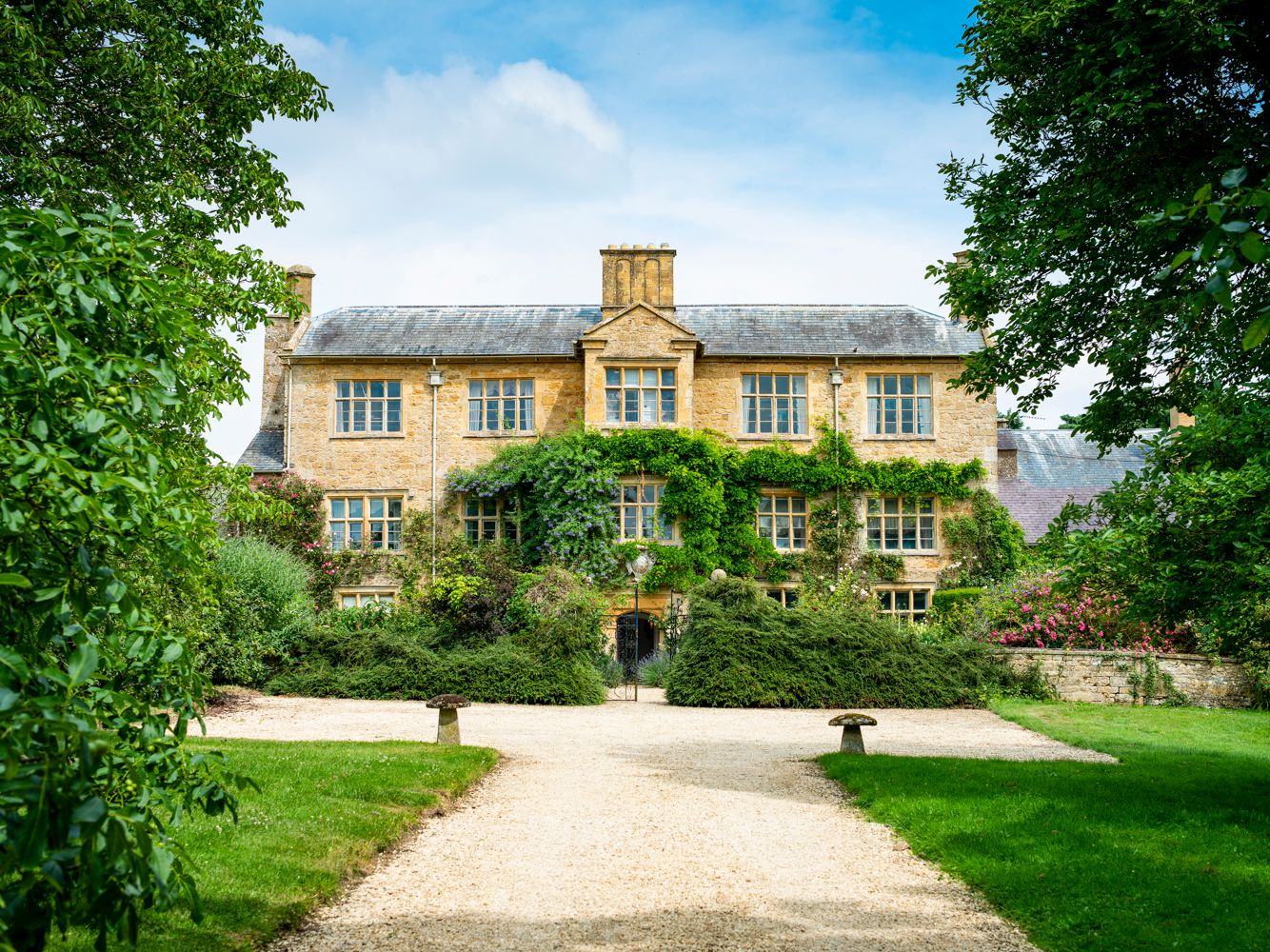
Orchard Manorputs you close to Chipping Norton’s market-town charm, Daylesford lunches, and the villages beyond.
St Ives: best for art and white-sand beaches
View overlooking Porthminster Beach in St Ives, Cornwall
Artistic Heritage
St Ives’ rarefied beauty has been drawing painters for more than a century. Atlantic light fills its studios, sharpening white walls and every attempt to capture the essence of the place. Even on a busy day, when the streets fill and the harbourfront is crowded with people eating ice cream, there is something improbable about it – a Cornish town that feels almost Mediterranean, save the gulls and odd pasty.
Tate St Ives, Hepworth and Leach Pottery
The Tate Gallery St. Ives, Cornwall
The town’s creative life is everywhere. Tate St Ives looks out over Porthmeor Beach, where surf rolls in below gallery walls, while the Barbara Hepworth Museum & Sculpture Garden offers the magic of bronze, stone, and planting around the artist’s former home and studio. At Leach Pottery, clay, kiln heat and hand-thrown forms carry the story, while Fore Street keeps the independent galleries and makers’ studios close to the harbour life of the town.
Beaches, Seafood and Harbour Days
St Ives’ beaches are also spectacular, with remarkable white sand you wouldn’t expect this side of the Atlantic. Porthminster has water bright enough to make you question the latitude, while Porthmeor has surf and wild Atlantic sunsets. Lunch at Porthminster Beach Café is best with sea salt still on your ankles; later, The Fish Shed and Palais Provisions keep you near the harbour, moving between seafood, gelato, cold drinks and the warm stone of the lanes.
West Penwith, Zennor and the Tin Coast
Beyond St Ives, West Penwith becomes wilder. The South West Coast Path pulls you towards Zennor, where the cliffs grow darker and the gorse leans inland. TheGurnard’s Head makes a very good case for staying for lunch. Further along the coast are Mousehole, Marazion, Penzance, St Just, Cape Cornwall and the Tin Coast, with St Michael’s Mount rising from the bay and old engine houses standing against the weather.
Why St Ives Works for a Coastal Escape
St Ives’ beautiful landscape has long demanded translation. Alfred Wallis found it in tilted harbours and chapel-like boats, Ben Nicholson in pale geometries, Barbara Hepworth in pierced sculpture, Peter Lanyon in abstraction. You can surf, paddleboard, kayak or take a boat to Seal Island, but the real pleasure is simpler – walking between whitewashed streets, bright beaches, working studios and harbour views, feeling the town slip, again and again, into painting: houses stacked above the water, boats held in place, the sea strange and exact like Wallis’.
Where to stay near St Ives
Coastal Ateliermakes a beautiful base for St Ives, where days move between harbour walks, white-sand beaches and the Atlantic light that has drawn artists for generations.
Woolacombe: best for surf, sand and active families
Atlantic Beaches
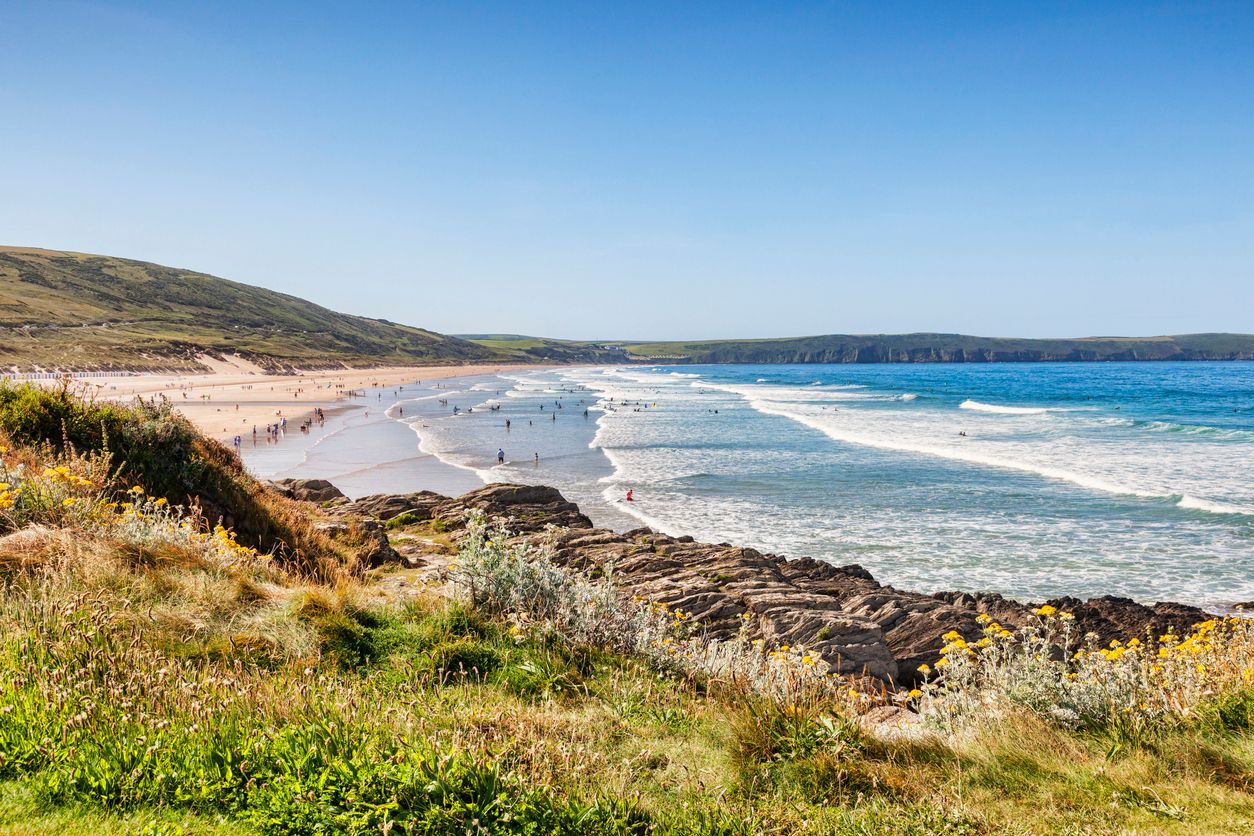
The beach at Woolacombe, North Devon
Woolacombe falls towards the Atlantic, where the beach seems to run on forever beneath the sandstone cliffs. The size of it is the first thing you notice – three miles of sand, pale and wide, washed clean by the tide, the sea moving in long lines, and the wind coming off the water. Even on a bright day, there is something untamed: buckets and surfboards, but also so much rock and salt.
Surfing, Coasteering and Coastal Walks
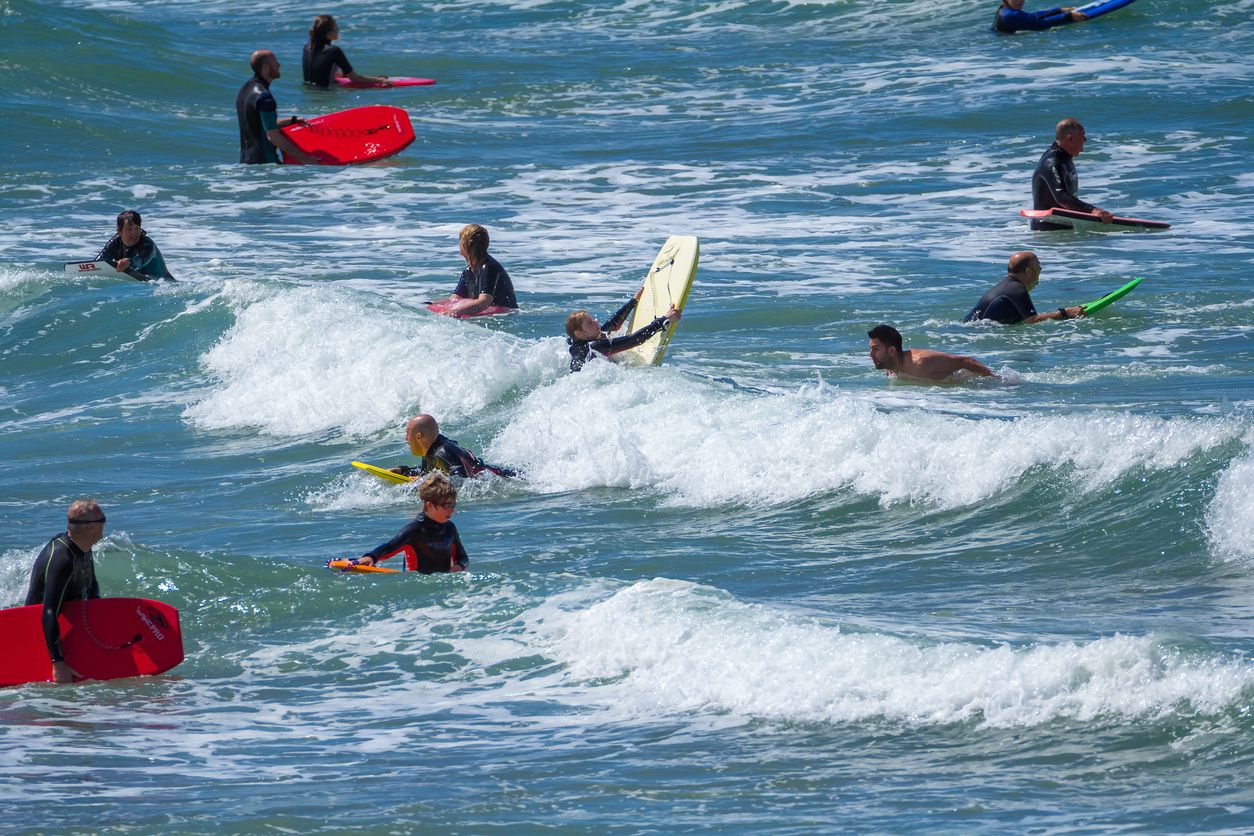
Surfing at Woolacombe beach in Devon
Woolacombe’s beauty is not delicate; it is one of Britain’s great beach towns precisely because it is built around movement. There is surfing, paddleboarding, sea kayaking, coasteering, and cliff walking. Meanwhile, the cafés, bakeries and surf shops keep the village relaxed with the smell of coffee, sunscreen, wetsuits and chips, damp with salt and vinegar, drifting off the wind back from the beach.
Morte Point, Croyde and Saunton Sands
Beyond the sand, the South West Coast Path carries you towards Morte Point, where the headland pushes into the sea and seals watch from the rocks below. Inland, the lanes lead towards Braunton and Croyde, where surf culture is a permanent fixture, and Saunton Sands opens out in another long sweep of dune-backed beach.
Ilfracombe, Exmoor and North Devon
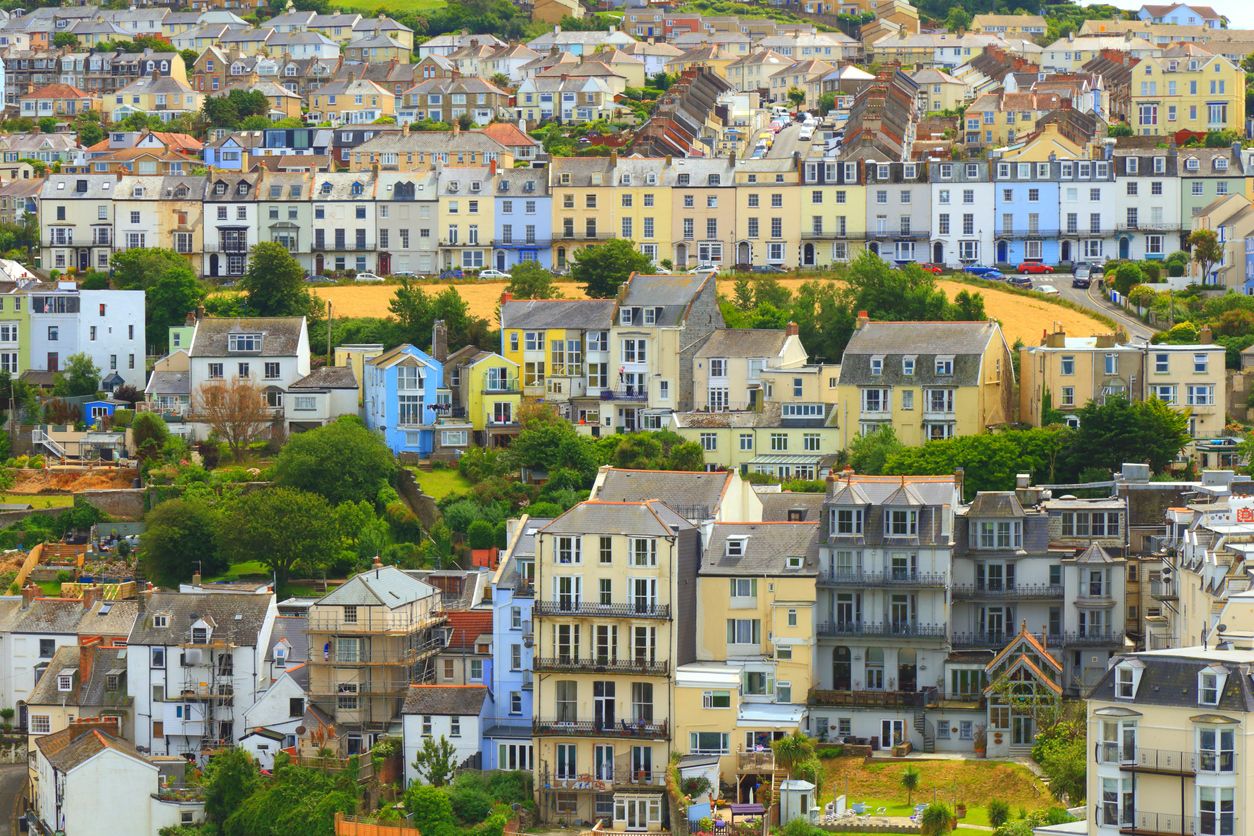
lfracombe on the North Devon coast, England
In Ilfracombe, there are galleries, a beautiful harbour, seafood restaurants, and Damien Hirst’s Veritystanding watch over the water, half guardian, half provoker. Further inland, Exmoor is wild with heather, wooded valleys, wild swimming, horse riding and some of the darkest skies in England.
Why Woolacombe Works for an Active Coastal Escape
Woolacombe is one of England’s most beautiful seaside towns because it makes the coast feel irresistible. You come for the beach, but the pleasure is found in the pull of the tide, the sting of the salt, the walk to Morte Point, and the cold shock of the water. It is a place for active coastal holidays, but also for remembering how good it feels to be lost in a landscape.
Where to stay near Woolacombe
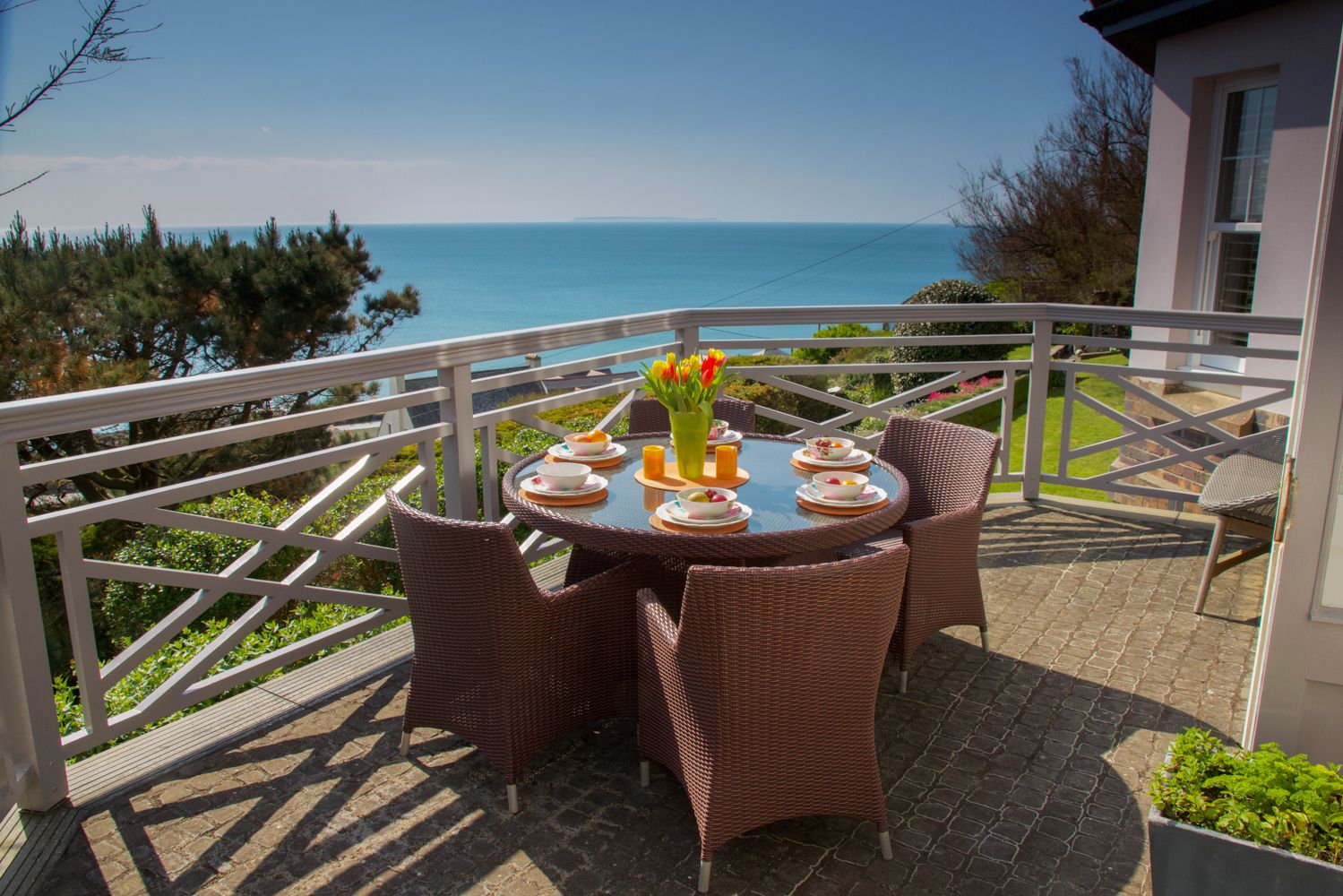
Shellhavenputs you close to the sand, surf and cliff paths, and the Atlantic nearby.
Rye: best for medieval streets and coast nearby
Medieval Streets
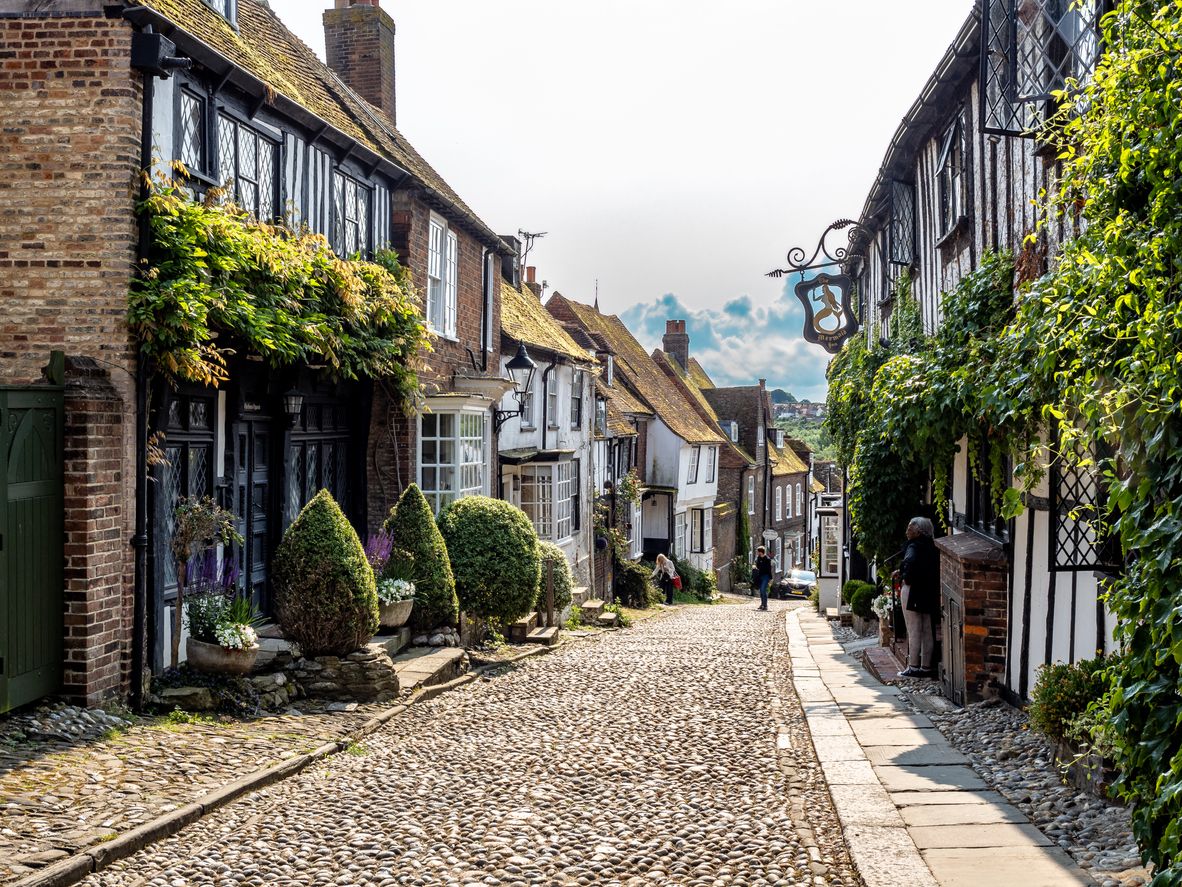
Old Medieval city of Rye
Rye, in East Sussex, feels like an England half-remembered from old books. The town rises above the marsh on its old hill, all cobbles, crooked timber, weathered brick, and windows that seem to lean towards one another like long guardians of secrets.
Mermaid Street is the main name, with its uneven stones and centuries-old inns, but Rye’s enduring quality is found across the town. Once surrounded almost entirely by sea, the water has now long withdrawn, but it still feels faintly tidal, held between land and marsh.
Bookshops, Inns and Rye’s Food Scene
Its beauty is old and theatrical like a set piece at the Globe. There are independent bookshops, antique dealers, galleries and interiors boutiques tucked into narrow streets. Ypres Castle Inn keeps the past close, while The Fig, The Globe InnMarsh, and Webbe’s bring Rye’s food scene into the present. For something simpler, Marino’s Fish Bar does the seaside palate justice, and The Gallivant, out towards Camber, gives you seafood and the pale pull of the dunes.
Camber Sands, Rye Harbour and Romney Marsh
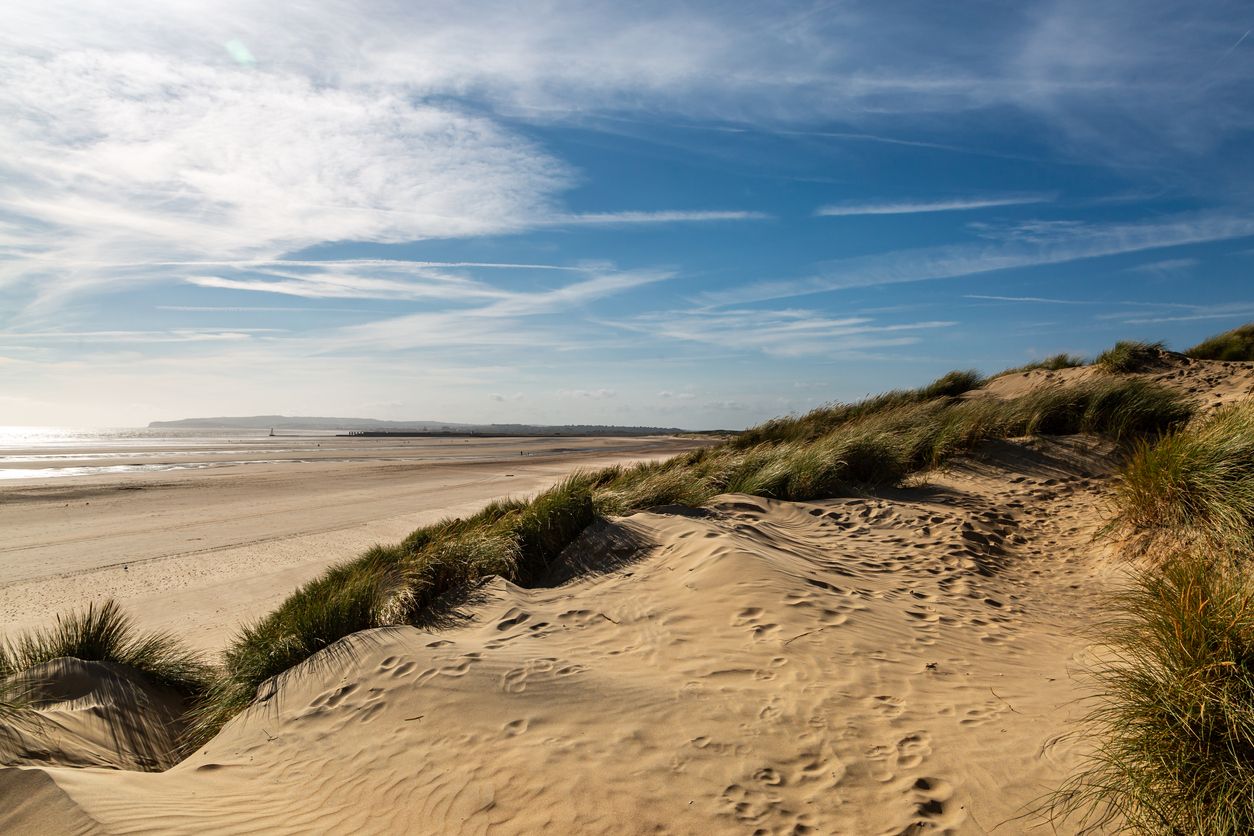
A view over the sand dunes at Camber Sands
Beyond Rye, the landscape opens. Camber Sands is one of the UK’s most beautiful beaches – a wide, pale sweep of beach where the sky feels enormous and the wind affects long silver strokes. Rye Harbour Nature Reserve has a rougher beauty, with shingle and saltmarsh, while Winchelsea sits nearby with its own old bones and Romney Marsh’s flat, watery light.
Vineyards, Great Dixter and Dungeness
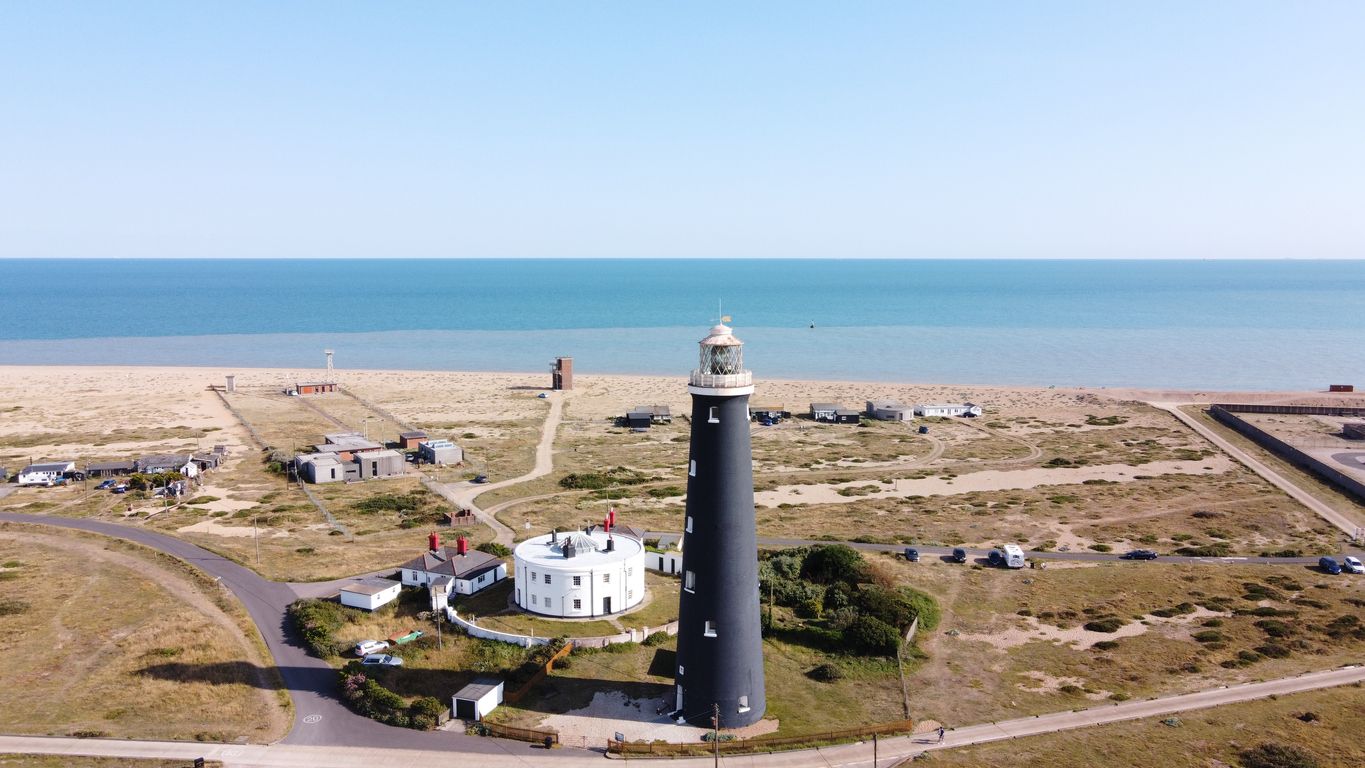
Dungeness, Kent
The wider county is full of good detours. Tillingham and Oxney Organic Estate give the area vineyards and easy afternoons; Tibbs Farm Café brings fruit picking and homemade cakes; Great Dixter offers the glorious disorder of one of England’s most beloved gardens. Further east, Dungeness has black beach huts, nuclear geometry and Derek Jarman’s Prospect Cottage standing low against the wind.
Why Rye Works for a Coastal Escape
By the time you leave Rye, it will appear changed in your mind. What first looked like a pretty medieval town becomes something different – a hilltop settlement with the sea missing from it, still full of salt somehow, Camber Sands lying beyond like a bright, blank page. Despite what you may have thought, Rye is not simply Old England preserved by salt marsh. The sea withdrew but the town stayed where it was; gulls flying over fields that were once water.
Where to stay near Rye
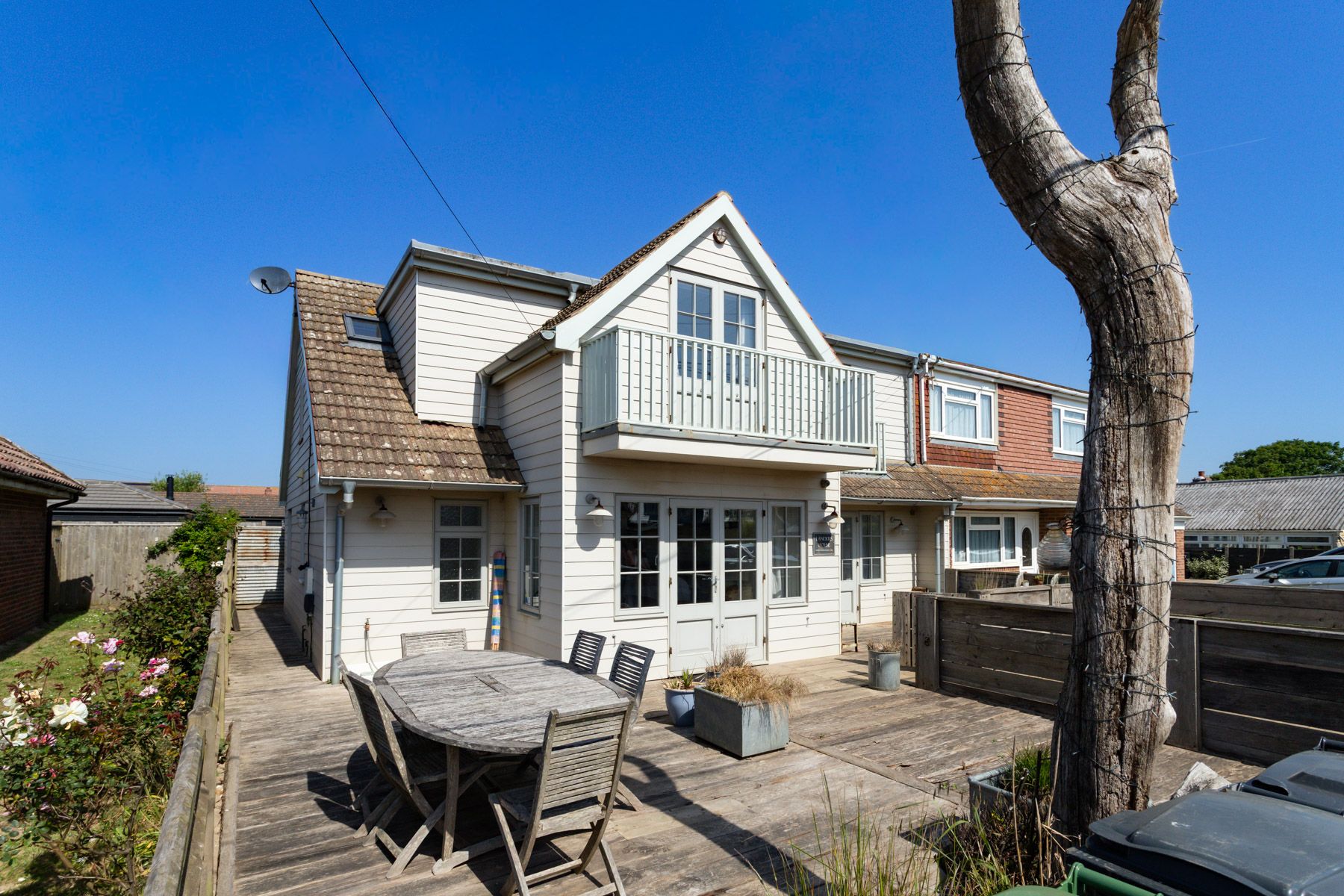
Camber Beach Housegives you the best of both Rye and Camber Sands: medieval streets one way, beach the other.
Find Your UK Escape with Oliver’s Travels
From the white-sand coves of Cornwall and the surf beaches of Devonto the honeyed villages of the Cotswolds, the big skies of Norfolkand the marsh-fringed coast of Sussex, Oliver’s Travels has extraordinary homes in some of England’s most beautiful towns.
Previous
Best Places to Stay in Crete for Couples: The Complete Guide
Next
The Odyssey: Where to Visit in Greece
Popular Articles
The 10 Best Beaches in Cyprus
Cyprus has beaches for almost every kind of holiday, from soft, pale sands and shallow family bays to turtle-nesting shores, watersports hubs, and quiet coves beneath cliffs. Better still, the island makes it easy to combine time beside the sea with ancient ruins, mountain villages, and lunches in coastal tavernas. The best beaches in Cyprus […]
The 10 Best Beaches in Mykonos
Mykonos may be known for its whitewashed lanes, late-night parties, and famous beach clubs, but its coastline has more range than the headlines suggest. Long sandy bays curve around the south of the island, while the north coast feels wilder, more exposed to the Aegean wind. The best beaches in Mykonos cover almost every mood. […]
10 Best Villas in Ibiza
The fabled ‘White Island’ is a place of many faces. On the one hand, Ibiza is renowned as a prime clubbing destination with a vibrant nightlife that’s a magnet for partygoers. But there’s more to the island than exclusive clubs and dancing ’til dawn! Further inland, you’ll find there’s a much more laid-back atmosphere among […]
Annual leave is one of the year’s more finite pleasures. Used without much thought, it can quickly disappear into the occasional Friday and a handful of Mondays. Place it more strategically, however, and the same allowance can turn four days away from your desk into nine or even ten days elsewhere. In 2027, Easter falls […]
Sense and Sensibility: Where to stay for a Jane Austen-inspired escape
On 25 September, this year’s Sense and Sensibility will introduce Jane Austen’s razor-sharp wit and biting social commentary to a whole new generation of gooey-eyed romantics. Like Emma Thompson’s much-loved 1995 adaptation and the novel long before it, the new film promises fierce heroines, men whose charms cannot always be trusted and – of course […]
Venice Film Festival 2026: Where to Stay
Every September, Venice – a city already accustomed to grand entrances – becomes the stage for cinema’s most anticipated arrivals. First held in 1932, the Venice International Film Festival is the oldest in the world. Its 83rd edition runs from 2–12 September 2026 on the Lido, the long barrier island separating the Venetian Lagoon from […]
10 European City Breaks and Where to Stay
One of the great pleasures of living in the UK is its access to the rest of Europe. It is easy to forget quite how extraordinary it is until you hear it from someone who has crossed an entire ocean to get here. The distinctly American idea of “doing Europe”, which tends to mean a […]
7 Days In… Corfu
In the turquoise Ionian, just off the coast of Albania, lies Greece’s greenest island. Stand at the north-west of the peninsula at Paleokastritsa, and you will see the whole landscape open before you. Lush, green hills rise from every angle, their cypress trees fringing the rocky bay out into endless azure, the old monastery above […]
Solar Eclipse 2026: Best Places to Watch in Spain & Where to Stay
On 12 August 2026, the solar eclipse will sweep across Spain, coinciding with the peak of the Perseid meteor shower on the same summer night. Near sunset, the moon will pass across the sun, drawing a narrow band of darkness over the country. Hours later, beneath an almost moonless sky, the Perseids will reach their […]
Edinburgh Festival Fringe & International Festival 2026: What to See and Where to Stay
Every August, artists and visitors from around the world flock to the Scottish capital for the Edinburgh International Festival and the Edinburgh Festival Fringe. For a few weeks, the city gives over its lecture halls, churches, music venues, theatres and pub basements, turning them into stages for one of the year’s most interesting arts events. […]
7 Days in… Mallorca
The largest of the Balearic Islands has long worn its paradisiacal reputation with confidence. Along Mallorca’s south coast, there is white sand and calm, turquoise water. In the north, olive terraces and ochre villages climb towards the ridges of the Tramuntana, the mountain range that runs along the island’s north-west coast. Between them, pine-covered hillsides […]
The Odyssey: Where to Visit in Greece
In Book XII of the Odyssey, Odysseus’ men bind him to the mast of the ship, beeswax in their ears, as he listens to the song of the Sirens. No man, they say, has heard the tune and lived to tell the tale. But this is Odysseus; he has already outwitted the Cyclops Polyphemus, survived […]
Best Places to Stay in Crete for Couples: The Complete Guide
In Elafonisi, on the far western edge of Crete, the sand is pink. Crushed blush shells and coral stipple the shallows as the sea laps in, mixing white and pink with blue like a natural triptych. There is a yearning, too, in Chania at night. When the old lighthouse sends its glow across the harbour, […]