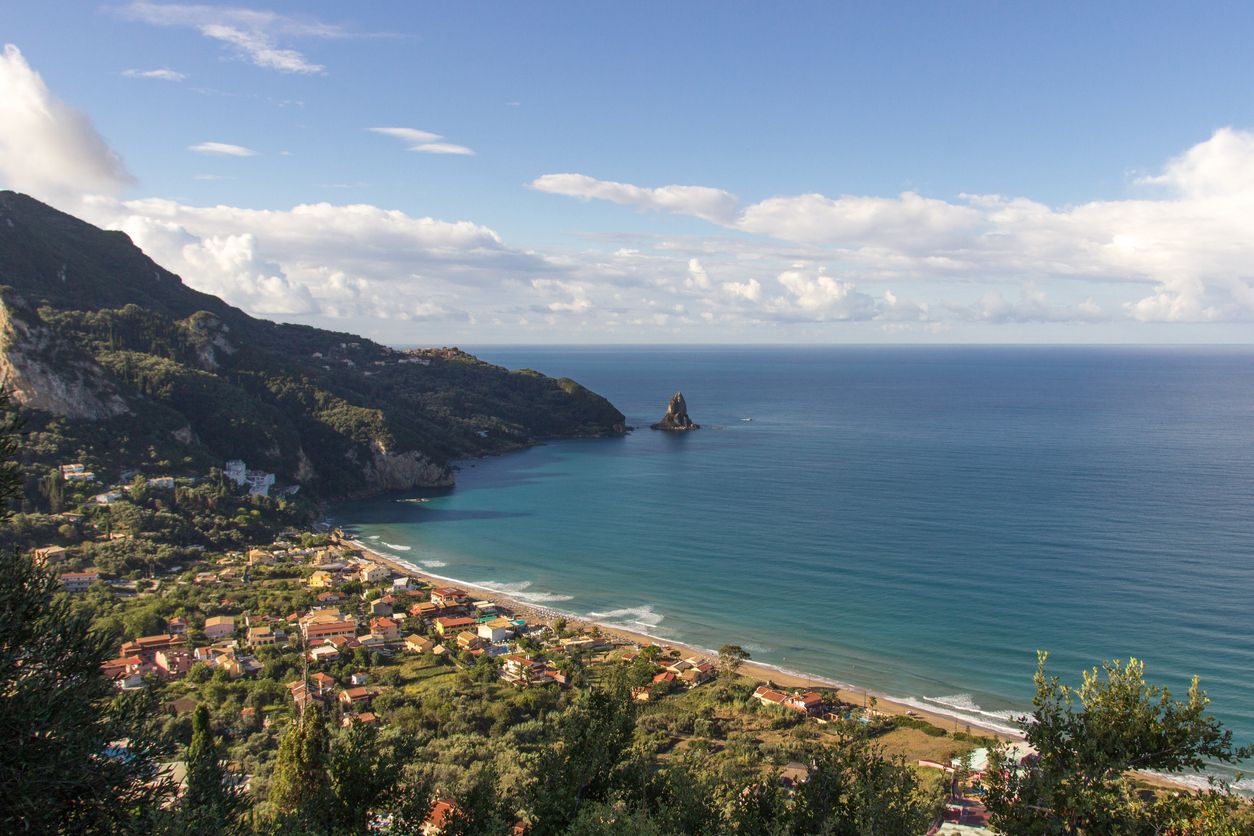
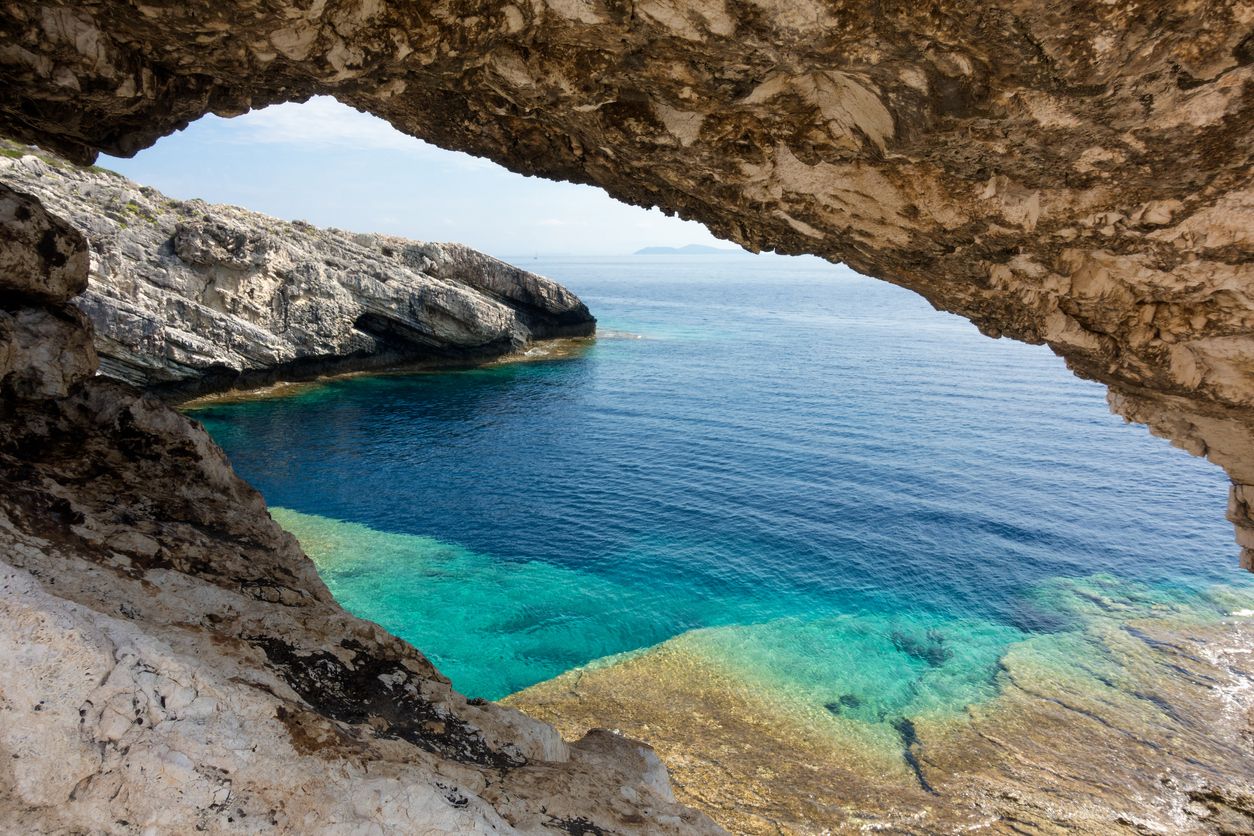
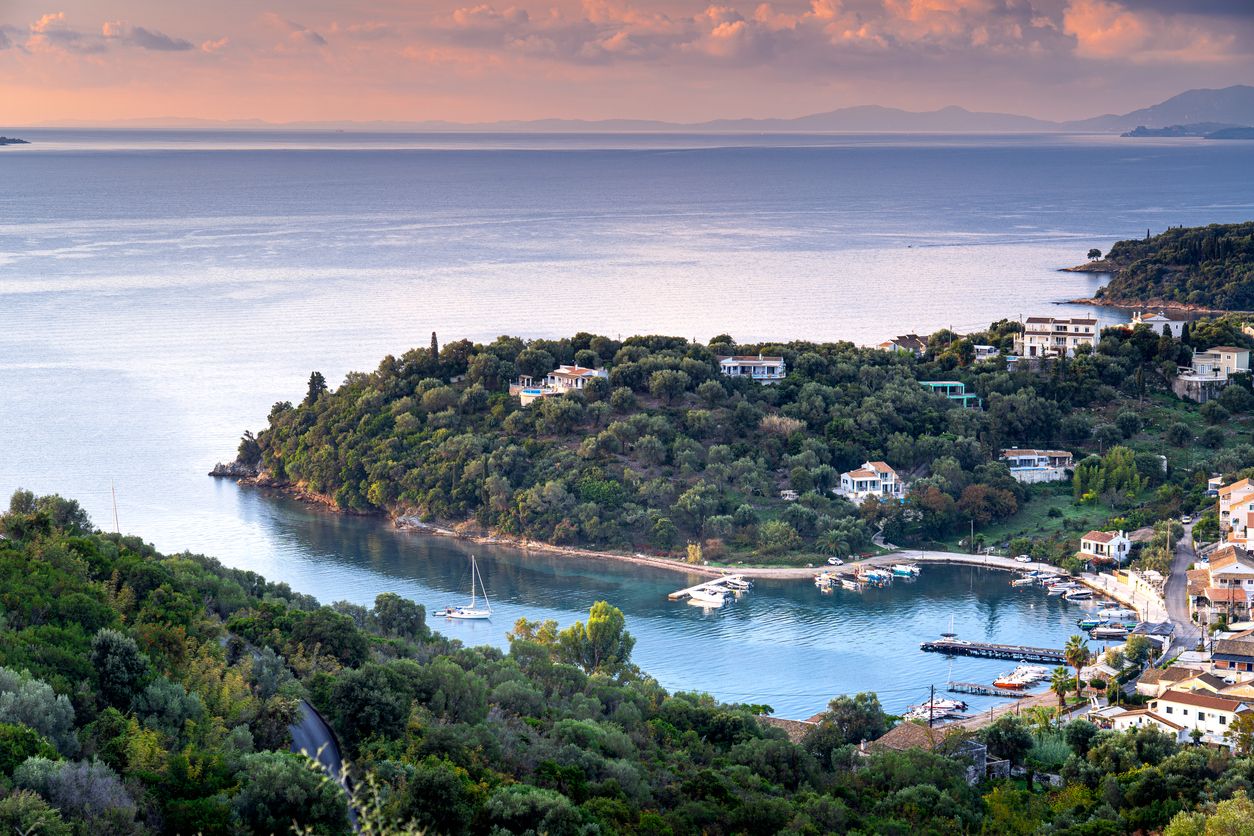
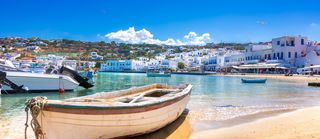
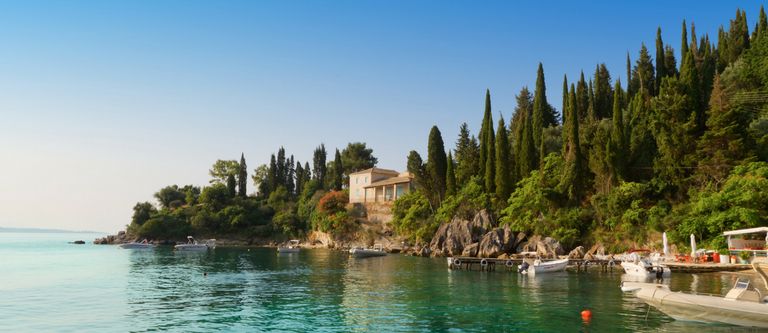
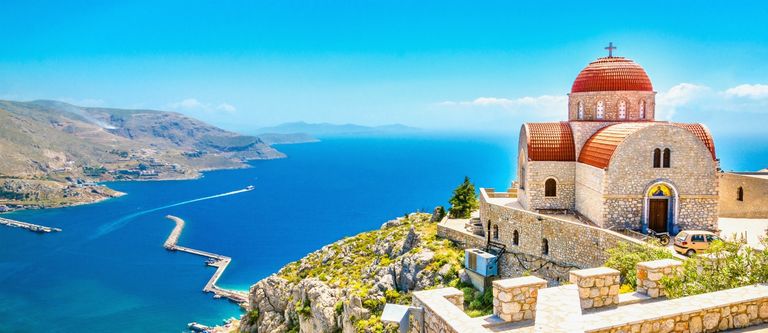
In the turquoise Ionian, just off the coast of Albania, lies Greece’s greenest island. Stand at the north-west of the peninsula at Paleokastritsa, and you will see the whole landscape open before you. Lush, green hills rise from every angle, their cypress trees fringing the rocky bay out into endless azure, the old monastery above you.
Anyone who has been to Corfu will attest to the compelling quality of the island, the magic of its verdant nature and labyrinthine alleys.
Though it is not especially large – covering just under 600 square kilometres – Corfu manages to pack in ancient ruins, Venetian architecture, mountain villages, centuries-old churches and some of the world’s most beautiful beaches, making the prospect of a seven-day trip already feel somewhat predicated on compromise.
So, before you sacrifice the Corfu Trail for the Old Fortress, or opt for a bougatsa from the same zacharoplasteío every morning, read on for our guide to seven days in Corfu – as well as our pick of villas across Greece’s greenest island.
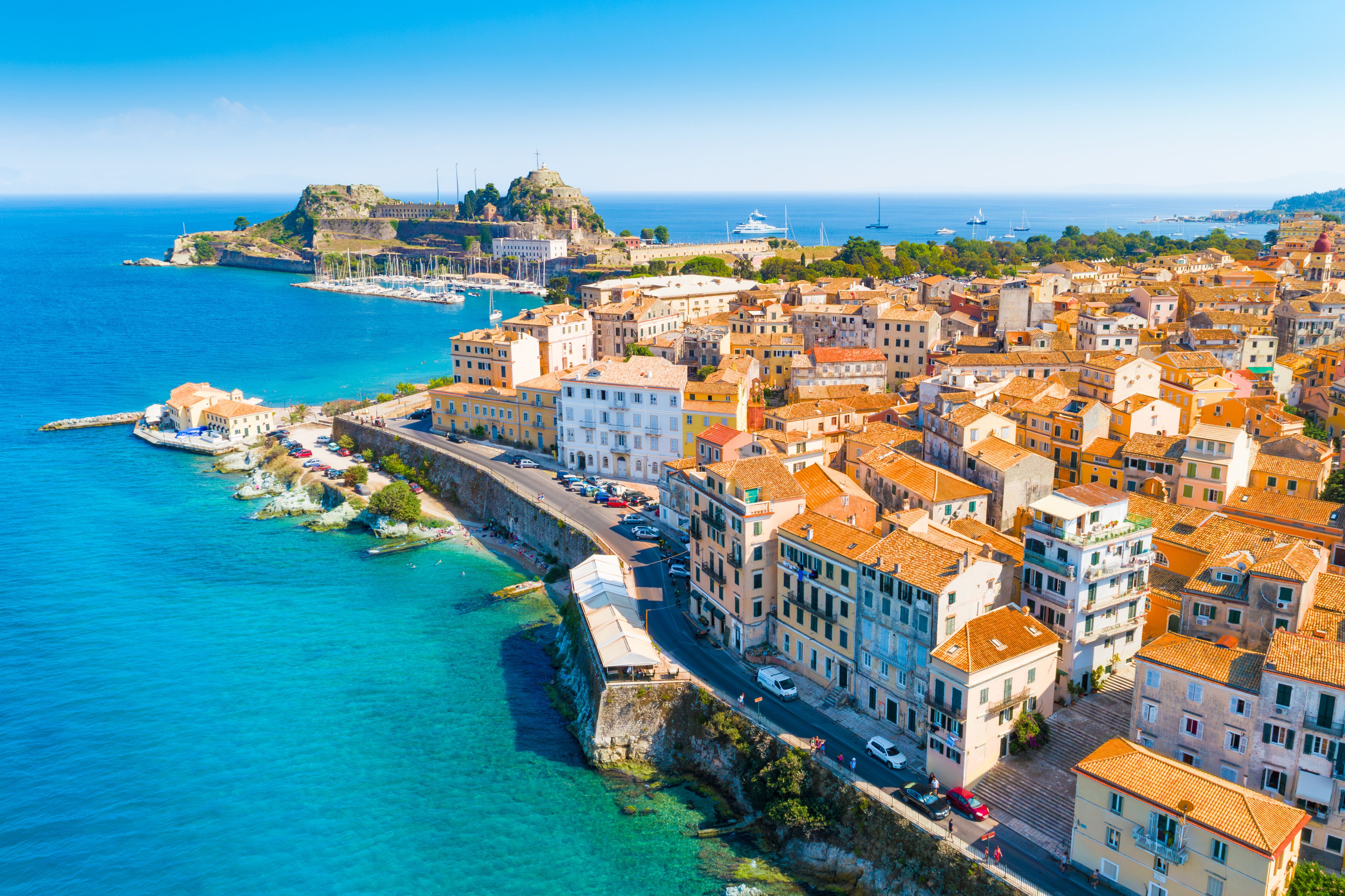
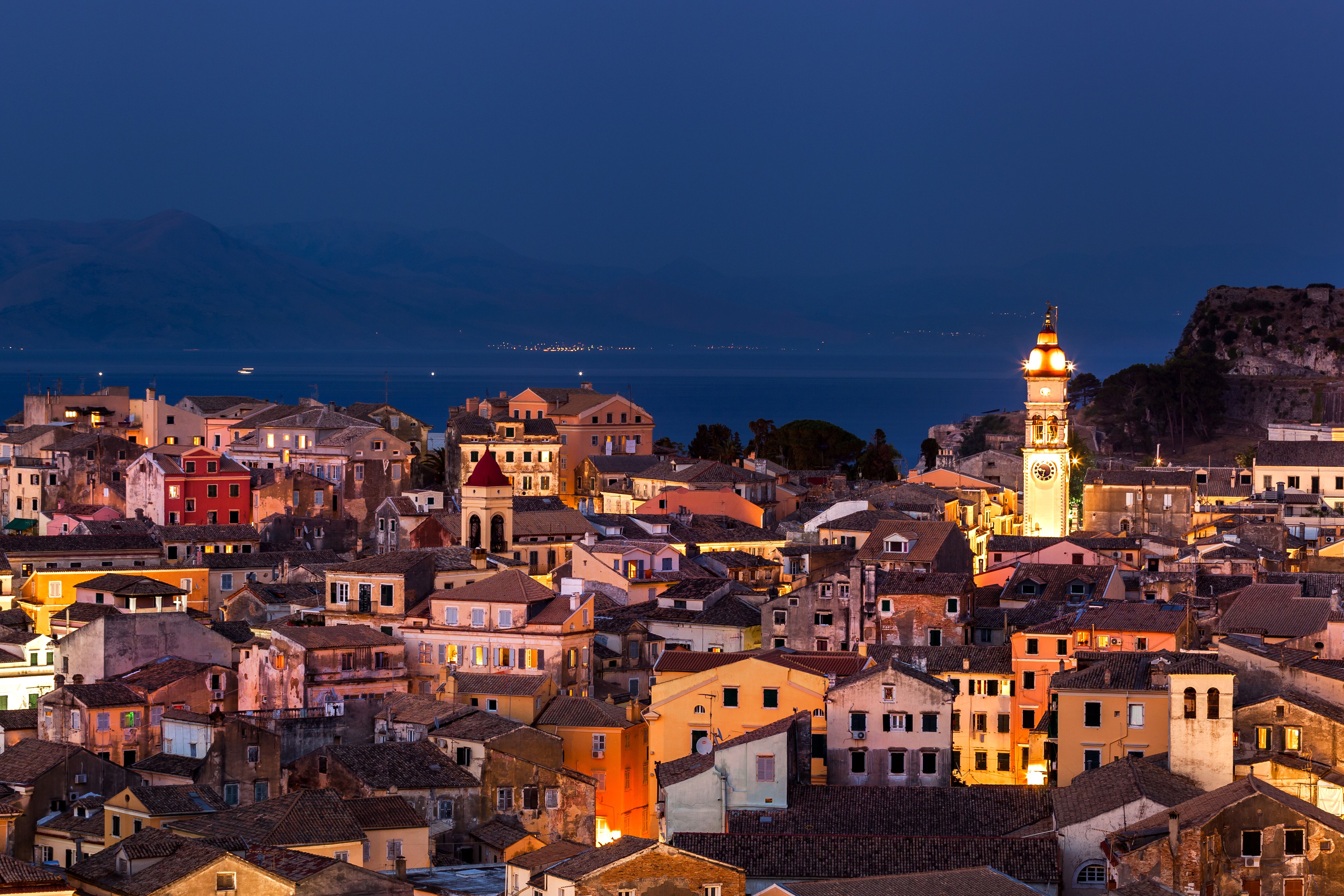
Take a morning stroll through Corfu Town, where tall Venetian houses rise through a grand, light-washed centre, strung together by kantounia: labyrinthine lanes paved with cobbles. One of the best-preserved historic centres in Greece, the island’s capital is a UNESCO World Heritage Site; its inheritance of four centuries of Venetian rule still carefully protected.
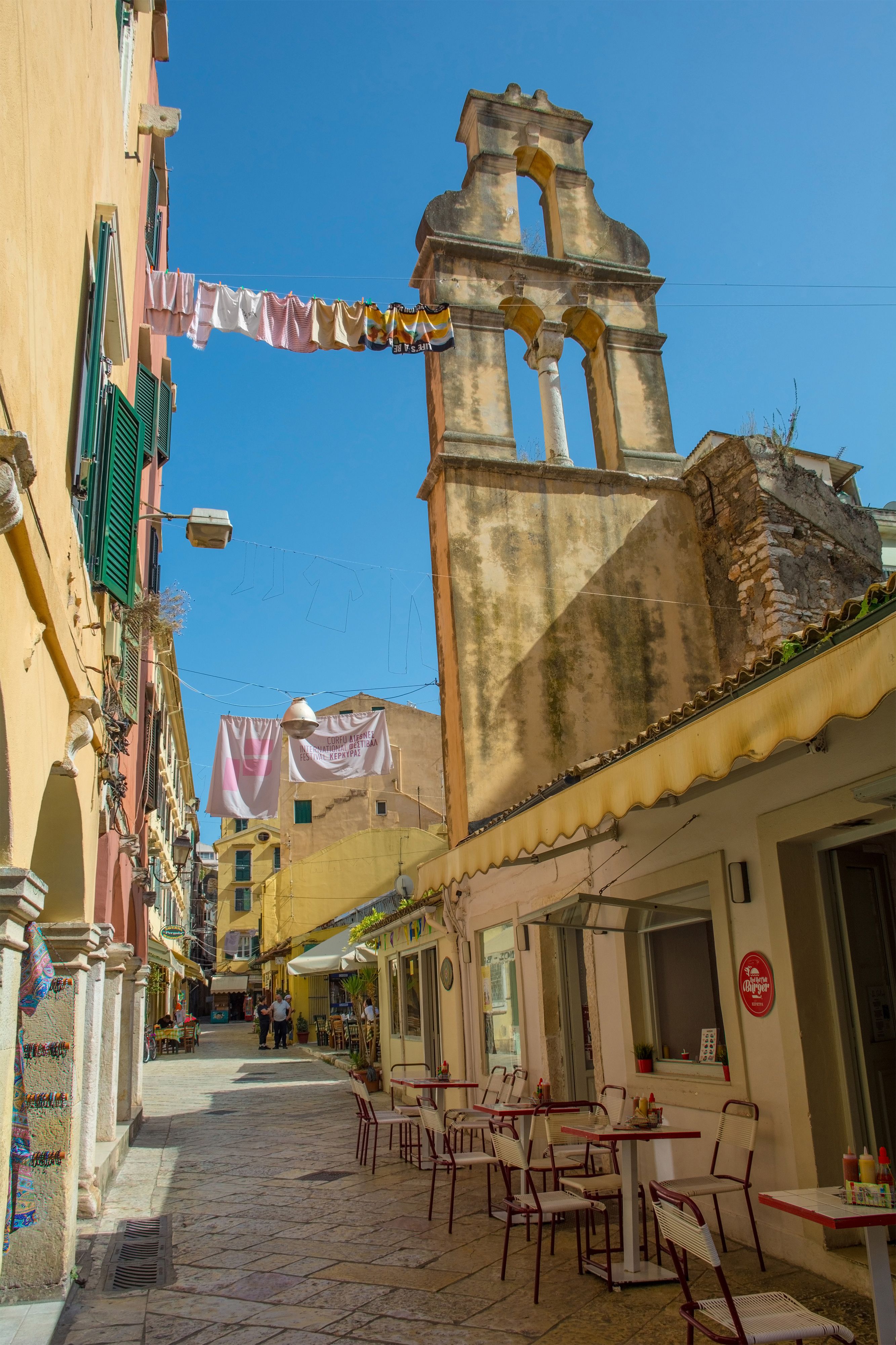
If you are to know Old Corfu, you may as well start from the beginning. Head for Campiello, the oldest quarter of the town, where the pleasure is as much in the architecture as in the centuries of footsteps you follow. Dip through the kantounia beneath archways, climb the steep stone steps and squeeze between houses; look for all the life above you: the washing lines hanging between walls, the little shrines tucked into them. Stop for a freddo and a bougatsa – Greek iced coffee and a pastry made with layers of crunchy, buttery filo and soft, silky folds of sweet custard.
Campiello
From Campiello, make your way south towards the Spianada, the largest square in Greece. After a morning enclosed by Campiello’s tall houses, the streets suddenly fall away into an enormous green esplanade, laid out beneath the walls of the Old Fortress. Walk beneath the Liston’s elegant arcades, stop at the Maitland Rotunda, and look out for the most conspicuously British mark left on the town: a cricket pitch, where games have been played since the days of the British Protectorate.
Afternoon
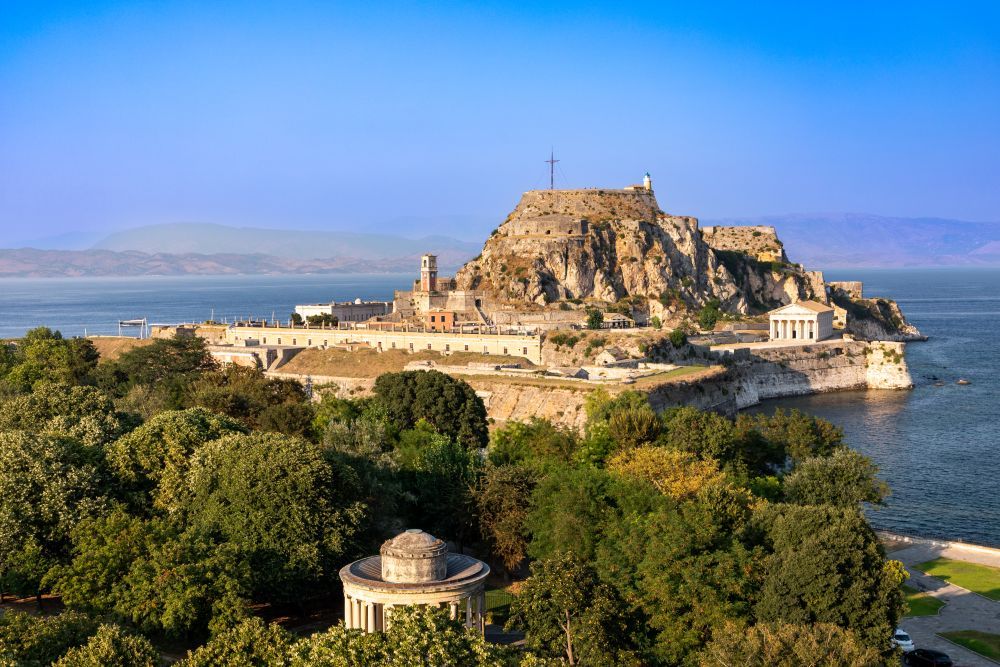
The Old Fortress above Corfu Town
At the eastern edge of the Spianada, cross the bridge over the contrafossa, the seawater moat separating Corfu Town from the Palio Frourio, or Old Fortress. The citadel occupies the rocky promontory that gave the town its earliest form, its immense bastions rising above the Ionian.
Allow a couple of hours here, but save some energy for the climb to the lighthouse at the top. The final ascent is steep and exposed in places, but the view is worth the climb. After hours among its passageways, narrow lanes and open spaces, it is a surprise to see just how compact Corfu Town is from the top – the Spianada spread out below, Campiello compressed into rooftops and bell towers, the sharp drop from the fortress into the Ionian. Look east across the Ionian on a clear day and see the mountains of Albania on the horizon.
Evening
Corfu Town at night. Kerkyra, Greece, Corfu island
As evening settles over Campiello, return to the kantounia where you began. This time, follow them to the Venetian Well in Kremasti Square, a restaurant named for the old stone well in the square. Order the pastitsada – one of Corfu’s great Venetian inheritances – thick pasta glossed with a richly spiced tomato sauce, the slow-cooked meat fragrant with cinnamon, clove, pepper and wine.
If you eat as the Greeks do, it will be late by the time you leave the taverna. The light will have gone, but the balconies will be glowing above. The bell towers will be quiet, and the stone will hold the heat of the day. And though it is quiet, history will still be breathing. The little shrines and the washing lines above them. The lighthouse and all its spectators, Campiello so small beneath it.
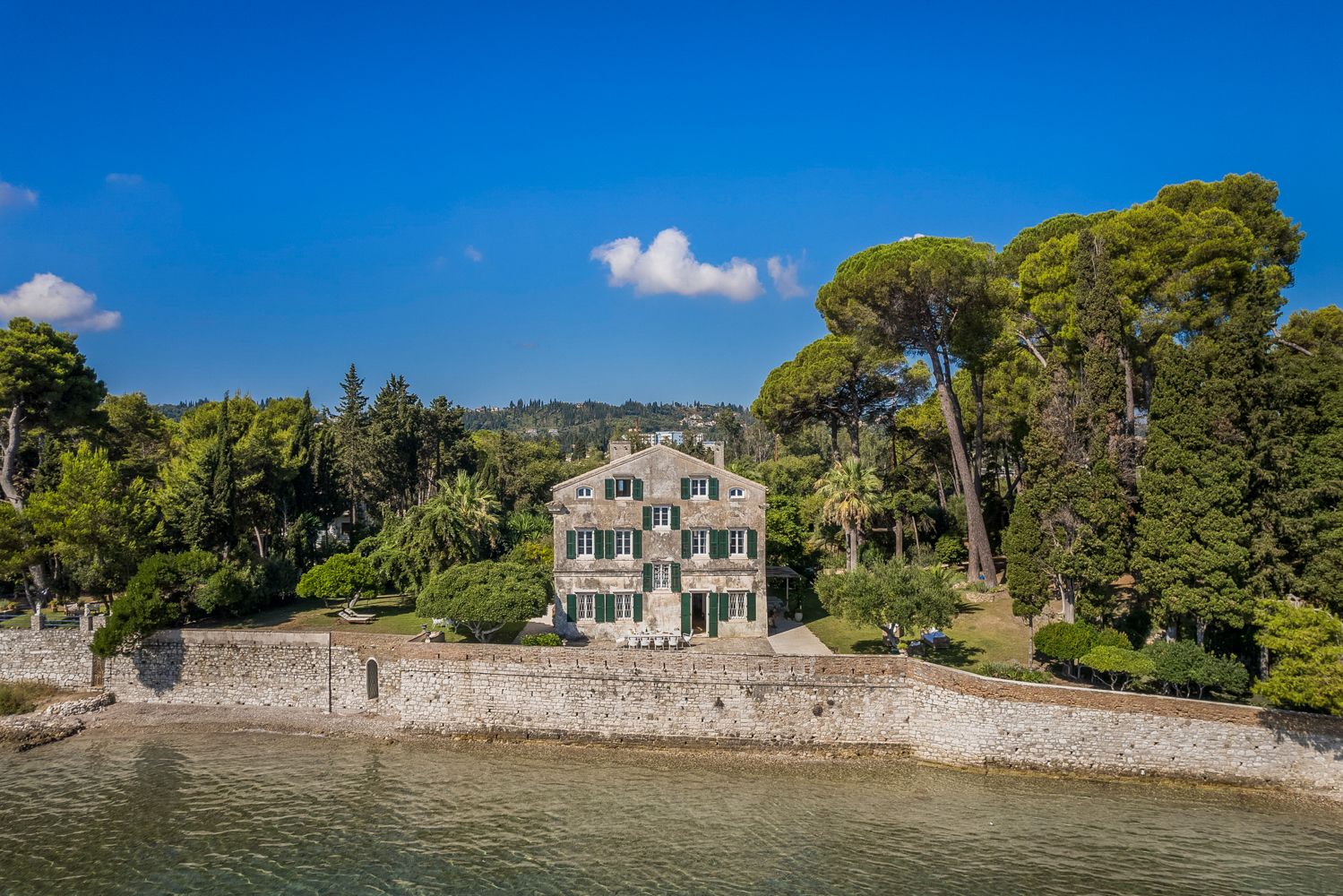
Where to stay near Corfu Town: Villa Iridos
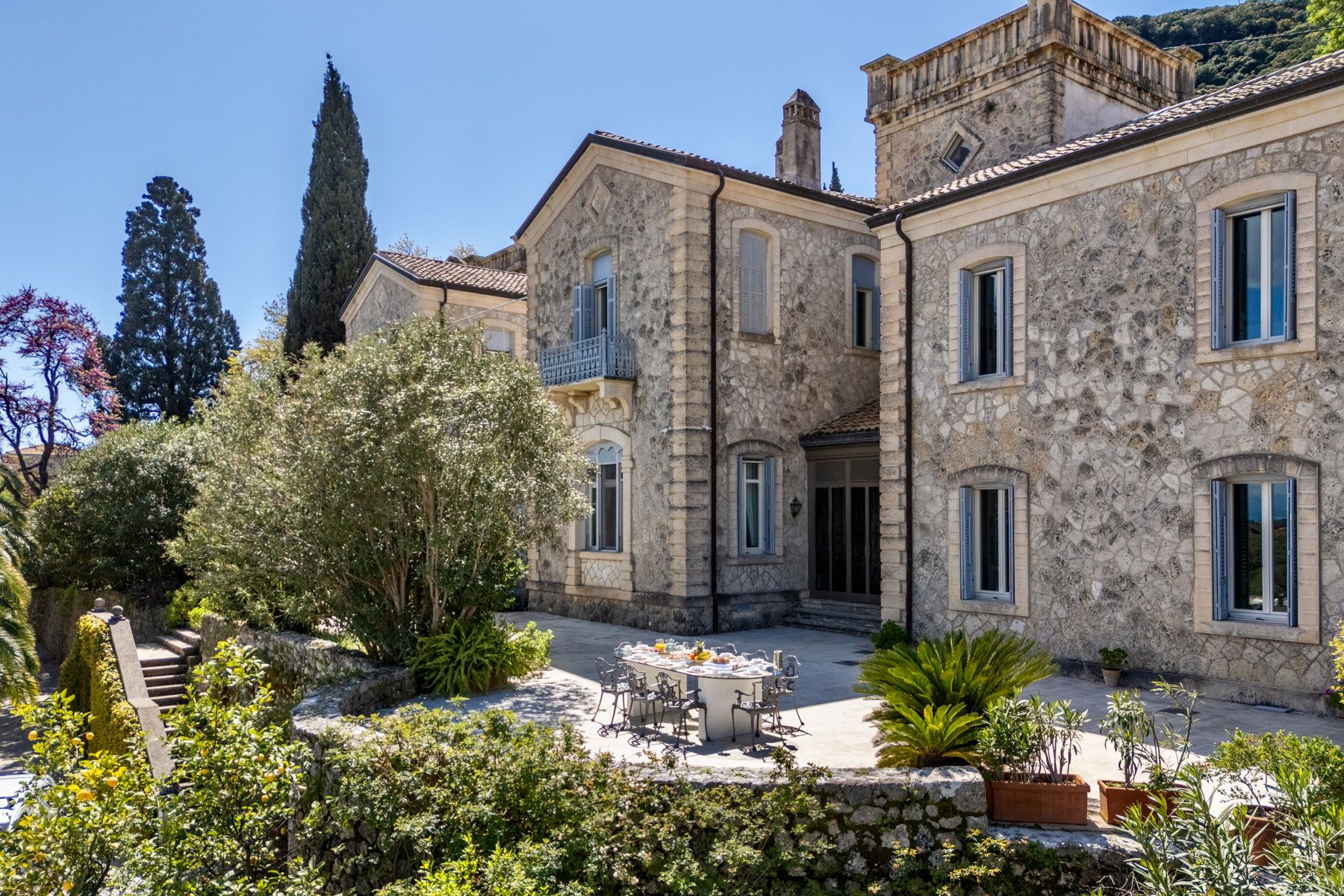
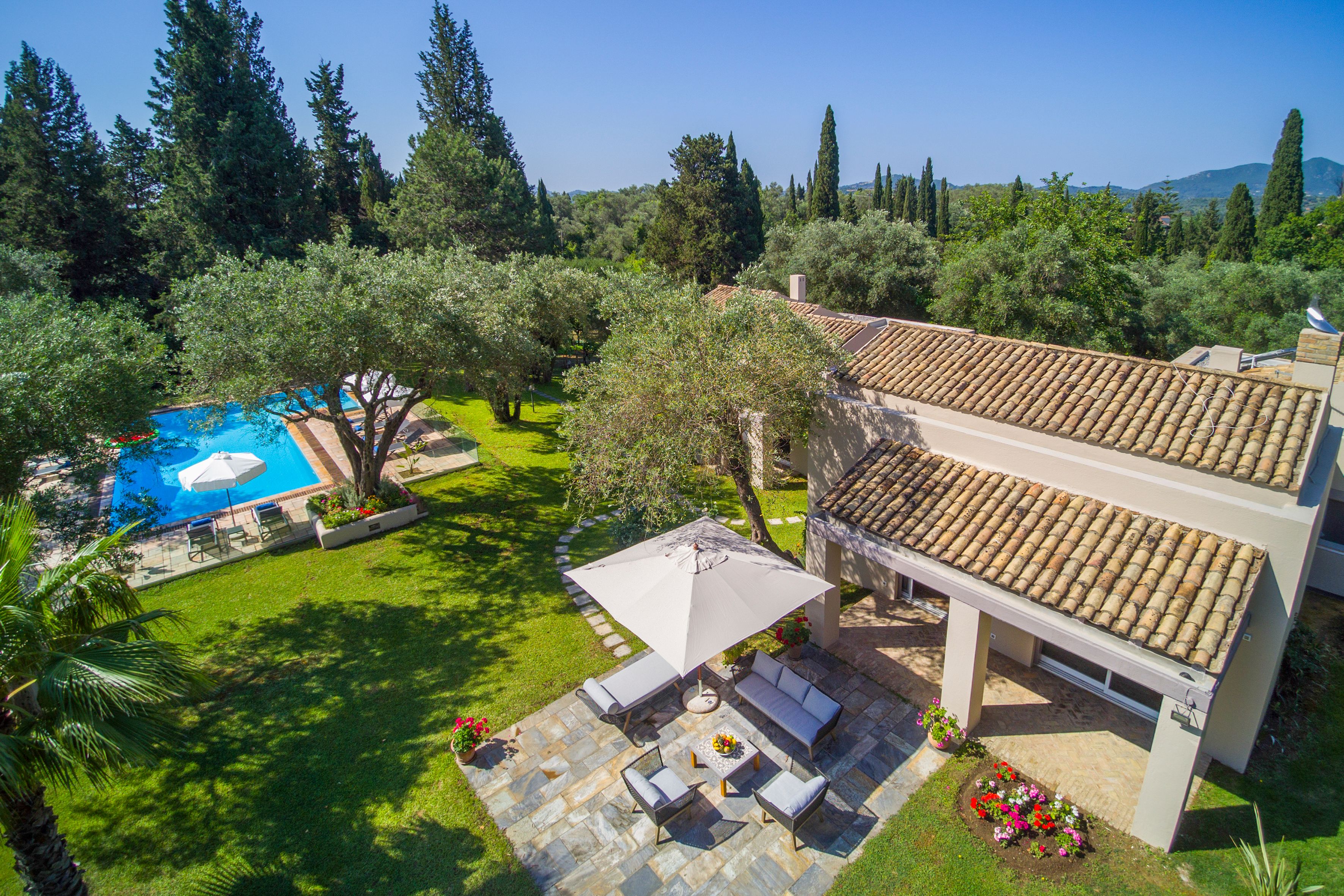
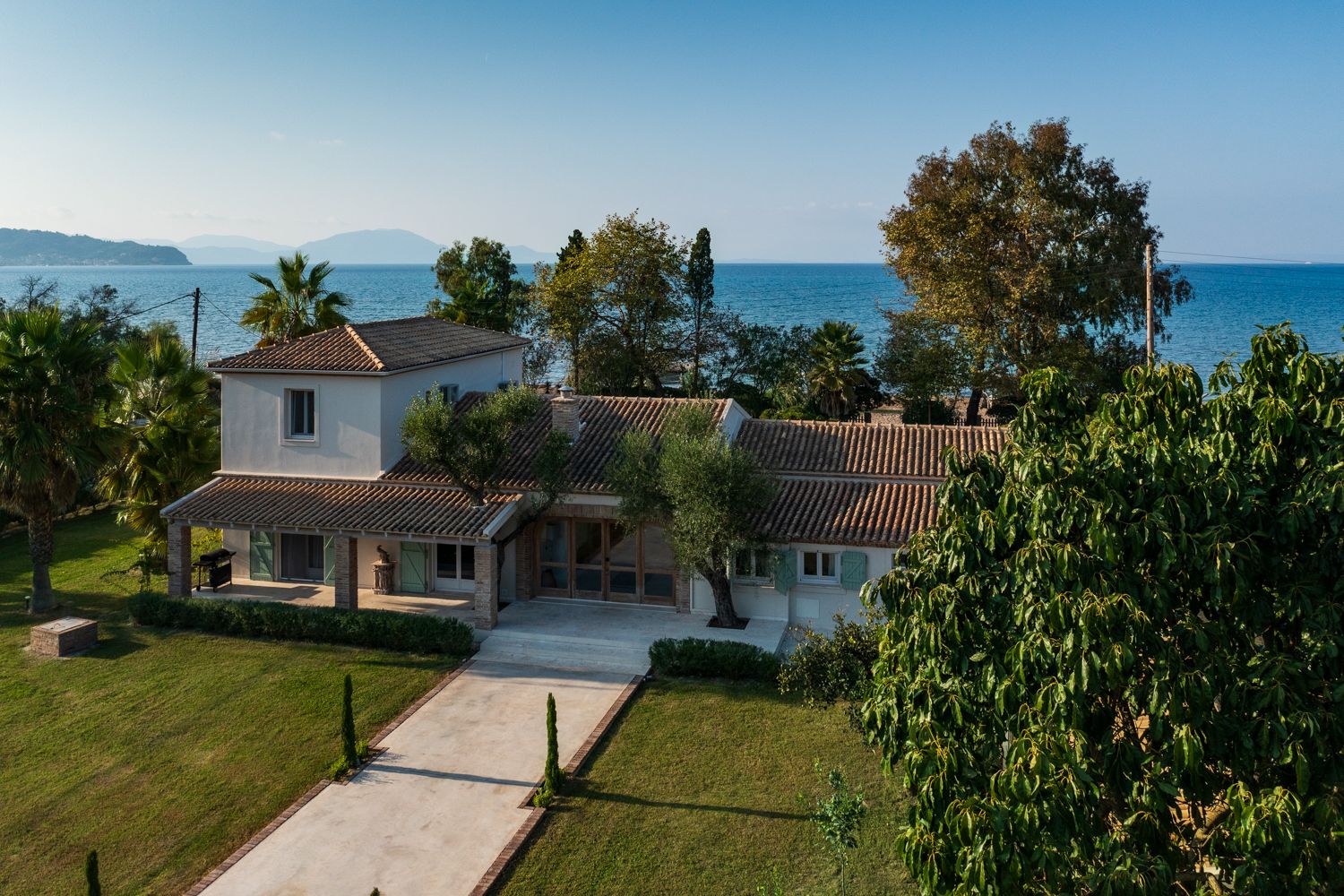
Corfu’s history need not end when you leave the Old Town. On the island’s east coast near Gouvia, just 7.4 kilometres away, Villa Iridos occupies an 18th-century estate where there are original stone walls, high beamed ceilings, and antique heirlooms in the rooms. The grandeur feels lived in, softened by contemporary furnishings and sea views from each of its five bedrooms. Outside, two acres of olive trees, citrus and lavender lead towards a palm-shaded pool and a near-private beach.
Day 2: Paleokastritsa and the West Coast
Morning
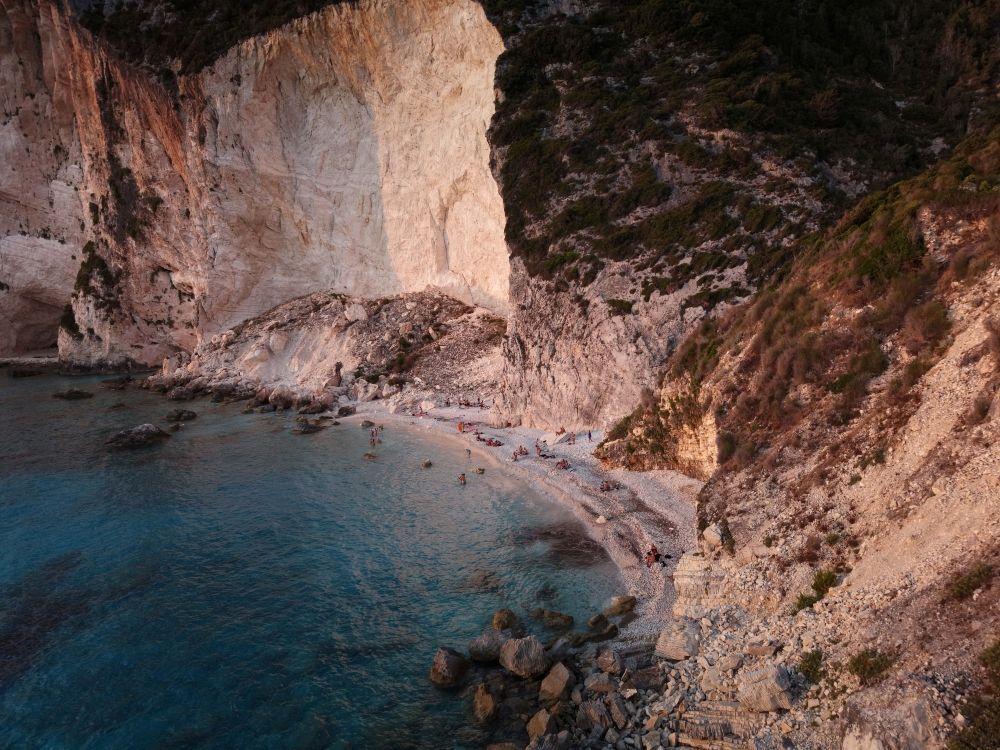
Chomi beach
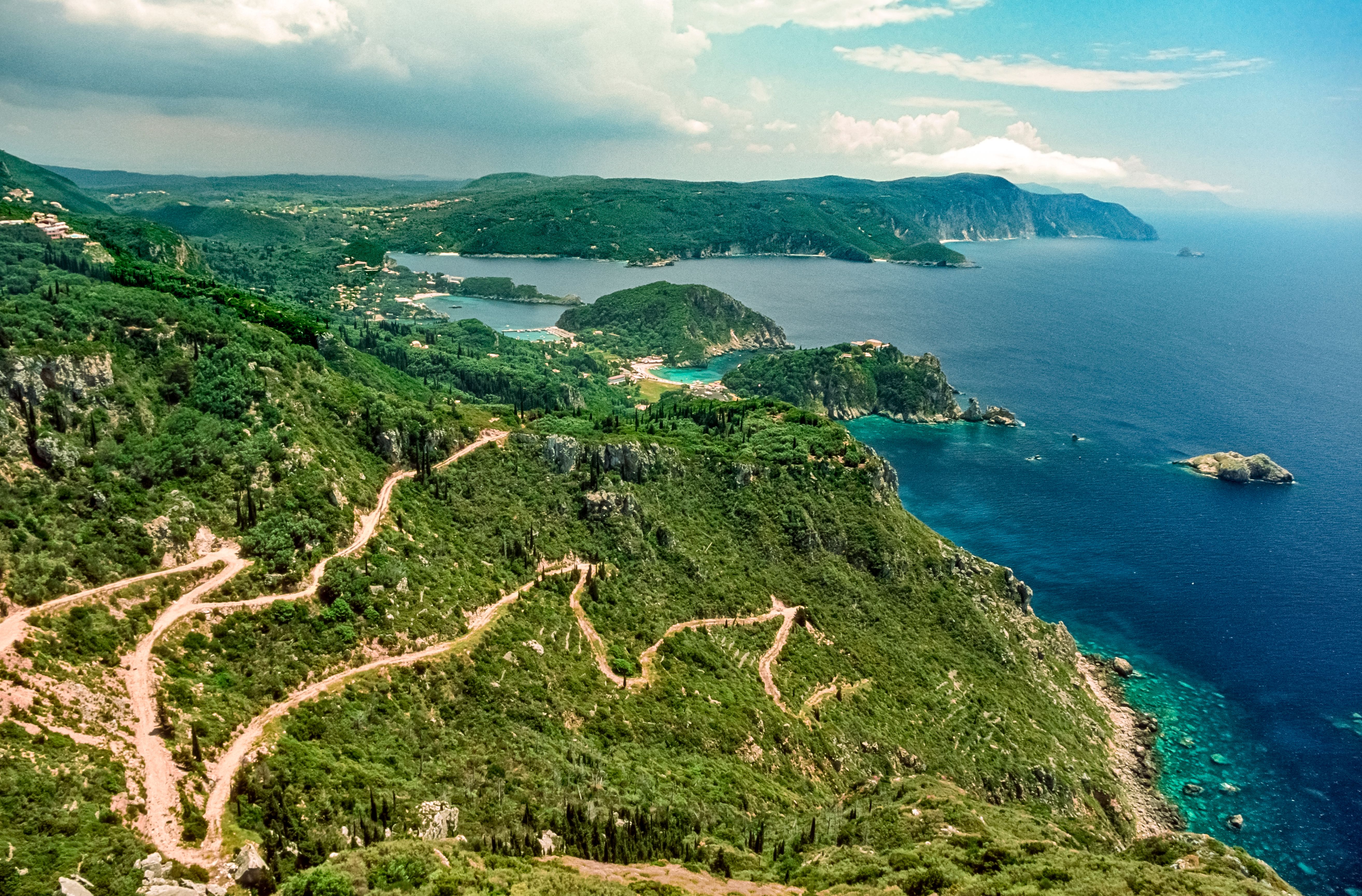
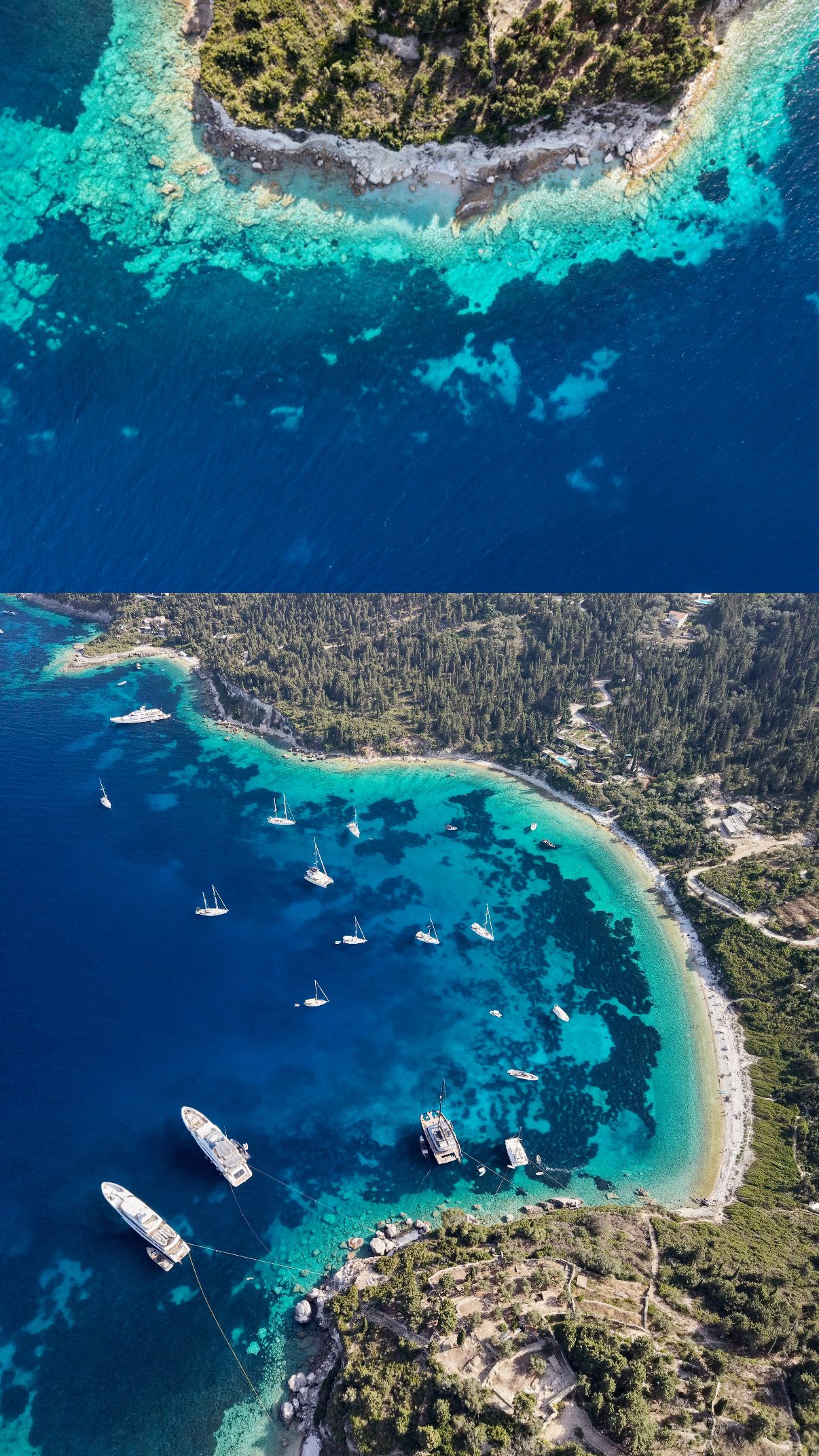
On your second morning, leave Corfu Town’s stone and stucco behind and drive to the greener west. At Paleokastritsa, Corfu’s famous cypress-covered hills tumble into six rocky coves, the water shifting between a heady mix of turquoise, emerald and deep Ionian blue. Travellers have been coming to admire this landscape since the 19th century, and from the road above it, it’s not hard to see why.
Begin at the Monastery of the Virgin of Paleokastritsa, perched on the northern promontory above Agios Spyridon Bay. Wander through its whitewashed courtyards and beneath the bougainvillea, then look over the walls to the coves below. From up here, boats appear no more than flecks of white on the water. Soon enough, you will be in one of them.
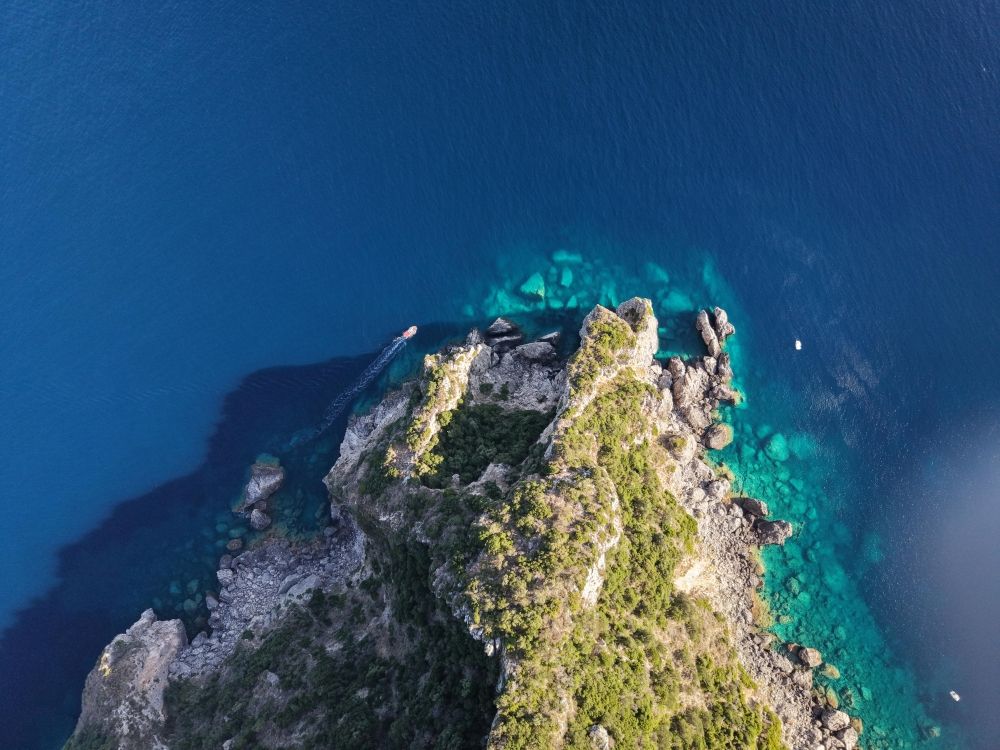
Make your way down to Alipa harbour and hire a small boat for the rest of the morning. The coastline is best seen from the sea, where sheer rock faces split into grottoes and beaches disappear beneath cliffs. Chomi, a white-pebbled cove inaccessible by road, is one worth steering towards. Drop anchor when the water becomes irresistible and swim back towards the rocks, the sea clear enough to watch shadows fall beneath you.
Come ashore for a late lunch by the water, and stay there for a while. There is no great rush to leave Paleokastritsa. The afternoon’s only appointment has been standing above you all morning.
Afternoon
Angelokastro
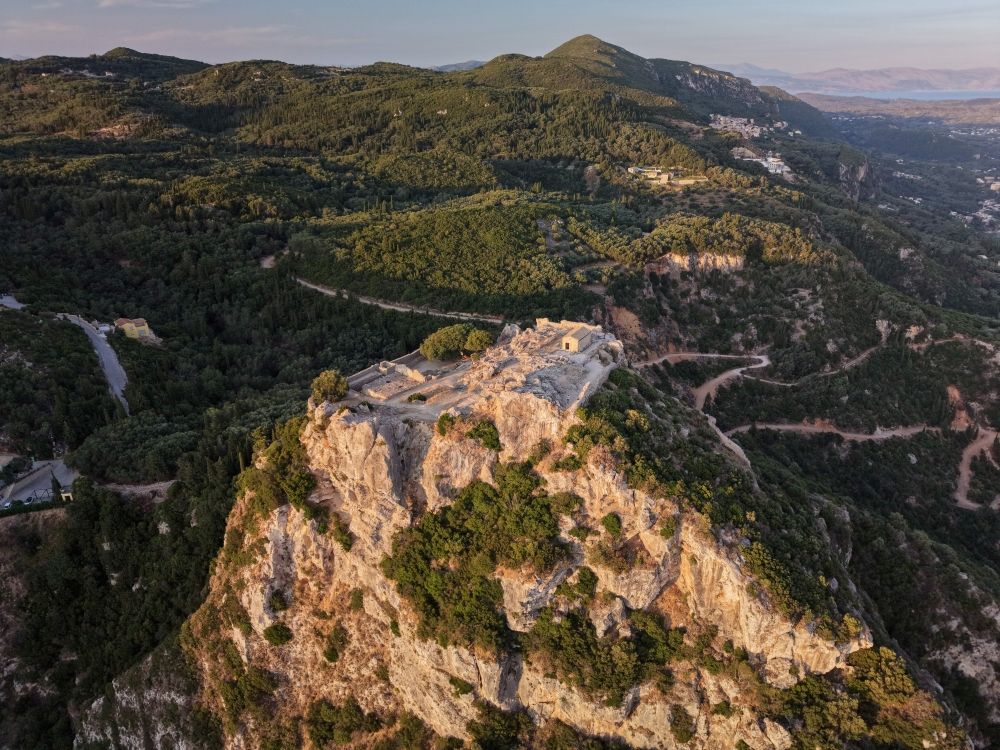
When the sun’s heat has dropped, head into the hills towards Krini and Angelokastro, the great Byzantine fortress balanced on a precipice above Corfu’s north-western coast. Its position is strategic. From the top, watchmen could see as far as the southern Adriatic, scanning the horizon for threats approaching by sea.
The final approach is on foot. And when you reach the top, the whole of Paleokastritsa appears beneath you; the coves you sailed that morning mere blue incisions in the green coastline.
On the way back down, pass through Lakones, the old hillside village above Paleokastritsa. The village is celebrated for its views over the west coast, particularly towards sunset, when the cliffs darken and the sea holds the last of the light.
Evening
North-west Corfu, around the Paleokastritsa coast
By evening, follow the road inland towards Doukades and find Taverna Elizabeth, a family-run taverna that has been cooking here since 1960. Order the sofrito – tender veal cooked slowly with garlic, parsley and white wine, and a carafe of local wine.
Tomorrow will put you properly on foot. But for now, there is only the road back through the cypresses and the darkening hills.
Where to stay near Paleokastritsa: Villa Latona
Villa Latona is a historic residence that sits among 7,000 square metres of palms, pines and cypresses, with terraces looking across the surrounding parkland, valley and village. Inside, a six-metre-high entrance hall gives the house its grandeur, while one of the upstairs suites occupies what was once an artist’s studio. Liapades Beach is just 3.9 kilometres away, and Paleokastritsa close beyond.
Day 3: The west coast & Corfu Trail
Morning
The Corfu Trail
You could spend seven days in Corfu simply walking the Corfu Trail, which runs almost the full length of the island, from Kavos in the south to Agios Spyridon Beach in the north. For your third day, though, we recommend taking on only a small stretch of it.
Begin around Sinarades, an old village tucked into the hills above Agios Gordios, and pick up the Trail’s red-and-yellow waymarks. Soon the houses thin out and the path slips beneath olive trees, following old tracks that once connected villages long before anyone came for the pleasure of walking them.
Eventually, the trees fall away at Aerostato, a natural balcony high above the west coast. Agios Gordios lies far below, pressed between green hills and a vast sheet of blue. From here, the Trail disappears beneath the olives once more as it continues towards Pelekas.
The Trail here is not especially technical, but there are some steady climbs, so proper shoes and plenty of water are sensible. In summer, set out early, before the heat begins to build.
Afternoon
Kaiser’s Throne
Perched high on Corfu’s western side, Pelekas clings dramatically to a verdant hillside, its old houses stacked along the slope above great folds of olive and cypress. It is hard to quite grasp the height until you are there; the village balanced delicately above the wooded valleys, the Ionian opening out so far below.
Stop in Pelekas for lunch at Alexandros, a family-run restaurant whose roots stretch back more than a century, when the family first opened a bakery and pantopoleio here in 1924. Today, tables spill onto a terrace overlooking the sea, with home-cooked Corfiot dishes such as pastitsada, sofrito and bourdeto on the menu.
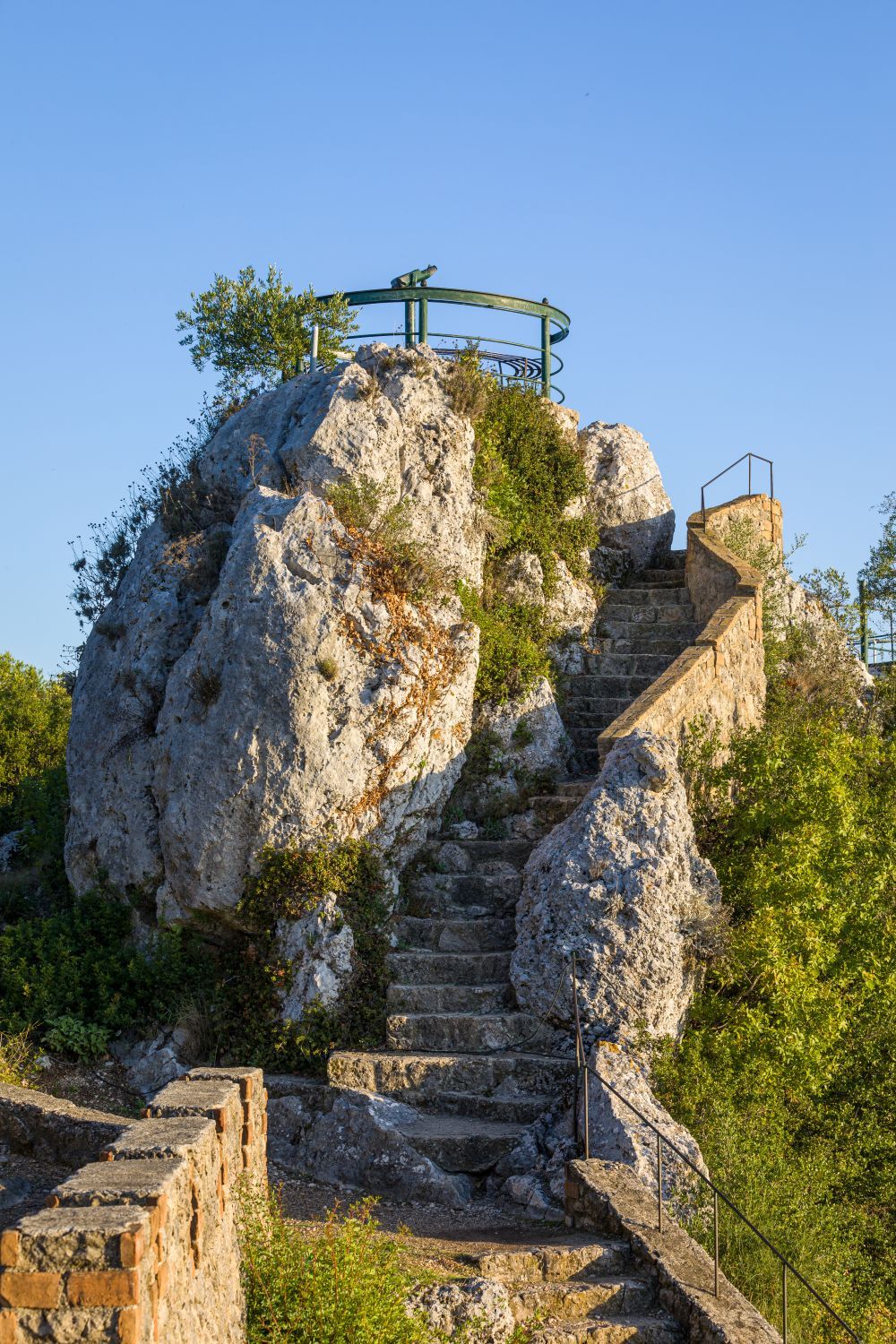
After lunch, start the incline above the village until you see a rocky lookout with a view of almost the whole island – its green interior and great wooded folds, both coasts on either end. This was the view that so captivated Kaiser Wilhelm II during the summers he spent at the Achilleion Palace in the years before the First World War. Pelekas became one of his favourite excursions, particularly towards sunset, and the viewpoint still carries his name: Kaiser’s Throne.
When you are ready to leave, drop south towards Agios Gordios. After a morning on foot and an afternoon above the island, its long sandy beach is a welcome change of pace. Swim, stretch out on the sand or, if there is still energy to spare, hire a paddleboard or canoe and head back onto the water.
Evening
View at the bay of Agios Gordios
From Agios Gordios, continue south to Pentati, a small fishing village set above its little harbour. This part of the coast feels more intimate after the drama of Pelekas, its narrow roads slipping through dense olive country, houses set close together and, offshore, the dark shape of Ortholithi rising from the water. Pentati has faced the sea for centuries, though the old village grew higher up the slope, safely beyond the reach of pirates.
By early evening, make your way down towards the harbour and find somewhere for dinner. Fishing is still part of daily life here, with the local catch supplying the local tavernas. Stay until the last light leaves, then take the winding road home through the olives.
Where to stay near the west coast: Villa Certosa
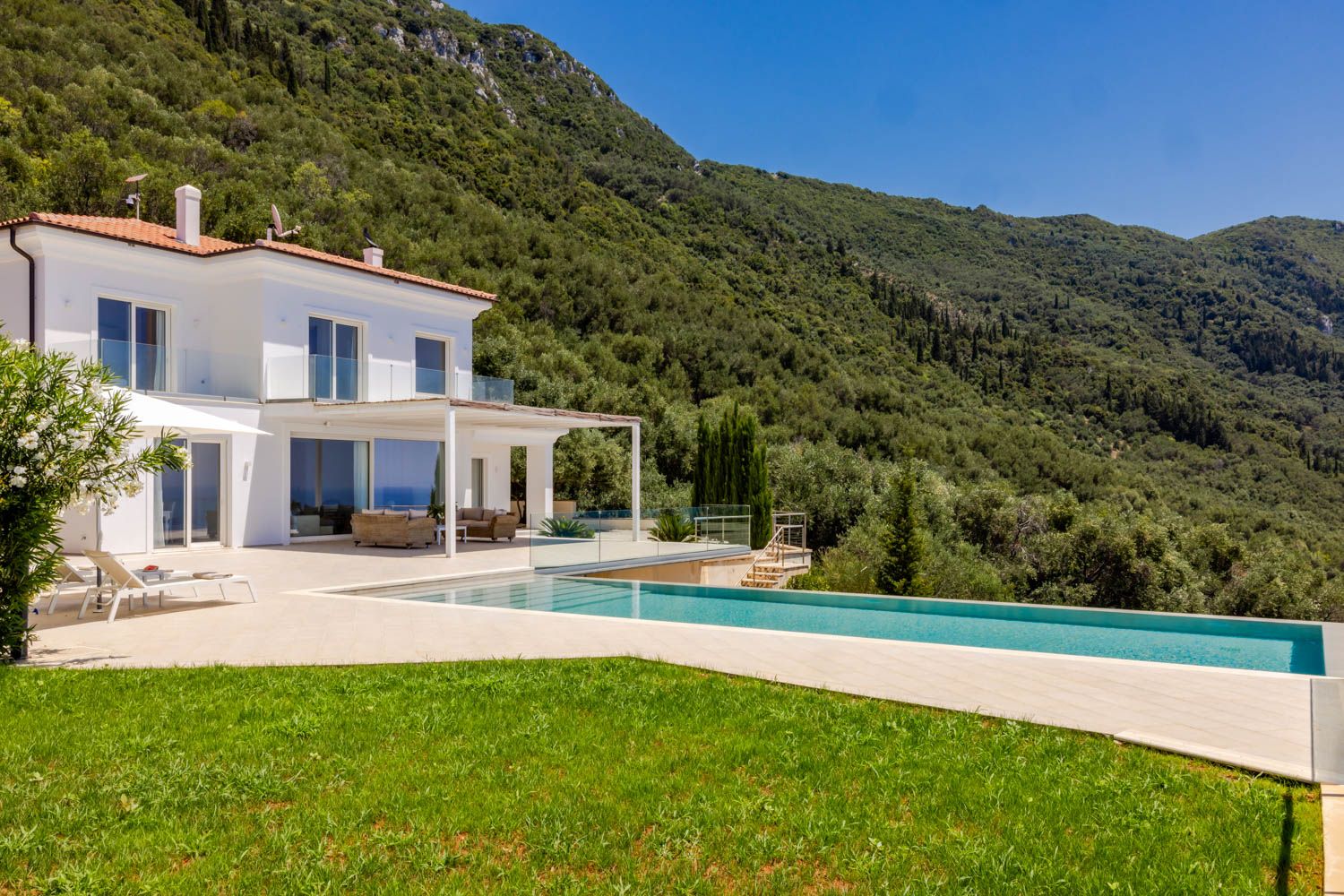
Villa Certosa sits high above the fishing village, with the Ionian spread out beneath its infinity pool. After a day spent walking through the hills, it is exactly the sort of place you want to come back to, with three calm, contemporary bedrooms, plenty of space outside and a terrace looking out towards the sunset.
Day 4: Canal d’Amour & the Diapontia Islands
Morning
Canal D’Amour
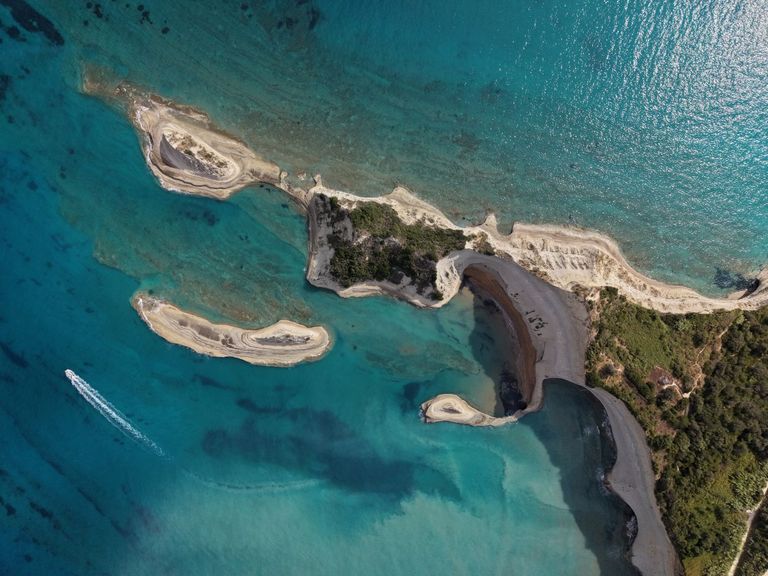
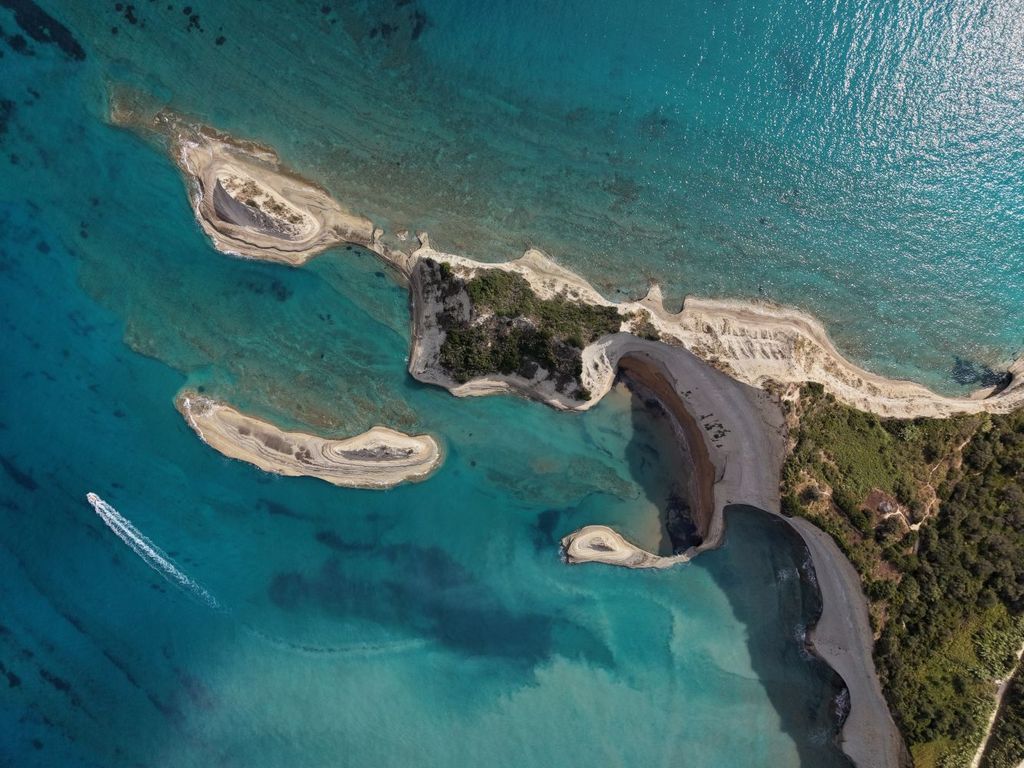
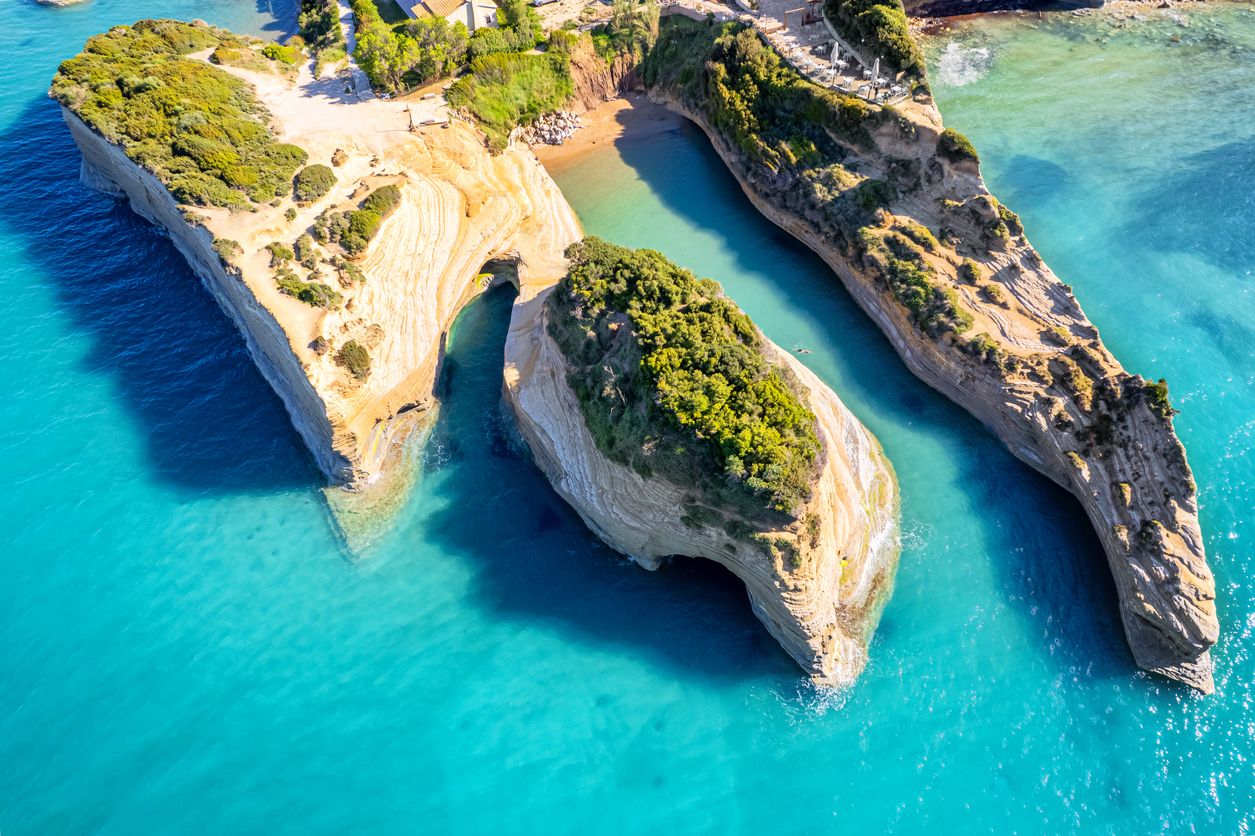
Get to Canal d’Amour before Sidari begins to stir. Its name means ‘Channel of Love’, but the real drama is geological; wind and sea have carved the soft sandstone into narrow inlets, sculpted ledges and freestanding formations, with clear water threading between them. It is one of Corfu’s best-known beaches, so an early swim makes a difference.
Afterwards, stop for a coffee, dry off in the sun, then continue west along the coast to Agios Stefanos Avliotes, where boats depart for the Diapontia Islands.
Afternoon
The south coastline in Othonoi, Greece, one of the Diapontia Islands
The Diapontia are Corfu’s small offshore neighbours, Othonoi, Erikousa and Mathraki, with little islets and astonishingly clear water.
Exactly where you go depends on the day you sail. Current excursions from Agios Stefanos split the archipelago into different routes rather than racing around all three islands in one go. One heads towards Erikousa, with swimming at Brakini Beach and a return past Cape Drastis. Another goes via Mathraki and Diaplo to Othonoi, stopping at the white cliffs of Aspri Ammos and Calypso’s Cave.
Choose the sailing that works with your dates and give it the afternoon. There will be time for swimming, a beach stop and long stretches on deck with little between you and Italy but the Ionian blue. Schedules are weather-dependent, particularly this far north-west, so book ahead in summer and reconfirm the sailing before setting out.
Evening
Back on Corfu, point the car south-east and let the rest of the day be simple. After the open water and far-flung Diapontia Islands, the drive back along the island’s tree-lined roads feels like a return to shelter, solid ground welcome beneath you again. Stop for dinner along the way, or head straight towards the east coast and leave the evening plans loose.
Where to stay near northern Corfu: Villa Kontokali
Villa Kontokali is a contemporary four-bedroom retreat tucked into green gardens above the coast, with sea views appearing between the trees and a pool made for doing very little beside it.
If you would rather not head out again for dinner, arrange a chef with concierge and stay in. The kitchen can also be stocked ahead of arrival, leaving the evening to the garden, something cold to drink and an early night before tomorrow’s drive north-east.
Day 5: Mount Pantokrator & the north-east
Morning
Mount Pantokrator, Corfu’s highest mountain
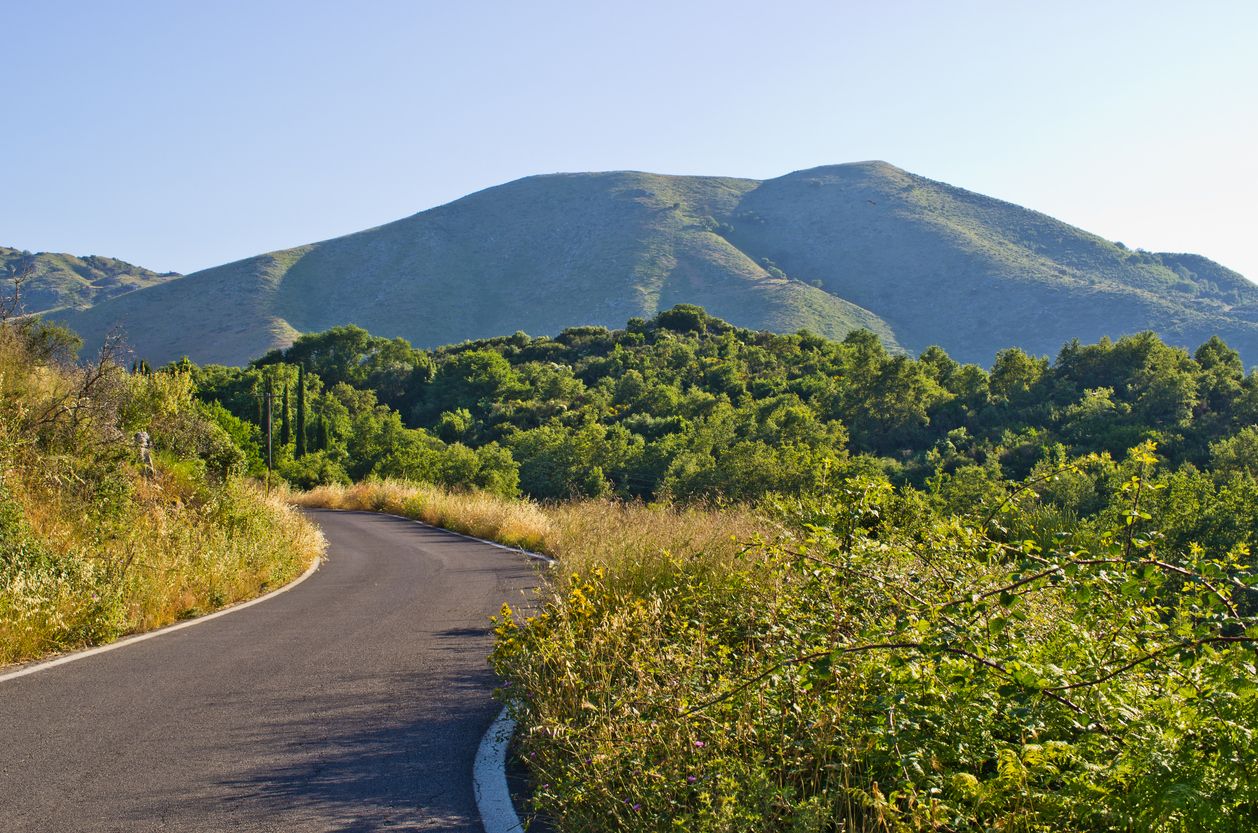
Set out early for Mount Pantokrator, Corfu’s highest point at just over 900 metres. The road narrows as it climbs, winding through the mountains until it reaches the monastery at the summit. From here, northern Corfu opens out below in great green sweeps, with the mountains of Albania appearing close across the water on a clear day.
On the way down, make the short detour to Old Perithia, tucked beneath Pantokrator. One of Corfu’s oldest settlements, it belongs to an older, more rural island with its stone houses, little churches and narrow lanes high in the mountains. Much of the village was abandoned as life shifted towards the coast during the 20th century, but a handful of homes and tavernas have since been restored, giving the place a quiet sense of revival.
Afternoon
Stay for lunch. O Foros is a good choice for traditional Corfiot cooking in the old village, with dishes such as pastitsada, lamb and seasonal vegetables.
Then follow the mountain road down towards the north-east. The change in landscape is part of the pleasure – bare uplands give way to olive groves and cypress trees, with glimpses of the Ionian appearing between them. Make for Avlaki for a swim if you wish, its long, pebbled bay sits between Kassiopi and Agios Stefanos, with clear, deep water and the Albanian mountains a pleasing sight beyond.
Evening
Agios StefanosHarbour
Let the road carry you around to Agios Stefanos, the small north-eastern harbour tucked into the coast beneath the hills. Find a waterside table at Eucalyptus Taverna for grilled fish and seafood by the bay. Or continue a little farther to Kassiopi, where the harbour gives the evening a little more life. Porto Nuovo has been serving this waterfront since 1952 and remains a lovely spot for dinner overlooking the boats and the mountains across the channel.
Where to stay near the north-east mountains: Villa Chic View
For anyone who wants to make the north-east their base, Villa Chic View is a particularly good choice. Set among olive trees above the coast, it looks across the Ionian with the mountains rising behind . Avlaki, Kerasia and Agios Stefanos are all nearby, with Kassiopi around 5km away.
There are seven bedrooms split between the main villa and guest house, plus a heated pool, terraces and an organic vegetable garden. But it is really the setting that earns the name – the uninterrupted sea ahead, mountains behind, and some of Corfu’s best coastline within easy reach.
Day 6: The north-east coast
Morning
Kerasia, on the north-east coast of Corfu
Hire a small boat and set out along the north-east coast. Depending on where you start, you might pass Kassiopi, Avlaki and Kerasia before working south towards Kalami. It was along the north-east coast that Lawrence Durrell lived in the White House beside the water, and the bay still has something of the Corfu he wrote about, the wooded slopes and pale pebbles, boats sitting just offshore.
With waters this incredible, we recommend you just find a cove that looks good, drop anchor and swim.
Afternoon
Continue down the coast towards Agni, a place that feels incredibly satisfying to reach by boat. Its wooden jetties reaching into the bay and tavernas almost at the waterline.
For lunch, Toula’s Seaside is worth making a destination of in its own right. Moor up and settle in for seafood and Corfiot cooking overlooking the bay. Afterwards, carry on towards Barbati, or simply work your way back slowly, stopping wherever the water proves too tempting to pass.
Evening
Bring the boat back before the light fades, when the little harbours begin to empty and the mountains across the strait turn hazy in the last of the sun. Salt still on your skin, keep the evening simple. Find a table close to the water and order grilled fish and a cold bottle of wine.
Where to stay near the north-east coast: Villa Azure
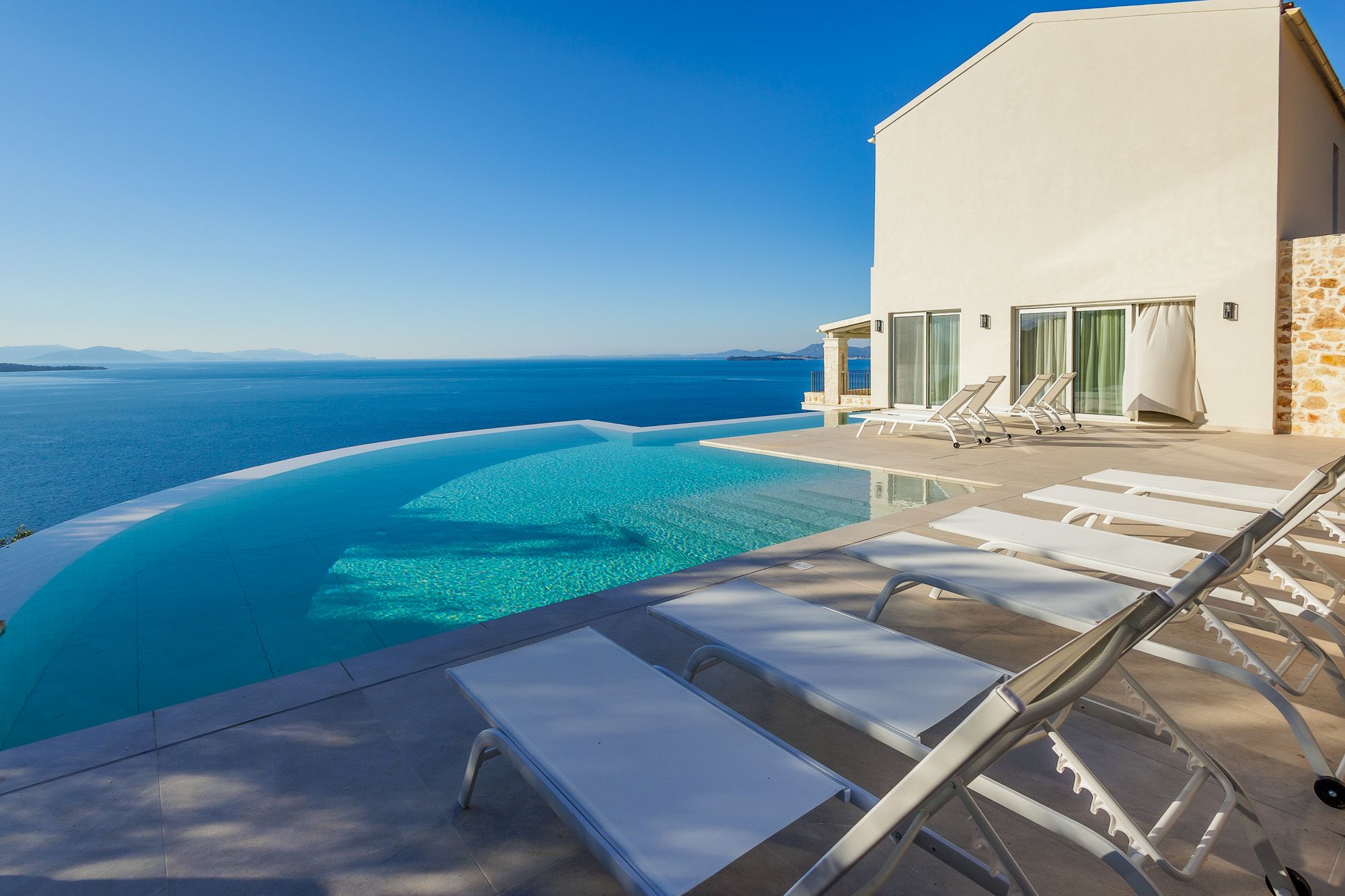
For a base on the north-east coast, Villa Azure sits above Nissaki, where the hillside falls steeply towards the Ionian and much of today’s coastline lies below you.
The five-bedroom villa is spread across four levels, with a separate guest house and private gym, but the real draw is the view. From the terraces, the sea runs all the way to mainland Greece, with Corfu Town visible farther down the coast.
Day 7: South Corfu
Morning
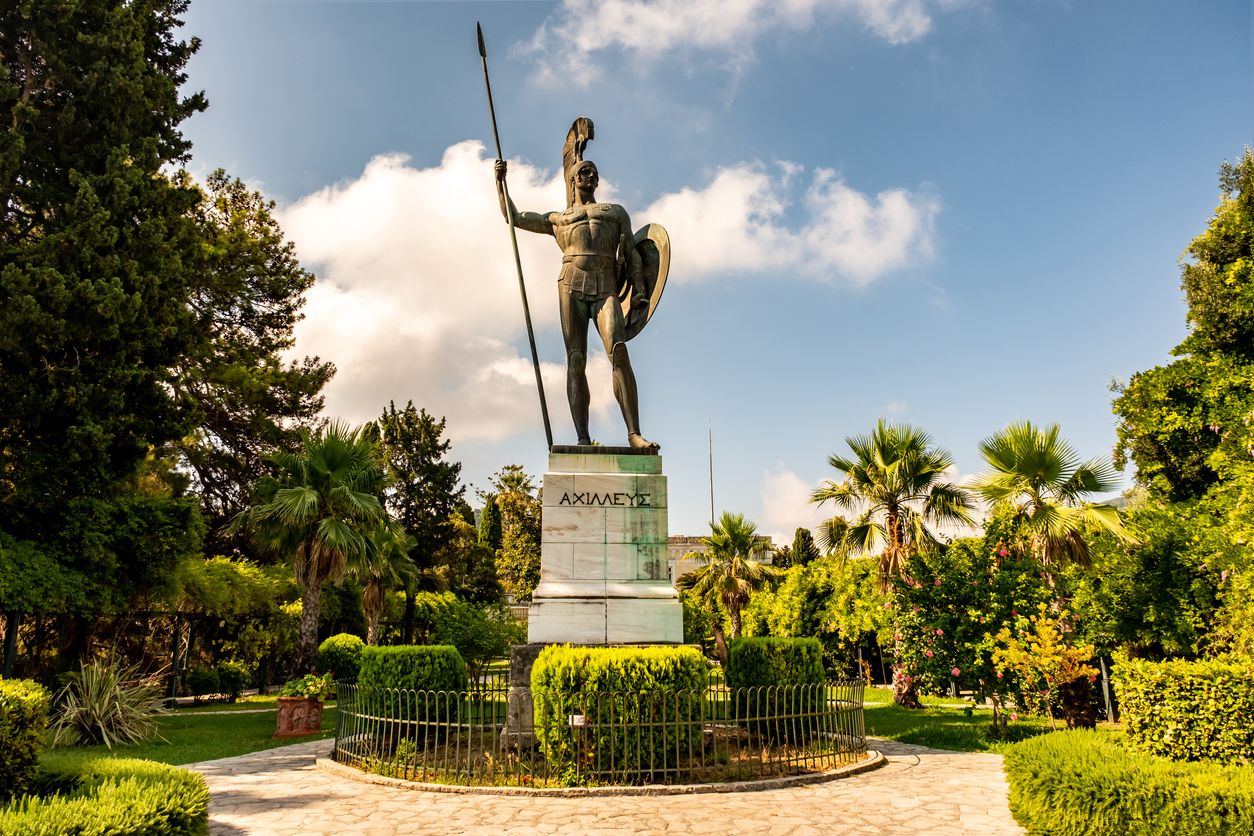
Achilles statue in gardens of Achilleion palace
Leave the north-east behind and make your way south towards Gastouri, home of the Achilleion. Built for Empress Elisabeth of Austria in the late 19th century, it is one of Corfu’s most extravagant historic landmarks. The palace interior is currently closed for restoration, but the Imperial Gardens remain open, with their Achilles statues and views across the island.
Afternoon
Lake Korission
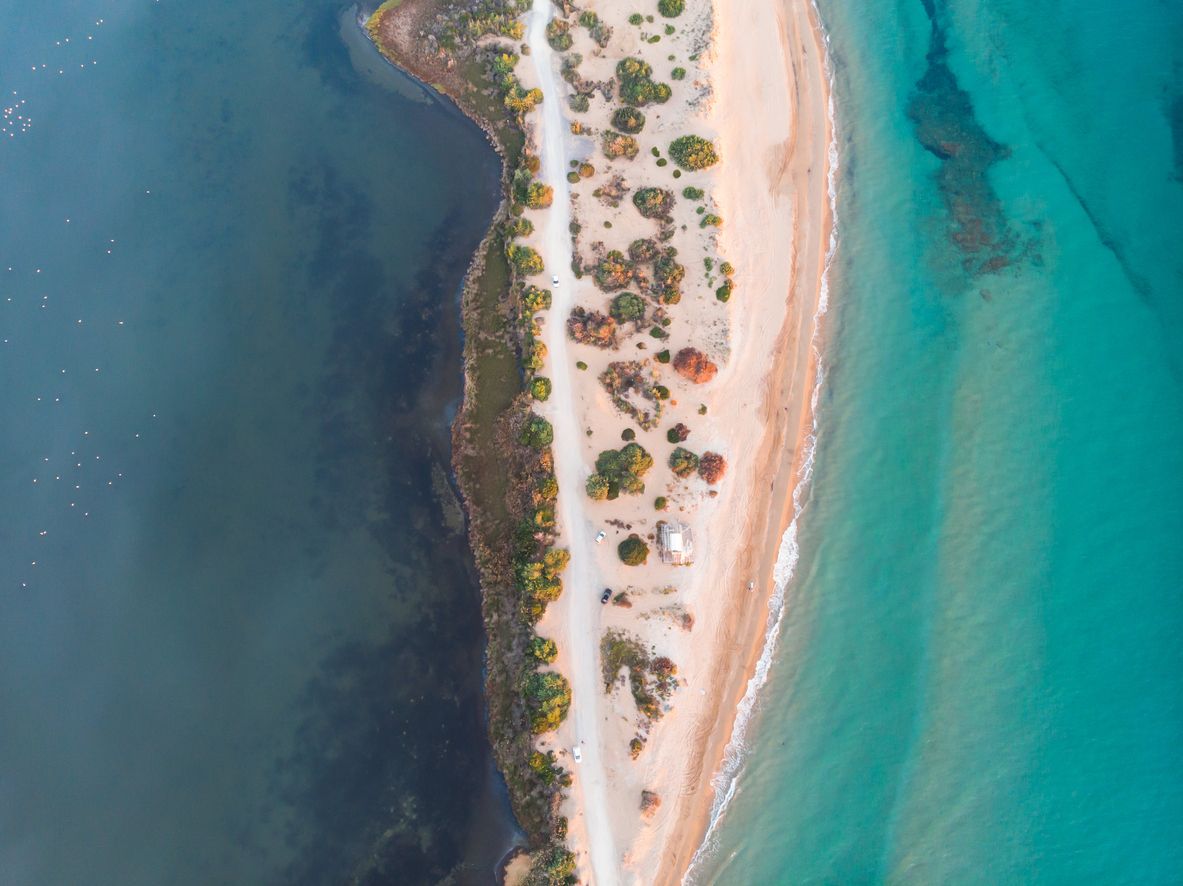
Aim for Lake Korission, a broad coastal lagoon separated from the Ionian Sea by little more than dunes and a ribbon of sand. Pick Halikounas or Issos, walk out through the dunes and spend a few hours by the sea. Issos has great sweeps of sand backed by the Korission lagoon, while Halikounas runs along the other side of the wetland, with open Ionian water in one direction and the lagoon in the other.
Evening
Cross towards the south-east coast as the heat begins to drop. Petriti and Boukari still have the feel of fishing villages, and this is a good part of the island for one last dinner beside the sea. We recommend Taverna Kalami in Boukari, right on the waterfront and known for its seafood.
Where to stay near south Corfu: Villa Mare Sea
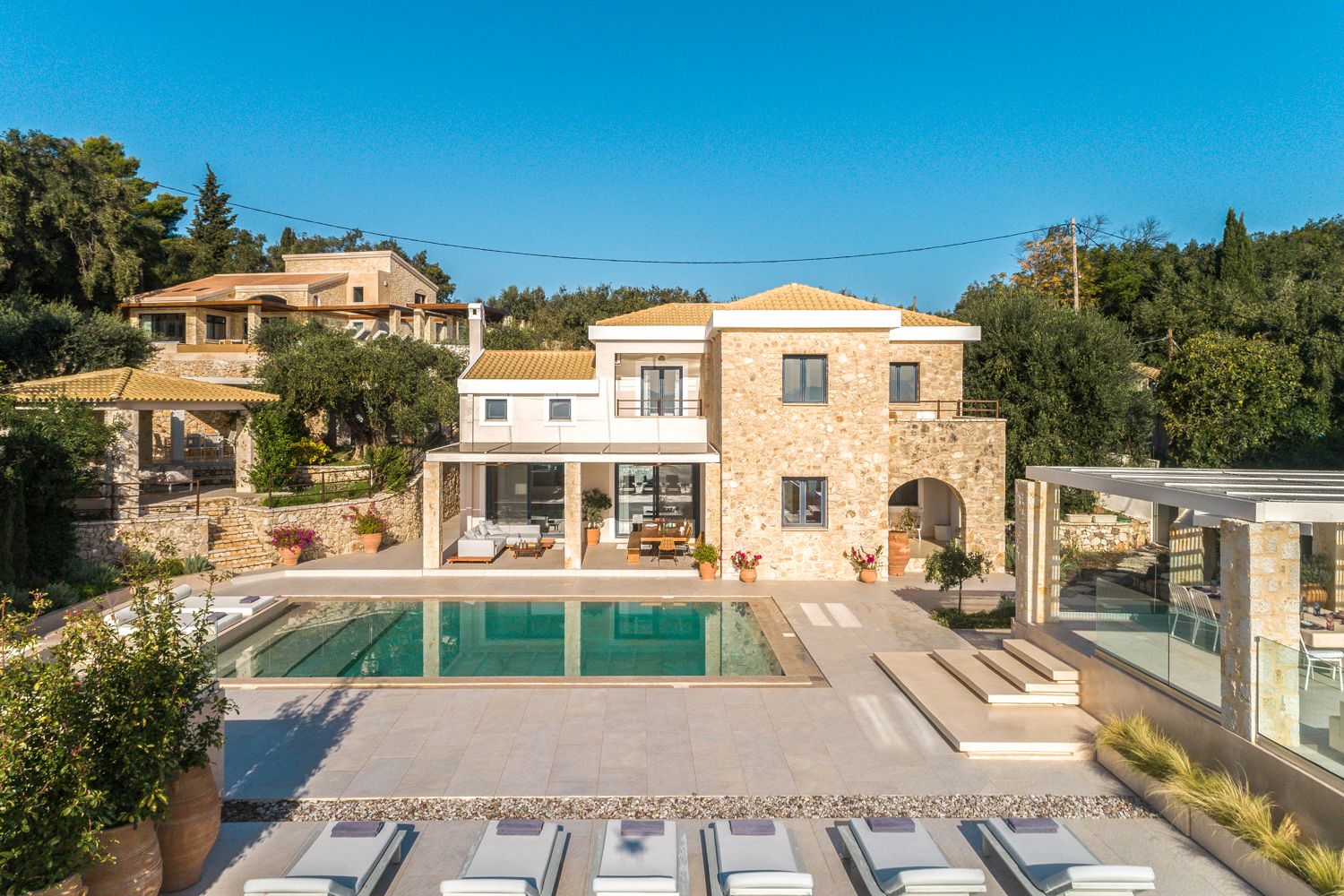
For travellers who choose to make South Corfu their base, Villa Mare Sea sits directly on the beach at Lefkimmi, its gardens running towards an almost-private stretch of sand, with shallow water just beyond and sunset views from the pool terrace.
It sleeps up to 12, but the real luxury is how little stands between the house and the sea. The owners also have a RIB that can be booked for trips across the water to Paxos or Sivota.
Oliver’s Travels offers handpicked villas acrossCorfu, with stays along the north-east coast, among the olive-covered hills of the west and close to the beaches of the south. And if one Greek island isn’t quite enough, our wider collection of villas acrossGreecetakes in the Ionian and Cycladic islands, as well as the mainland.
Previous
Solar Eclipse 2026: Best Places to Watch in Spain & Where to Stay
Next
10 European City Breaks and Where to Stay
Popular Articles
The 10 Best Beaches in Cyprus
Cyprus has beaches for almost every kind of holiday, from soft, pale sands and shallow family bays to turtle-nesting shores, watersports hubs, and quiet coves beneath cliffs. Better still, the island makes it easy to combine time beside the sea with ancient ruins, mountain villages, and lunches in coastal tavernas. The best beaches in Cyprus […]
The 10 Best Beaches in Mykonos
Mykonos may be known for its whitewashed lanes, late-night parties, and famous beach clubs, but its coastline has more range than the headlines suggest. Long sandy bays curve around the south of the island, while the north coast feels wilder, more exposed to the Aegean wind. The best beaches in Mykonos cover almost every mood. […]
10 Best Villas in Ibiza
The fabled ‘White Island’ is a place of many faces. On the one hand, Ibiza is renowned as a prime clubbing destination with a vibrant nightlife that’s a magnet for partygoers. But there’s more to the island than exclusive clubs and dancing ’til dawn! Further inland, you’ll find there’s a much more laid-back atmosphere among […]
With stunning beaches and Venetian charm, Corfu successfully masters equal measures of cosmopolitan and tradition, so is perfect for a villa holiday. And those travelling to this Grecian paradise can expect a whirlwind of fun, with something for everyone, including families, couples, and companions. Naturally, any memorable adventure begins with a jaw-droppingly good villa, and […]
The Top Family-Friendly Activities in Corfu
If you’re travelling to Greece with little ones, then look no further than our list of the top family-friendly activities in Corfu. This island’s magical combination of sunshine and sandy beaches is always a hit with younger visitors: the shore is essentially one giant playground, while the breaking waves provide hours of entertainment. But there’s […]
Top 10 things to do in Corfu: Activities & Places to Visit
Whether you’re craving rest and relaxation or an all-action holiday adventure, crowd-pleasing Corfu has something to tempt every traveller. From mountain biking on rugged peaks to scuba diving with eels, you can find plenty of energetic ways to get under the island’s skin. Low-key days can be spent wine tasting, strolling ancient streets or hopping […]
Best Foodie Experiences & Restaurants in Corfu
Corfu’s Med diet is one of the healthiest and tastiest on the planet. Fresh, locally grown ingredients are key to Corfiot cuisine, as are lashings of homegrown olive oil. Hearty dishes of lamb and game, fresh seafood, and made-for-sharing mezze plates are what you’ll find on most Corfiot dining tables, typically partnered with glasses of […]
No Driving Required: 10 Car-Free Villa Holidays
For some of us, there’s no better feeling than arriving on holiday knowing the car keys have stayed at home. Perhaps it’s the pleasure of wandering into the village for fresh croissants each morning, walking down to the beach whenever the mood takes you, or ordering another glass of wine at dinner, knowing home is […]
We’re delighted to share that Oliver’s Travels has been voted Runner-Up in the Condé Nast Traveller Readers’ Choice Awards 2026. This marks the tenth consecutive year that Condé Nast Traveller readers have recognised Oliver’s Travels among the world’s leading villa rental companies. And we’re so grateful to everyone who has voted for us along the […]
Want to host your own Traitors-inspired weekend? Here’s everything you need to know
We know you’re watching it. And if you’re anything like us, you’re also thinking about playing it. It’s easy to feel confident while you’re watching from the sofa, but how would you really fare if you were tapped on the shoulder? Could you hold firm when accused or give yourself away before breakfast? Chances are, […]
How to Make the Most of Your 2027 Annual Leave
Annual leave is one of the year’s more finite pleasures. Used without much thought, it can quickly disappear into the occasional Friday and a handful of Mondays. Place it more strategically, however, and the same allowance can turn four days away from your desk into nine or even ten days elsewhere. Easter falls early in […]
Sense and Sensibility: Where to stay for a Jane Austen-inspired escape
On 25 September, this year’s Sense and Sensibility will introduce Jane Austen’s razor-sharp wit and biting social commentary to a whole new generation of gooey-eyed romantics. Like Emma Thompson’s much-loved 1995 adaptation and the novel long before it, the new film promises fierce heroines, men whose charms cannot always be trusted and – of course […]
Venice Film Festival 2026: Where to Stay
Every September, Venice – a city already accustomed to grand entrances – becomes the stage for cinema’s most anticipated arrivals. First held in 1932, the Venice International Film Festival is the oldest in the world. Its 83rd edition runs from 2–12 September 2026 on the Lido, the long barrier island separating the Venetian Lagoon from […]