
Think of Italy and the country’s rich history is bound to come to mind. Antiquity, renaissance, modernity… century after century, Italy has left its indelible mark on Western culture. And thanks to some extraordinary conservation efforts, these historical sites are still around for us to discover today.
A trip to Italy wouldn’t be complete without a historical excursion or two, but how does one even begin to choose a starting point for visiting historical sites in Italy? Well, we’d recommend you start by taking a look at this list of our favourite historical sites in Italy. 10 fascinating places to go and learn more about the heart and soul of Italy.
Our Top 10 Historical Sites in Italy:
1. Saint Mark’s Basilica
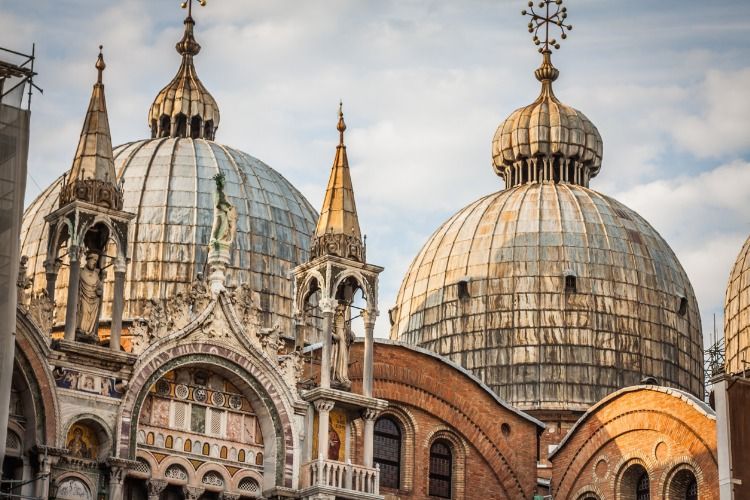
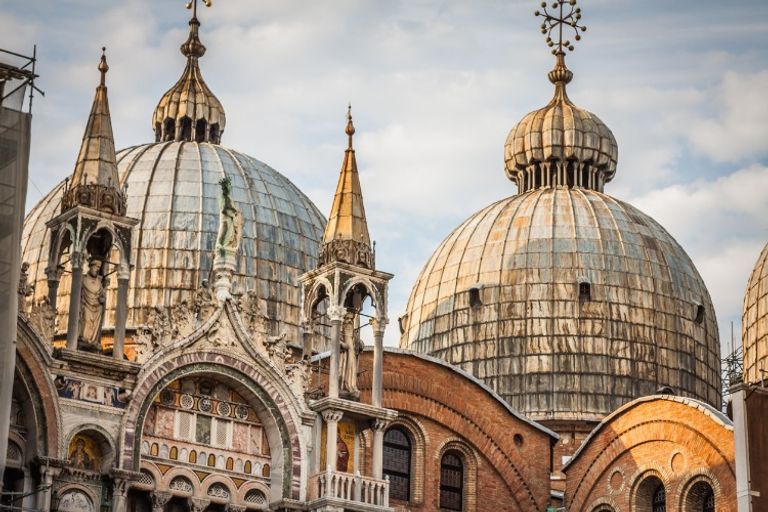
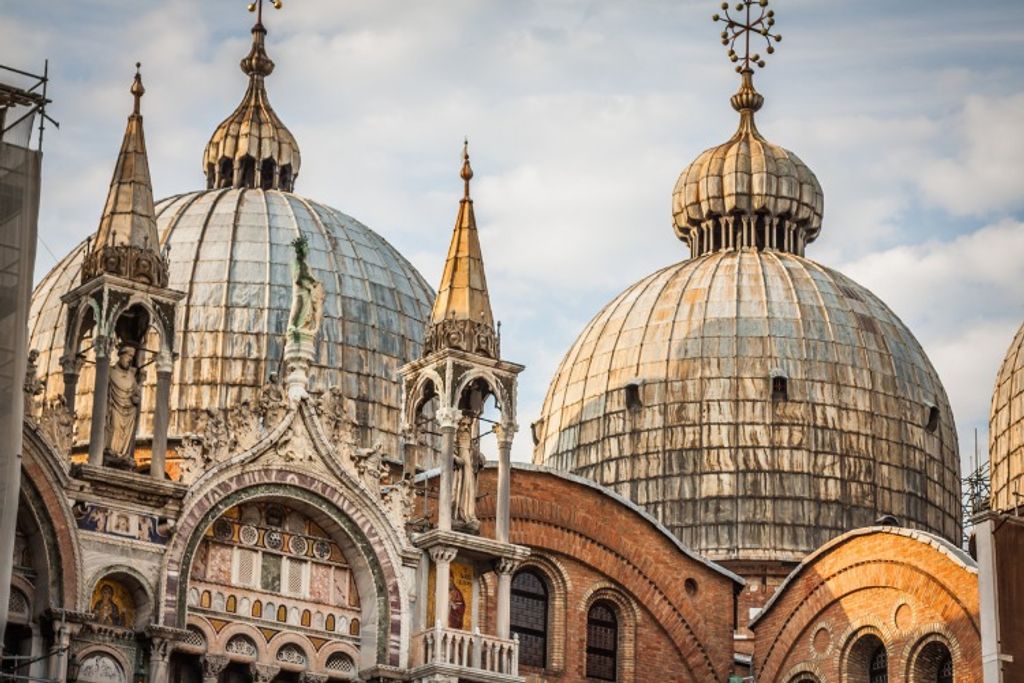
Saint Mark’s Basilica was founded in the 9th century with the purpose of housing the tomb of St Mark himself. For hundreds of years, it served as the private chapel of the city’s Doge, until it became the official Venice cathedral in 1807. The original basilica was lost in a fire in 932, and the rebuilt version, complete with Byzantine domes and marble exteriors, is what stands today.
The Basilica is famous for its intricate design, 8,000 square metres of mosaics, and epic domes. The most famous of these domes is the Cupola of the Prophets, where a gold altarpiece studded with over 2,000 gemstones is housed. This spectacle is best viewed from the church’s main altar, where St Mark’s sarcophagus is kept.
2. Herculaneum
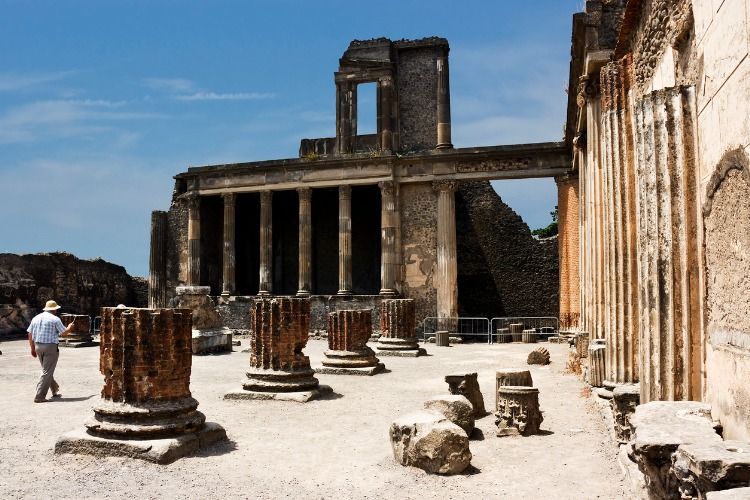
You’ve undoubtedly heard of Pompeii, but you might not have heard of Herculaneum, the second city to be buried under the ashes of Mount Vesuvius’ eruption in 79 AD. Herculaneum is, in fact, much better preserved than its more famous counterpart. It was hit before Pompeii, giving its inhabitants no time to escape and therefore leaving many bodies perfectly preserved for centuries.
You can still discover the town’s temples, baths, houses, and taverns at this UNESCO World Heritage Site. It gives a very real sense of how spectacular this wealthy city once was. Some of its most luxurious villas overlooking the sea retain details as small as doors and beds, all perfectly preserved as if cased in glass from the harsh turns of time,
3. Area Sacra di Largo Argentina
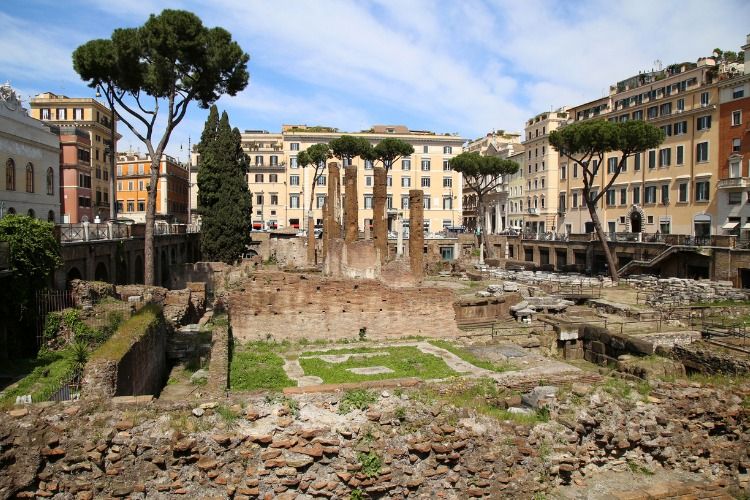
While attempting construction on a completely different building between 1926 and 1930, the oldest temple ruins ever to be found in Rome were discovered in what’s called the Area Sacra di Largo Argentina. The four temples were built in the 3rd century B.C., right by the murder site of Julius Caesar, next to the theatre and Curia of Pompey.
Nobody knows who these temples were dedicated to, so they’ve been pragmatically renamed Temple A, B, C, and D. These days, however, the temple ruins are home to something much friendlier than Roman gods… cats! Hundreds, much beloved by tourists and locals, roam the old temples. They cast some pretty curious shadows when the ruins are lit up with golden lights at night; one of the best historical sites in Italy for visiting both day and night.
4. Paestum
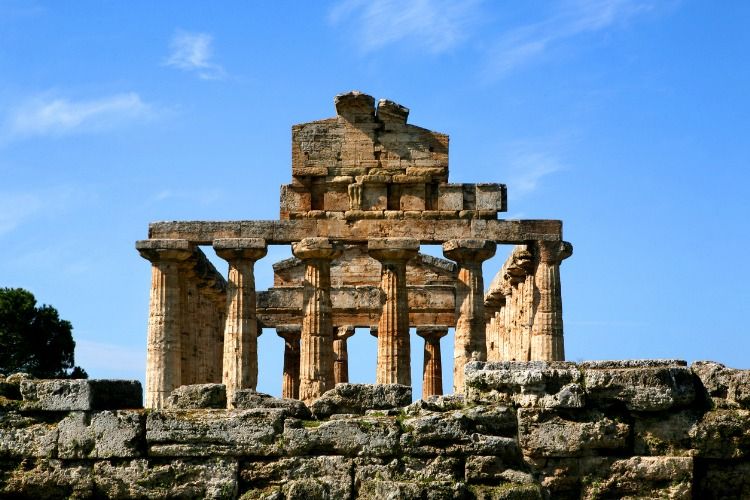
Just south of the marvellous Amalfi Coast, there once stood a town called Poseidonia, named in honour of the Greek sea god Poseidon. It was settled in the 6th century, but eventually fell under Roman control and was renamed to Paestum. What is left of Paestum today is a UNESCO World Heritage site, including three of the best-preserved ancient Greek temples in the world.
Periodic malaria outbreaks and raids upon the city by the Saracens caused Paestum’s population to abandon their home as the Roman Empire was falling. Today, most of what was once a city is buried deep under Italian farmland. Only its ancient walls and archaeological zone in the middle are open to the public, telling the tale of the long-lost grandeur of Poseidonia.
5. Florence Cathedral
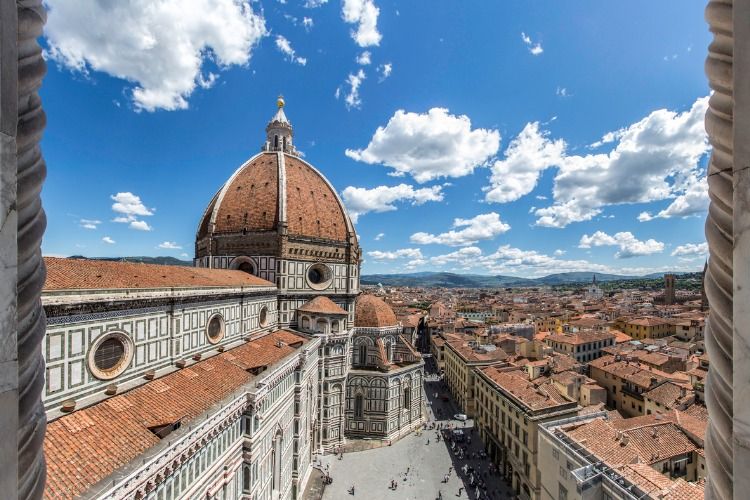
The Florence Cathedral, once known as the Cattedrale di Santa Maria del Fiore, is the fourth largest in the world. The building of this great Gothic church began at the end of the 13th century, right atop the site of the old church of Santa Reparata (you can still spot these remains in the crypt). However, the great and iconic dome wasn’t added until 200 years of construction later, when the project was deemed complete.
The architects of the Cathedral, Arnolfo di Cambio and Filippo Brunelleschi, are immortalised in two statues outside the cathedral. They stand admiring its decorative pink, white, and green marble exteriors. Just beyond their view in the church’s entrance halls sits the epic 1443 clock, which tells time according to the ora italica, meaning its 24-hour days always end at sunset.
6. Pianosa Island
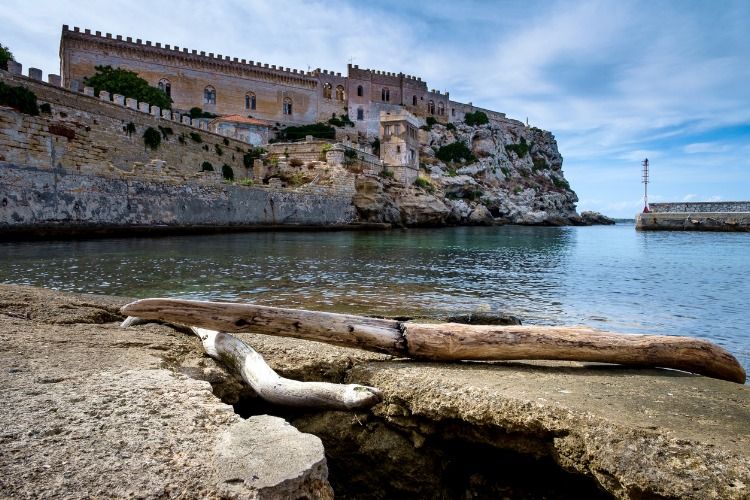
Pianosa Island is barely more than a memory of times long gone. Due to conservation efforts, only 400 people can visit each day, so consider yourself lucky if you get the chance! While Pianosa has been settled many times since the late Stone Age, it is virtually abandoned as of today. Only a handful of people reside on the island, alongside the spectacular wildlife it’s famous for .
Of course, this wasn’t always the case. There are remains of a Roman town on Pianosa and evidence that several fishing colonies once resided here. Pirates have visited, and so has Napoleon (who was a big fan). Most recently, the island served as a military stronghold and high-security prison. The prison was abandoned in 1998, but some of the paroled prisoners still reside on the island, running a small restaurant and museum for tourists.
7. Villa d’Este
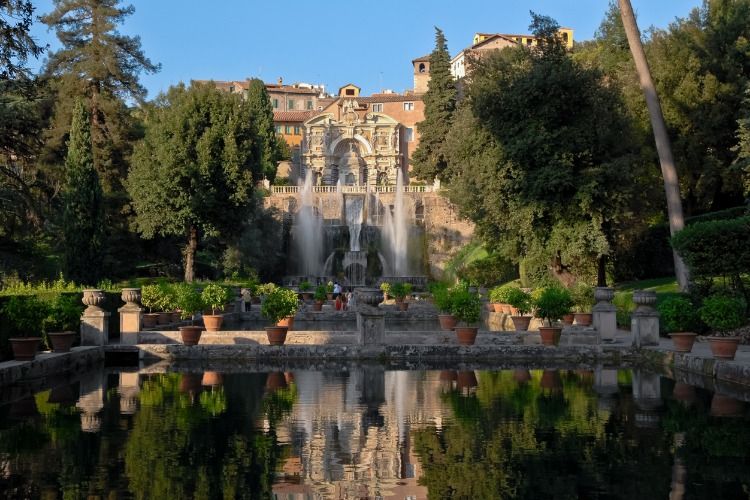
Villa d’Este is what you might call the pièce de résistance of the beautiful town of Tivoli in the countryside of Lazio, just on the outskirts of Rome. What was once a Franciscan monastery was turned into a spectacular example of Renaissance architecture and lifestyle by the town governor during the 16th century. It is presently run as a museum and holds a well-deserved spot on UNESCO’s list of World Heritage sites.
While the Villa’s interiors are gorgeously adorned with frescoes on its walls and ceilings, nothing beats its view of the gardens below. Villa Este’s gardens are absolutely breathtaking, with their many sculptures and over 500 fountains. One of these had a water organ installed in 1571 that still plays today. As if this architectural masterpiece weren’t enough, the gardens are also complemented by their own waterfall.
8. Botanical Gardens in Padua
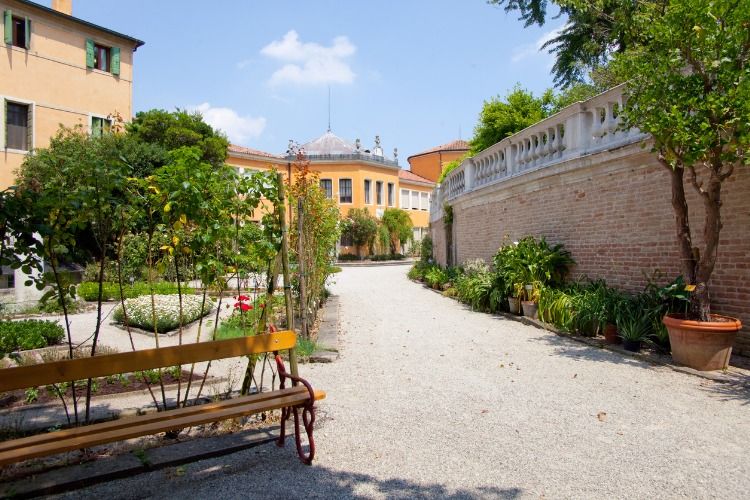
The year 1545 saw the creation of the world’s first botanical gardens in Padua. It consisted of a central circular plot representing the Earth, surrounded by a ring of water. Except for some additions and practical tweaks, this is the same layout you’ll find there today. Throughout the centuries, these botanical gardens have also retained their original purpose as a university centre of scientific research.
The Padua Gardens were where botanical science was born. They created the foundation for our longstanding tradition of scientific exchanges and understanding of the relationships between nature and culture. Famous for cultivating and collecting, especially rare plants, there are currently over 6,000 species at the Padua Botanical Gardens. In addition to these, their library, containing more than 50,000 scientific volumes, is considered one of the most important in the world.
9. Duomo di Milano
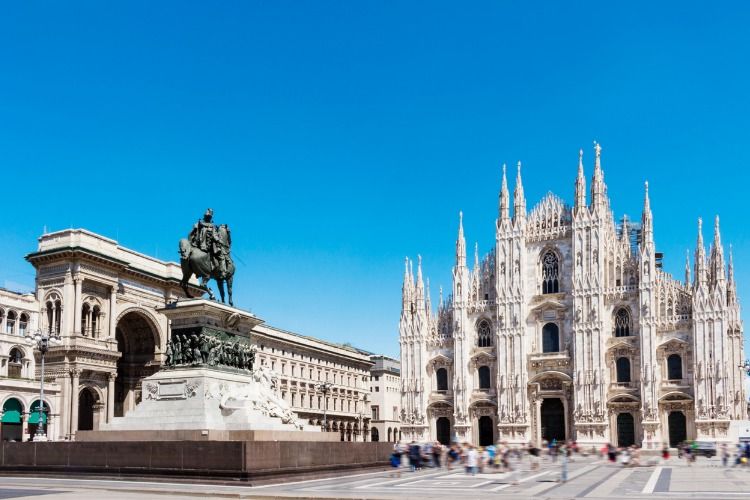
The most visited spot in Milan is its splendid Gothic cathedral, the largest of its kind, which can hold up to 40,000 people inside. Its construction began in 1386, with the purpose of modernising the area after Gian Galeazzo Visconti came into power. But even so, it took five whole centuries for the masterpiece to be completed. During this time, many architects, artists, and sculptors worked on the construction of the building, which merged the Gothic and Romanesque styles.
The Duomo di Milano is covered in beautiful white and pink marble, only upstaged by the openwork pinnacles and spires which decorate the roof. These are adorned with sculptures as well, and as a tourist, you may walk along the roof terrace and appreciate them, as well as the unrivalled views of the city from above.
10. Santa Maria delle Grazie and The Last Supper
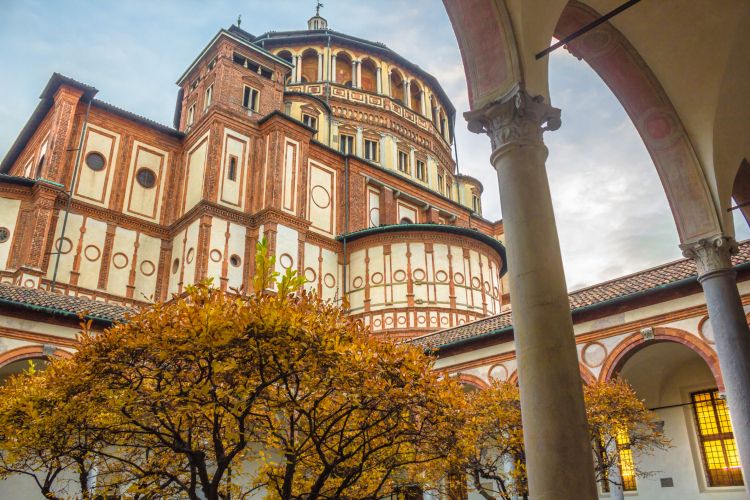
The Church and Convent of Santa Maria delle Grazie is another outstanding work of Milanese architecture and one of our must-see historical sites in Italy. It was initially built beginning in 1463, but reworked in the late 15th century by Bramante, who is generally considered one of the great Renaissance masters. But this emblem of the Catholic tradition has not found its way onto the UNESCO World Heritage list due to a mere architectural feat…
Within the church’s refectory, on its western wall, hangs Leonardo da Vinci’s great fresco “The Last Supper”, painted between the years 1496 and 1497. Uniquely symbolic of the creative human genius, the fresco is available for public viewing. This didn’t always seem so likely, however. When the site of the church was struck by Allied bombing in 1943, “The Last Supper” miraculously made it out unscathed.
There you have it! Hopefully Oliver’s Travels’ top 10 historical sites in Italy have inspired you to take a little trip of your own. If so, don’t forget to take a look at our luxury holiday villas in Italy, and get in touch with our concierge team if you need any help with your holiday planning.