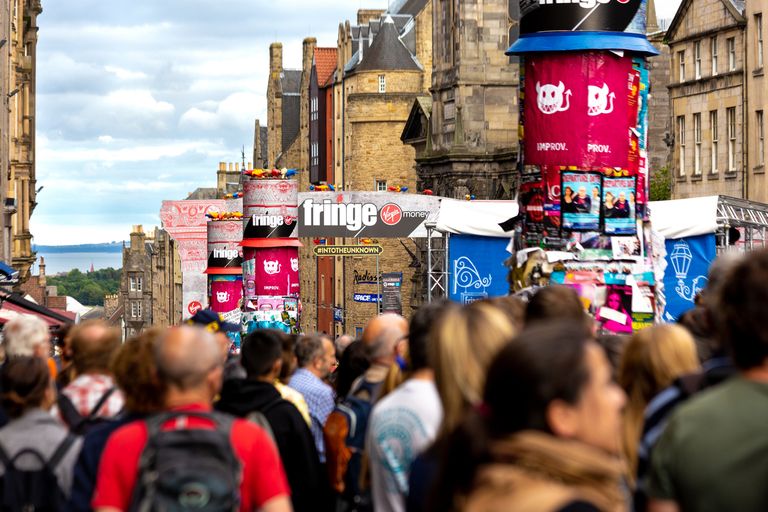
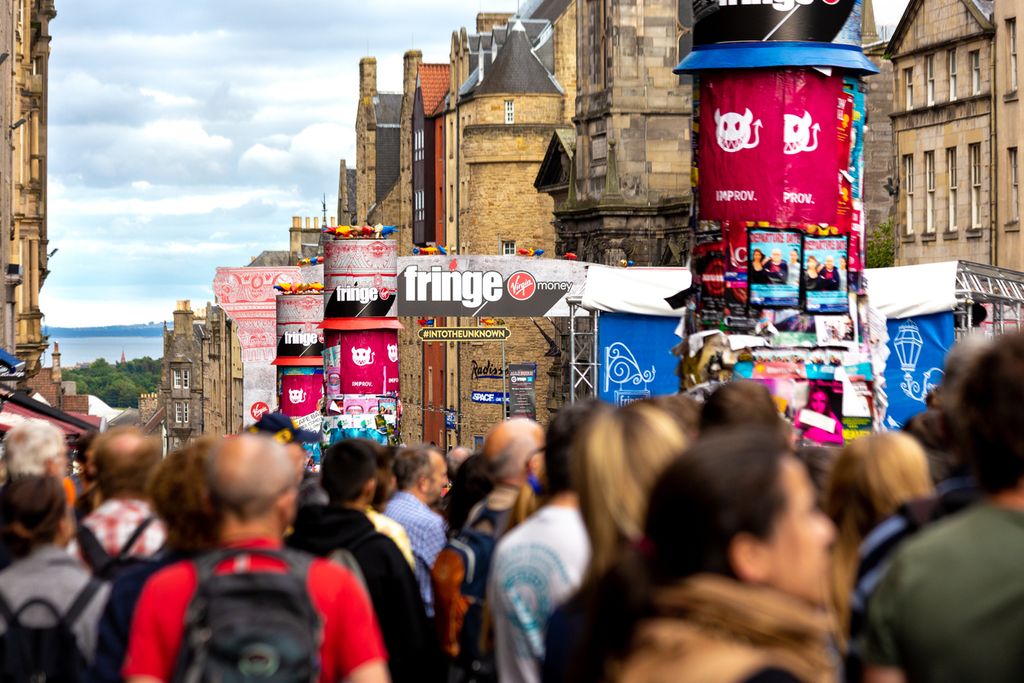
Every August, artists and visitors from around the world flock to the Scottish capital for the Edinburgh International Festival and the Edinburgh Festival Fringe. For a few weeks, the city gives over its lecture halls, churches, music venues, theatres and pub basements, turning them into stages for one of the year’s most interesting arts events. In 2026, they will run from 7–30 August and 7–31 August, respectively.
The International Festival is the older, curated festival of theatre, opera, music and dance. Around it grew another ‘fringe’ festival, open to anyone with a show and somewhere to stage it. That freedom has helped catapult the Fringe into the world’s largest arts festival and given it a reputation that precedes it, with previous shows such as Richard Gadd’s Baby Reindeer and Phoebe Waller-Bridge’s Fleabag going on to become global hits.
But the fun doesn’t just come from seeing something amazing before the rest of the world does, though that is certainly part of it. It comes from arriving in rooms with no idea what you are about to see. Planning is good, but leave plenty of room for the Fringe to surprise you.
At Oliver’s Travels, we like to arrive with a few tickets booked and leave the rest open to persuasion. See a show you hear about in a queue, let a flyer decide your evening, answer the plea of a hopeful actor. Some festivalgoers even count down the listings and book whichever title they land on – a system no less dependable than many of the more involved methods.
Still, it is always useful to have somewhere to begin. Read on for our pick of the 2026 programmes, along with the best places to stay in and around Edinburgh.
Edinburgh Festivals: What to See in 2026
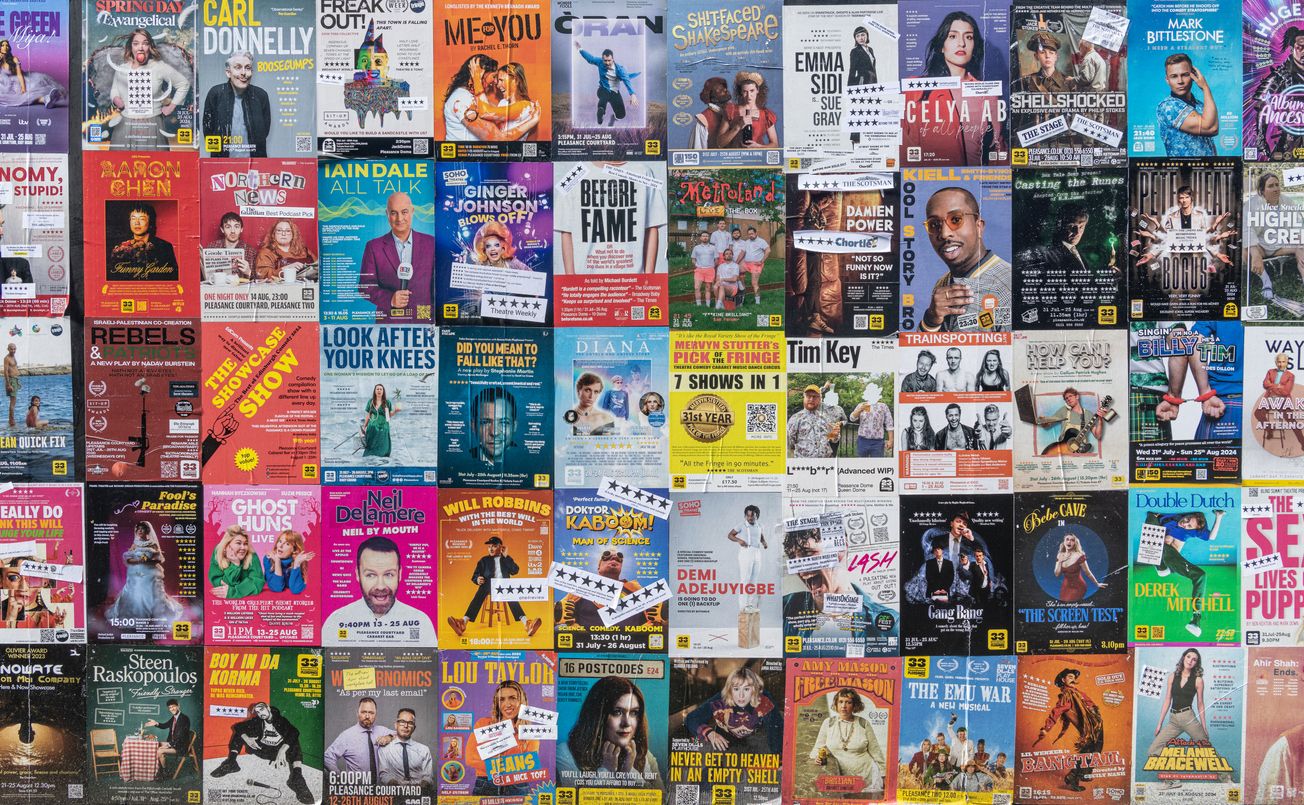
Posters advertising events at the Edinburgh Festival Fringe, Scotland
Little Animals
Paul Ready, best known as the long-suffering Kevin of Motherland, writes and performs this one-man play about a friendship that has reached its end. Richard is dead, his closest friend was not invited to the funeral and there is something between them that has yet to be laid to rest.
The friendship has also been strained by climate anxiety. As Richard becomes increasingly consumed by the crisis, his friend is occupied by mortgages, children and getting through the week. The interest lies between the difficulty of living responsibly in a culture built around consumption, and the resentment that can appear when private life refuses to match public conviction. Climate theatre can easily become a lecture. Little Animals is more interested in the awkward people sitting through one.
Angels in America
Tony Kushner’s Angels in America first appeared in 1991, at the height of the AIDS crisis it depicts. It went on to win the Pulitzer Prize for Drama, as well as consecutive Tony Awards for Best Play. Thirty-five years later, its arguments about illness, queerness, religion, political cruelty and our obligations to one another have not settled.
For the International Festival, Ivo van Hove and Internationaal Theater Amsterdam compress both parts into a single production lasting almost five hours, performed in Dutch with English surtitles. The staging is spare, the soundtrack includes David Bowie, and Kushner has called it his favourite interpretation of the play. The company also knows its way around an Edinburgh epic, having previously brought A Little Life and Penthesilea to the Festival.
ROLEPLAY
A broke feminist podcaster reinvents herself as a provocative online personality, turning her identity into content and eventually losing track of where the performance ends. Hannah Reilly’s one-woman show begins as a comedy before shifting towards psychological thriller, taking aim at modern sex, personal branding and the profitable language of empowerment.
ROLEPLAY is produced by Francesca Moody Productions, the company that first brought breakout hits Fleabag and Baby Reindeer to the stage, alongside Moulin Rouge! producer Global Creatures. That pedigree guarantees nothing, which is partly the point of coming to Edinburgh before the verdicts are in. It does, however, make this one of the more intriguing bets in the programme.
Dracula: Lucy’s Dream
Bram Stoker gave Lucy Westenra a grim assignment: receive three proposals, become a vampire, provide the men with something heroic to do. Yngvild Aspeli’s Dracula: Lucy’s Dream returns the story to Lucy, recasting the familiar gothic tale.
Aspeli’s French-Norwegian company, Plexus Polaire, uses life-sized puppets, human performers, video and original music to create a wordless production in which actor and object are not always easy to tell apart. The company previously brought its remarkable Moby Dick to the Barbican, and this new production makes a persuasive case for puppetry as an adult theatrical form rather than something added to keep children occupied. Do not, incidentally, bring them.
Sauna Theatre
Edinburgh has turned almost every plausible kind of room into a theatre; in 2026, it adds a sauna. Installed in Summerhall’s courtyard, the UK’s first purpose-built Sauna Theatre seats 80 people and combines performance with Aufguss, a sauna ritual using steam, scent, music and choreographed towel work. Swimwear is required, which should at least settle the question of what to wear.
The programme moves between theatre, music, sauna rituals and morning raves. Our pick is Aufguss x The Waves, which places Virginia Woolf’s novel inside a landscape of heat, essential oils, and hot stones. It may be profound or it may simply make Woolf unusually humid. Either way, this is exactly the sort of experiment for which the Fringe exists.
Prophets
In Prophets, a Scottish researcher arrives on Saint John, a remote British territory in the South Pacific, expecting to study its landscape. She soon finds its small population under the influence of a growing religious sect, and her attention shifts towards the islanders as their promised day of paradise approaches.
The two-hander comes from Highland playwright Jack MacGregor, whose political drama Everything Under the Sun won a Fringe First in 2023. Prophets has already received Assembly’s 2026 ART Award for new Scottish writing.
[seagull]
Chekhov’s characters speak constantly and rarely understand one another. In [seagull], that failure of communication becomes part of the production itself. Belgian company Olympique Dramatique brings Deaf and hearing actors together, uses Flemish Sign Language throughout and pairs it with creative English captions. Some performers have signed since birth; others learned for the production.
The familiar country-house tangle remains, but the cast no longer treats language as a neutral tool that everyone shares. This staging does more than make The Seagull accessible. It turns access into the artistic idea, asking who must adapt, who controls understanding and what happens when words fail.
Haribo Kimchi
At Jaha Koo’s pojangmacha, a Korean late-night snack bar, the customers include a robotic eel, a snail and a gummy bear. Koo cooks, talks and moves between English and Korean, using food to examine what happens when somebody has lived away from home long enough to feel foreign in both places. Seaweed soup can carry memory; a packet of sweets can say so much more than was intended.
Koo has lived in Europe since 2011, and Haribo Kimchi moves between his longing for Korea and his experiences of racism and alienation abroad. His earlier production Cuckoo appeared at the 2019 International Festival, using talking rice cookers to explore South Korea’s economic history and a generation’s despair. The robots have returned, but the subject here is more intimate – how culture is consumed, adapted and occasionally reduced to something fashionable on a plate.
Ari Eldjárn: The Icelander’s Guide to Europe
Icelandic comedian Ari Eldjárn is from a country close enough to observe Europe and distant enough to find much of its behaviour faintly peculiar. His new show considers European habits, national contradictions and the small cultural differences that become increasingly absurd the longer somebody attempts to explain them.
Eldjárn is already well acquainted with Edinburgh, having sold out previous Fringe runs, and his English-language Netflix special Pardon My Icelandic applied the same dry humour to Nordic rivalries and international misconceptions about his homeland.
Goodbye Dandelion
Goodbye Dandelion tells the story of Darcy, an 87-year-old woman approaching the end of her life, and the friend five decades her junior who accompanies her through it. Real-life siblings Maddie and Marcus Rice perform the piece together, with Maddie telling the story and Marcus at the piano. Death and assisted dying are present, but so are the odd asides and private jokes that amount to an unlikely friendship.
Maddie Rice has strong Fringe form. She wrote and performed the acclaimed Pickle Jar in 2018 and took over from Phoebe Waller-Bridge in the touring stage production of Fleabag. Here, the subject is less the chaos of early adulthood than the difficult business of leaving it all behind. The show earns its place by treating death not as an abstract lesson in appreciating life, but as something experienced through another person.
Where to Stay in and Around Edinburgh
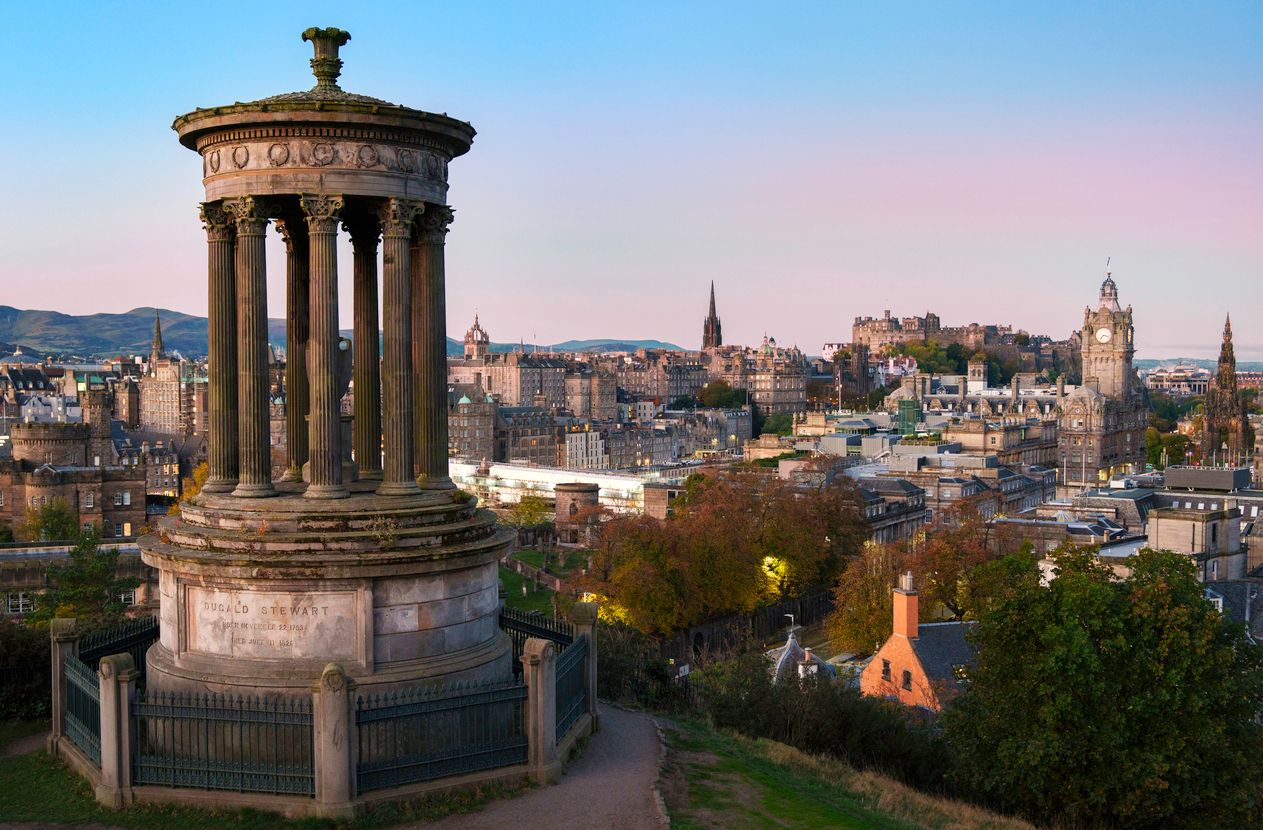
Edinburgh city at sunrise, viewed from Calton Hill
The Fringe encourages you to watch as many shows as can reasonably fit between morning and midnight. A little space beyond the city centre can therefore be welcome, particularly when travelling with a group. These homes place Edinburgh within reach while offering somewhere quieter to relax, before doing it all again.
Blossom Mansion
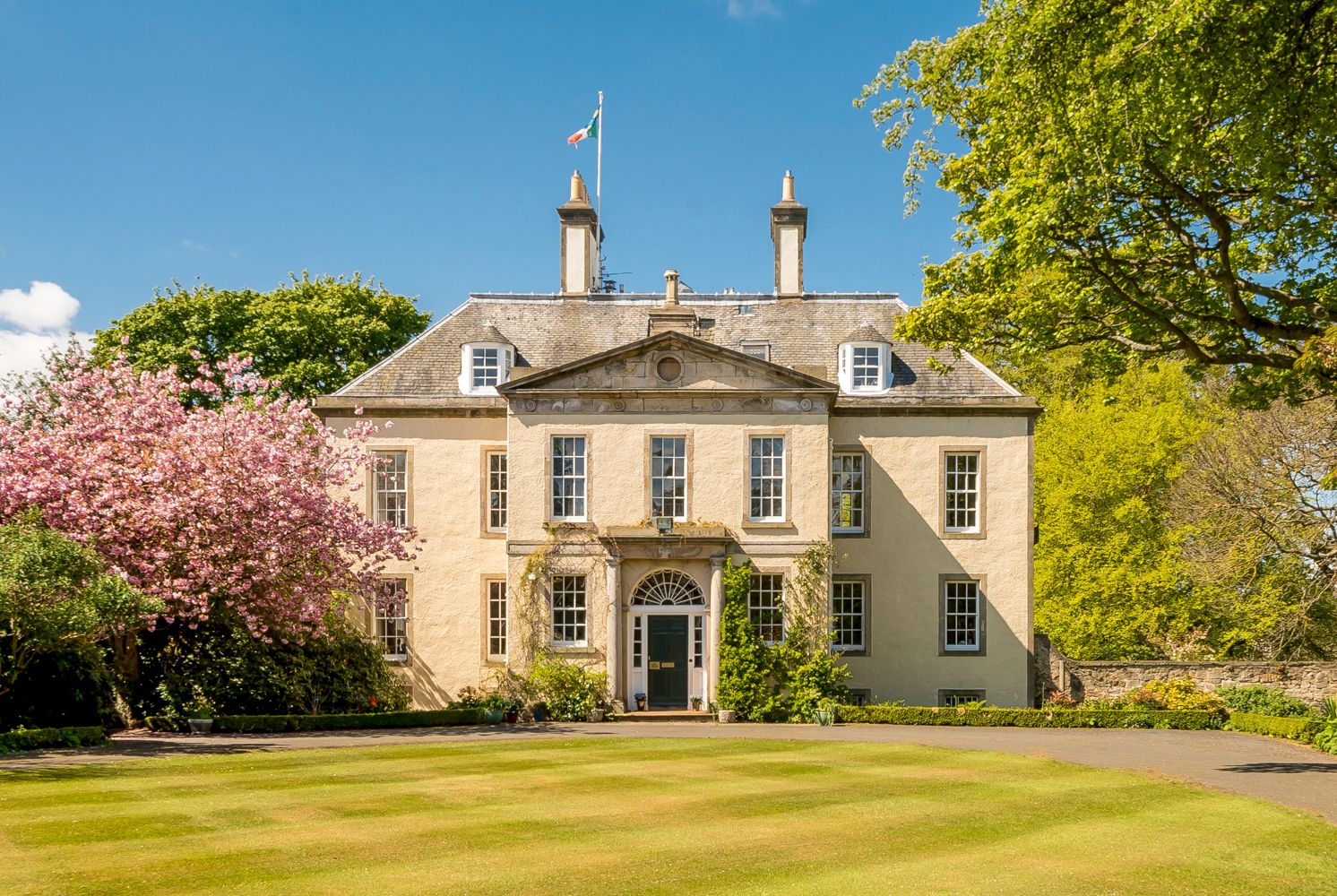
For those who want to remain close to the action, Blossom Mansion sits on the edge of Edinburgh, around 10 to 15 minutes’ drive from the city centre. The house sleeps up to 24 guests across ten bedrooms, making it a particularly sensible choice for a large gathering – or at least as sensible as coordinating theatre tickets for 24 people can be.
Set within five acres of grounds, the mansion has the scale and traditional character expected of a Scottish country house, alongside the comforts required after a day spent crossing Edinburgh on foot. Six communal spaces are spread across four floors, including several sitting rooms and a games room.
North Berwick House
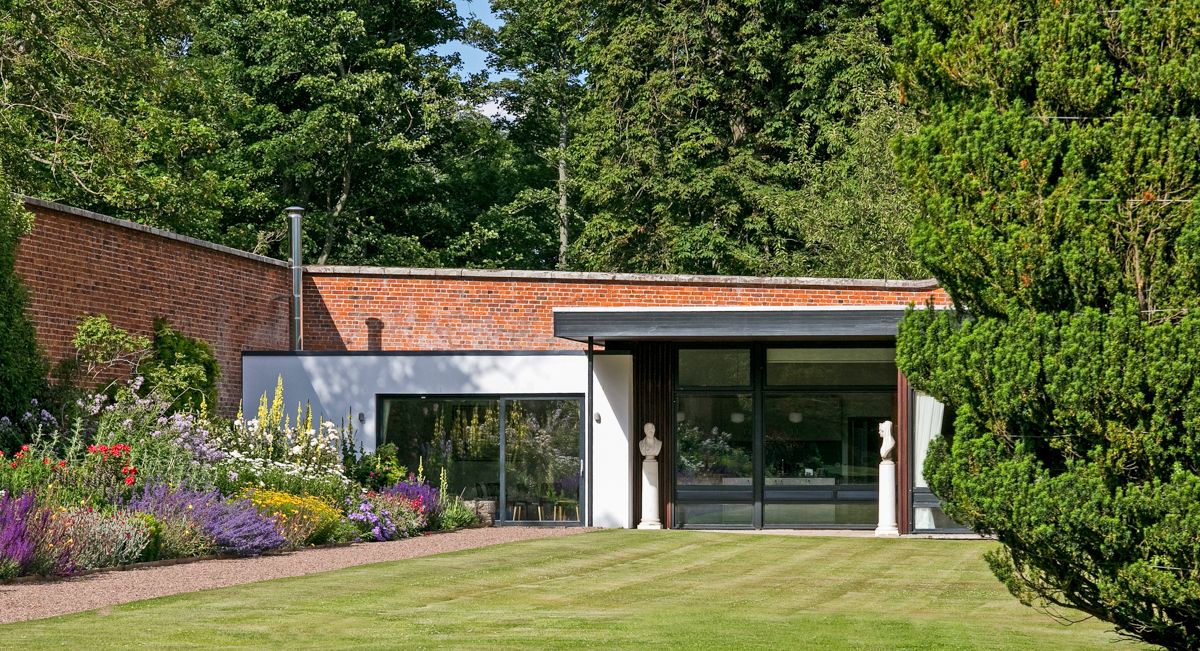
There are worse ways to approach the Fringe than by combining it with a few days beside the sea. North Berwick House is a six-bedroom home in a private estate around 50 minutes’ drive from Edinburgh and sleeps up to 12 guests.
The house joins a 200-year-old gardener’s cottage with a mid-century addition designed in 1960 by the Scottish architect Sir James Dunbar-Nasmith. The result is neither a conventional country house nor a stark modernist retreat, but something far more interesting, with old stone, broad windows and interiors that still retain much of their original architectural character. Edinburgh supplies the crowds and curtain calls; North Berwick offers coastal walks, good restaurants and a little distance from the whole affair.
Barons Tower
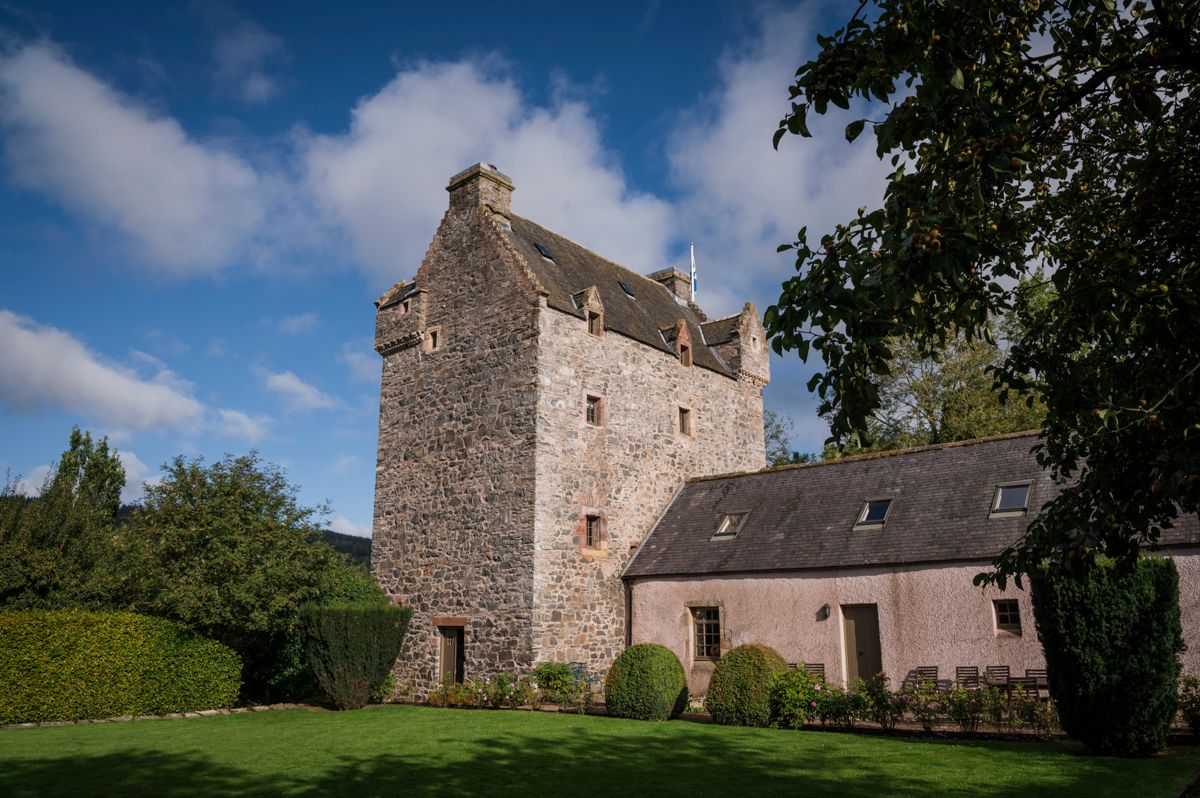
An hour south of Edinburgh, Barons Tower offers a suitably theatrical place to stay during festival season. This Grade A-listed Border peel tower rises among the hills, woodland and rivers of the Ettrick and Yarrow Valleys, with the villages of Ettrickbridge and Selkirk nearby.
The tower sleeps ten guests and has been restored with considerable care, preserving its thick stone walls, historic character and sense of drama while introducing rather more comfort than its original occupants would have known. Reception rooms provide space for long dinners and post-show debate, while the garden and surrounding countryside make a convincing argument for occasionally abandoning Edinburgh altogether. After several days of basement comedy venues and temporary theatres, returning to a medieval tower feels pleasingly extravagant.
Logan Manor
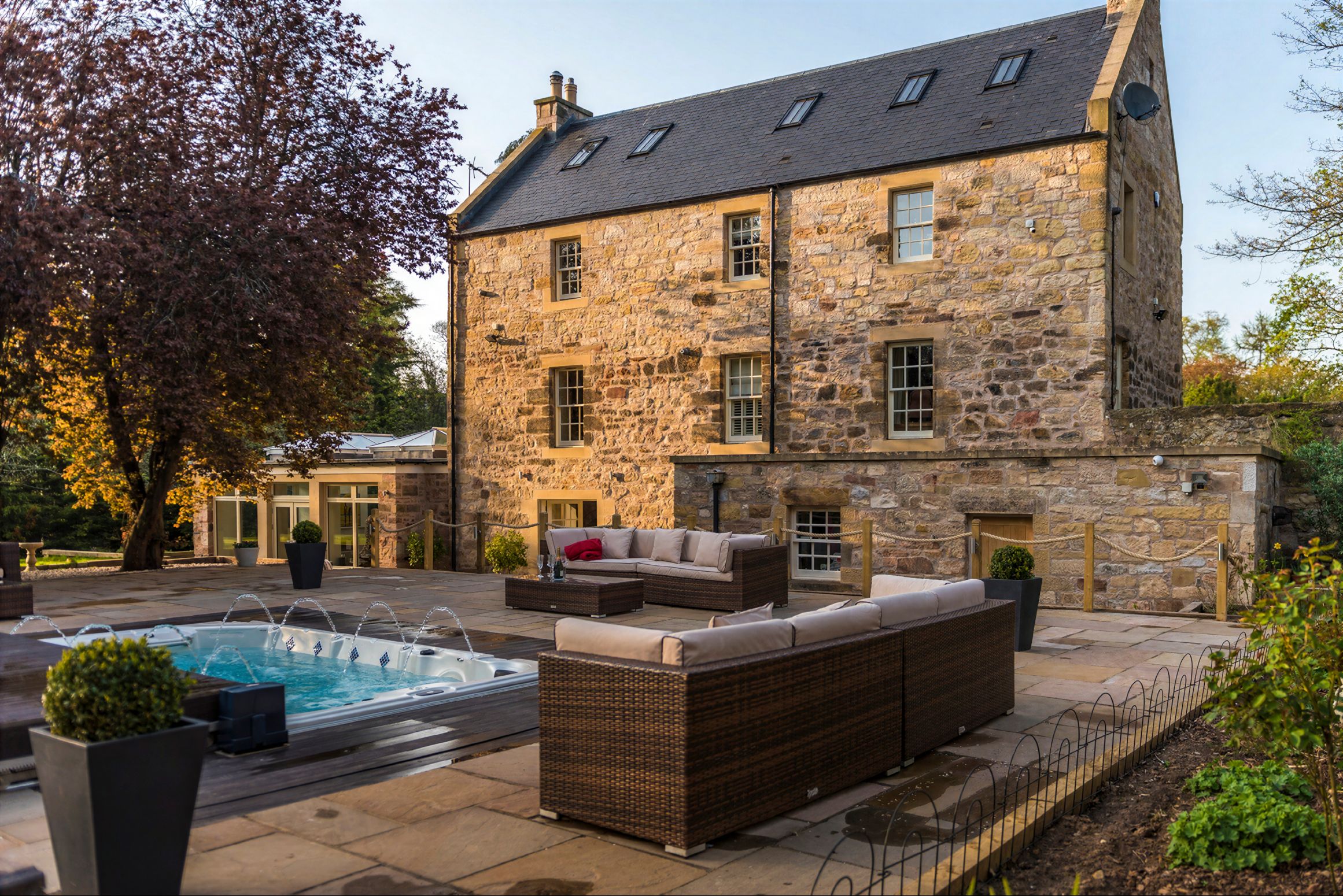
Logan Manor is in Dalkeith, within easy reach of Edinburgh but far enough away for the noise of the city to be replaced by the River Esk. The house stands in three and a half acres of private gardens and sleeps ten guests across five bedrooms, each with its own en-suite bathroom.
Dating to 1703, the manor balances its original proportions and period details with relaxed contemporary interiors. It is grand without being ceremonious, with enough room for a group to gather over breakfast and compare reviews.
Solar Eclipse 2026: Best Places to Watch in Spain & Where to Stay
Popular Articles
The 10 Best Beaches in Cyprus
Cyprus has beaches for almost every kind of holiday, from soft, pale sands and shallow family bays to turtle-nesting shores, watersports hubs, and quiet coves beneath cliffs. Better still, the island makes it easy to combine time beside the sea with ancient ruins, mountain villages, and lunches in coastal tavernas. The best beaches in Cyprus […]
The 10 Best Beaches in Mykonos
Mykonos may be known for its whitewashed lanes, late-night parties, and famous beach clubs, but its coastline has more range than the headlines suggest. Long sandy bays curve around the south of the island, while the north coast feels wilder, more exposed to the Aegean wind. The best beaches in Mykonos cover almost every mood. […]
10 Best Villas in Ibiza
The fabled ‘White Island’ is a place of many faces. On the one hand, Ibiza is renowned as a prime clubbing destination with a vibrant nightlife that’s a magnet for partygoers. But there’s more to the island than exclusive clubs and dancing ’til dawn! Further inland, you’ll find there’s a much more laid-back atmosphere among […]
Annual leave is one of the year’s more finite pleasures. Used without much thought, it can quickly disappear into the occasional Friday and a handful of Mondays. Place it more strategically, however, and the same allowance can turn four days away from your desk into nine or even ten days elsewhere. In 2027, Easter falls […]
Sense and Sensibility: Where to stay for a Jane Austen-inspired escape
On 25 September, this year’s Sense and Sensibility will introduce Jane Austen’s razor-sharp wit and biting social commentary to a whole new generation of gooey-eyed romantics. Like Emma Thompson’s much-loved 1995 adaptation and the novel long before it, the new film promises fierce heroines, men whose charms cannot always be trusted and – of course […]
Venice Film Festival 2026: Where to Stay
Every September, Venice – a city already accustomed to grand entrances – becomes the stage for cinema’s most anticipated arrivals. First held in 1932, the Venice International Film Festival is the oldest in the world. Its 83rd edition runs from 2–12 September 2026 on the Lido, the long barrier island separating the Venetian Lagoon from […]
10 European City Breaks and Where to Stay
One of the great pleasures of living in the UK is its access to the rest of Europe. It is easy to forget quite how extraordinary it is until you hear it from someone who has crossed an entire ocean to get here. The distinctly American idea of “doing Europe”, which tends to mean a […]
7 Days In… Corfu
In the turquoise Ionian, just off the coast of Albania, lies Greece’s greenest island. Stand at the north-west of the peninsula at Paleokastritsa, and you will see the whole landscape open before you. Lush, green hills rise from every angle, their cypress trees fringing the rocky bay out into endless azure, the old monastery above […]
Solar Eclipse 2026: Best Places to Watch in Spain & Where to Stay
On 12 August 2026, the solar eclipse will sweep across Spain, coinciding with the peak of the Perseid meteor shower on the same summer night. Near sunset, the moon will pass across the sun, drawing a narrow band of darkness over the country. Hours later, beneath an almost moonless sky, the Perseids will reach their […]
7 Days in… Mallorca
The largest of the Balearic Islands has long worn its paradisiacal reputation with confidence. Along Mallorca’s south coast, there is white sand and calm, turquoise water. In the north, olive terraces and ochre villages climb towards the ridges of the Tramuntana, the mountain range that runs along the island’s north-west coast. Between them, pine-covered hillsides […]
The Odyssey: Where to Visit in Greece
In Book XII of the Odyssey, Odysseus’ men bind him to the mast of the ship, beeswax in their ears, as he listens to the song of the Sirens. No man, they say, has heard the tune and lived to tell the tale. But this is Odysseus; he has already outwitted the Cyclops Polyphemus, survived […]
England’s Most Beautiful Towns for a UK Escape
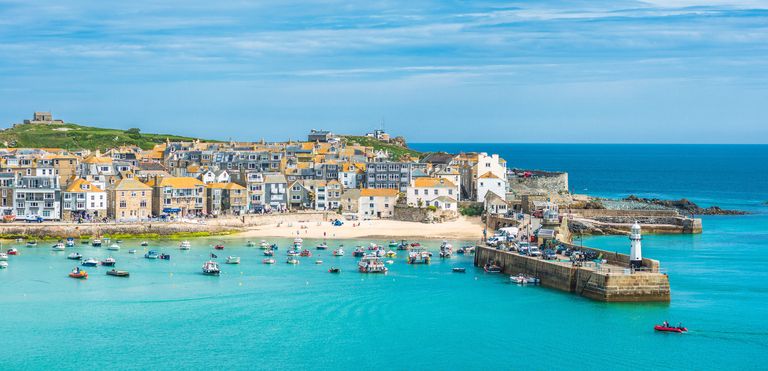
Take the train to St Ives and you see one of England’s most beautiful towns from above. The track runs high over the bay, carrying you past the pale sweep of Porthminster Beach and its turqouise waters, before the town appears in a jumble of whitewashed houses and cobbled streets. There is a feeling, in […]
Best Places to Stay in Crete for Couples: The Complete Guide
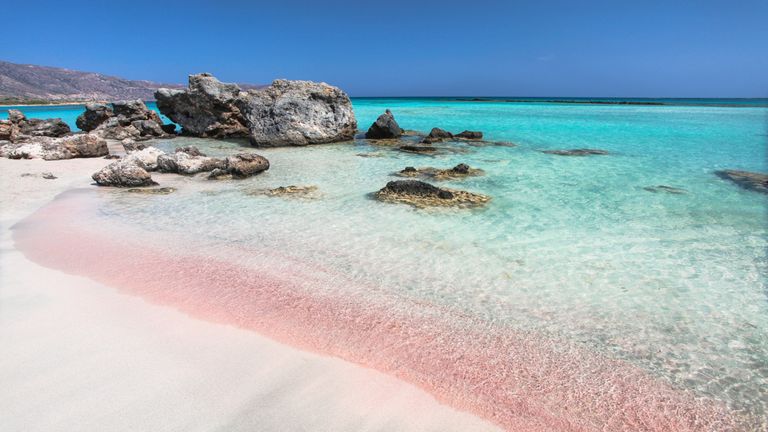
In Elafonisi, on the far western edge of Crete, the sand is pink. Crushed blush shells and coral stipple the shallows as the sea laps in, mixing white and pink with blue like a natural triptych. There is a yearning, too, in Chania at night. When the old lighthouse sends its glow across the harbour, […]