Spanish Cuisine by Region
| Region | Climate | Cooking Style | Key Identity |
|---|---|---|---|
| Madrid | Dry, inland | Hearty, stew-based | National classics |
| San Sebastián | Atlantic | Precise, high-tech | Pintxos & Michelin |
| Barcelona | Mediterranean | Creative, layered | Tradition + innovation |
| Valencia | Coastal wetlands | Fire-cooked rice | Paella culture |
| Andalucia | Hot, southern Mediterranean | Olive oil-based, fried & fresh | Tapas culture & Moorish influence |
| Galicia | Cool, Atlantic | Seafood-led, simple & produce-driven | Octopus, shellfish & Celtic heritage |
In 19th-century Andalucía, it became increasingly popular for bars to serve food with an order of drinks – a symbol of hospitality – or, as the more cynical would suggest, a barrier to soak up the alcohol and tempt punters to order more booze.
These dishes – small bites of bread, meat, or olives – were used to cover glasses, preventing small insects or dust from getting into their drinks. They were called ‘tapa’, the Spanish verb for ‘cover’, a nod to their practical purpose.
This simple act of practicality has since become a worldwide phenomenon, as well as the global face of Spanish cuisine. Stumble across any UK high street and you’re sure to find a spin on crisp patatas bravas with a smoky-spicy tomato sauce, octopus with a dusting of smoked paprika, or a questionable version of ‘meatballs’. Yet in the motherland, they’re a way of life – more affordable and infinitely more flavourful, ranging from the classic to the more inventive.
But Spain is so much more than tapas. In Valencia, you’ll find traditional paella with rabbit, chicken and beans. One of the world’s Michelin capitals, San Sebastián presents plates of perfect pintxos. In Galicia, seafood and Atlantic wines reign supreme. And in Barcelona, creativity is key.
The glorious thing about Spain is that no matter where you are, you’re sure to come across some of the world’s most delicious food. You might even find that the best examples are the ones you happen on unexpectedly. For now, though, consider this your starting point. Read on for our guide to Spain’s most delicious eats.
Madrid: The Melting Pot
Where to stay: Our villas in Castilla y León offer a peaceful countryside base within reach of Madrid, perfect for day trips to the capital’s markets, restaurants and historic streets.
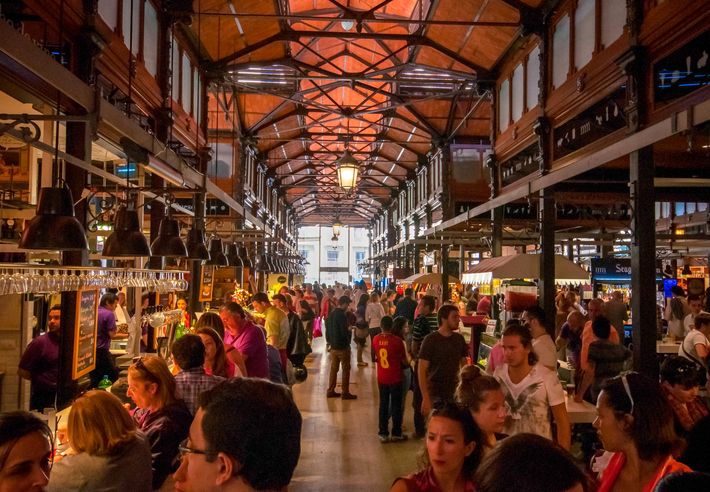
Our culinary adventure begins in Madrid. The capital may lack the ingredient purity of coastal regions, but it more than compensates with its extraordinary range of flavours. This is Spain’s great melting pot – a city that gathers the country’s finest dishes and presents them in their most vibrant and refined light.
Madrid’s Iconic Food Market
Markets make it possible to quite literally taste the nation, especially at Mercado de San Miguel. Just steps from Plaza Mayor, this glittering iron-and-glass landmark is part culinary showcase, part theatre: a celebration of Spain’s most beloved flavours under one historic roof. Here you’ll find everything from pristine jamón ibérico carved to order and briny Galician oysters, to golden croquetas, Basque pintxos and delicate pastries. It’s less traditional market and more gastronomic stage, where chefs, artisans and bartenders present Spain in perfectly portioned bites.
Traditional Spanish Dining in Madrid
For dinner, we suggest La MaMá. A celebration of generous, traditional Spanish cooking, the menu centres on big-hearted Spanish dishes rooted in tradition, complemented by two tasting menus. Los Clásicos pays homage to time-honoured favourites, while De Temporada is inspired by the best ingredients of the season. The result is cuisine that feels comforting and familiar, yet polished and thoughtfully modern.
Now if you’re looking for the taste of Madrid, you can’t go wrong with Cocido madrileño, a traditional stew that combines fatty meats, deliciously tender chickpeas, and vibrant vegetables in a silky, rich and flavourful broth.
Must try: Cocido madrileño
Book ahead: La MaMá
Don’t miss: Mercado San Miguel
San Sebastián: Michelin Country
Where to stay: One of our villas and apartments in San Sebastián
Of San Sebastián, Anthony Bourdain once declared, “There’s no better place to eat in Europe.” Step inside any bar and you’ll see why: tortillas spill with molten egg, steaks blush pink like a secret, and cheesecakes collapse into custard.
The Heart of Basque Cuisine
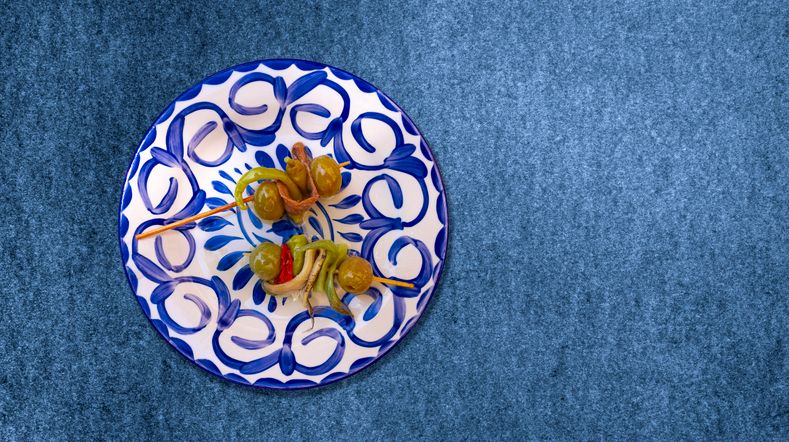
At the heart of it all are pintxos: bite-sized jewels of Basque cuisine. Originating in San Sebastián in the 1930s, the name, meaning ‘spike’ or ‘skewer’, comes from the toothpick that once held these tiny treasures together.
Today, pintxos have evolved into an art form, and the city is full of unforgettable examples. Start with the Gilda: San Sebastián’s most iconic bite, first created at Casa Vallés. Sharp, salty anchovies pair perfectly with briny olives and spicy, tangy guindilla peppers.
For the more indulgent, go for carrillera – melt-in-the-mouth beef cheeks, slowly braised in rich, red wine until they break apart with the touch of a fork. Or pulpo, tender octopus, chargrilled to smoky perfection and dusted with paprika.
Whatever you do, don’t leave without trying the tortilla de patatas, arguably the most famous of the pintxos. Savoury onions and fluffy potatoes melt into this legendary trio. At Bar Nestor, only a handful are made each day, and securing a slice is a rite of passage for many food lovers.
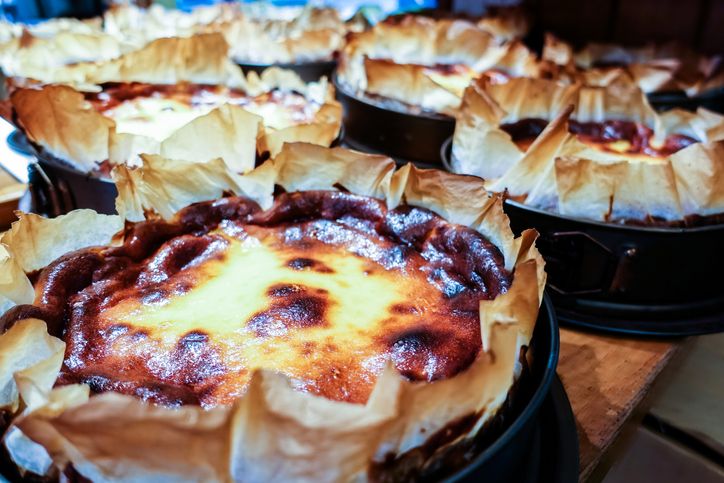
Finish it off with the region’s namesake: the king of Basque desserts, the famously silky, deeply caramelised, almost savoury-sweet burnt Basque cheesecake. The creation feels like something made in a dream: just cream cheese, eggs, sugar, cream and fire, baked at a scorching heat until bronzed and caramelised on the outside, yet impossibly light and custard-soft at its centre. In San Sebastián, you have to get to La Viña early – they have quite literally never not sold out. And it’s no surprise why: this is simplicity perfected, a dessert so delicate and indulgent that one slice inevitably leads to another.
Must Try: Tortilla de patatas
Go Early For: Bar Nestor, La Viña
Don’t Miss: La Viña’s burnt Basque cheesecake
Barcelona: The Creative Heart
Where to stay: One of our apartments and homes in Barcelona

From above, Barcelona’s meticulous grid system unfolds like a Mondrian of hexagonal streets and square, in which Gaudi’s imagination runs free. His abstract Park Güell and the ever-evolving Sagrada Família have long been reminders of Barcelona’s singular heritage, but look to the plates of the city and you’ll find something equally as fascinating. The Catalan capital eats as well as it looks; from the deceptively simple, satisfying bite of pan con tomate to the silky custardy Crema Catalana and the rich arròs negre, a distinctive rice dish cooked in the black ink of squid.
Three Michelin Stars in Barcelona
Barcelona is the city to go to for creative flair, where plates of precise innovation reflect the very soul of Catalonia. This is a place of resistance; somewhere unconfined by the orders and rules of cookery – and no restaurant exemplifies that better than Lasarte. Awarded three Michelin stars for exceptional cuisine, Martín Berasategui invites you on a culinary journey into the heart of Spain. Dedicated to the natural cycle of things, the chefs showcase the nation’s finest produce – from the land to the seas – creating plates that move you in ways that go beyond the tastebuds. It may be a splurge, but you’re guaranteed a meal you will never forget.
Modern Tapas
If you’re looking for something more affordable, we encourage you to discover the art of eating and drinking well at Paco Meralgo. This lively tapas bar celebrates traditional Spanish flavours with a refined touch. You’ll find tempting open sandwiches (montaditos) – the steak tartare version is particularly popular – alongside interesting seasonal suggestions not on the menu, excellent cuts of meat, carefully sourced wild fish from the market, and highly regarded rice dishes. It’s perfect for an informal gathering with friends, with dishes designed for sharing.
For the dish that best represents Barcelona, we have chosen the incomparable pan con tomate. Comprising warm, toasted baguette, topped with the freshest grated tomato spiked with rich and pungent garlic and finished with the highest quality olive oil, it may look simple – but like Barcelona itself with its perfectly formed grids, its maintained look of simplicity, its ease of navigation – a bite into its heart will uncover something far more beautiful and complex.
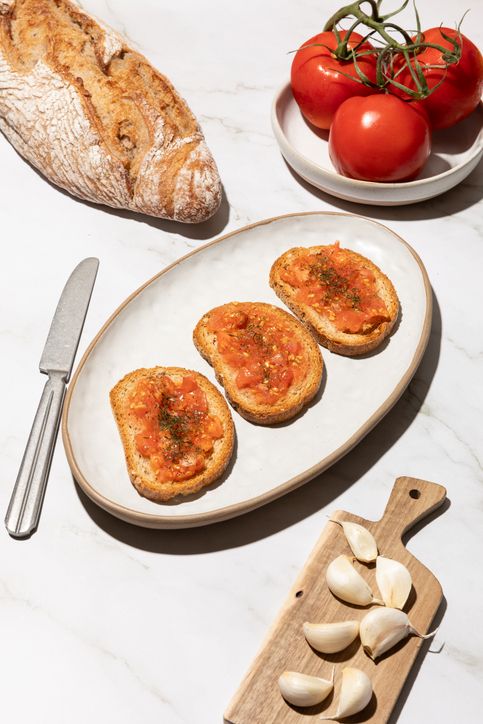
Must try: Pan con tomate
Splurge on: Lasarte
Visit: Sagrada Familia
Valencia: The Home of Paella
Where to stay: One of our villas in Valencia
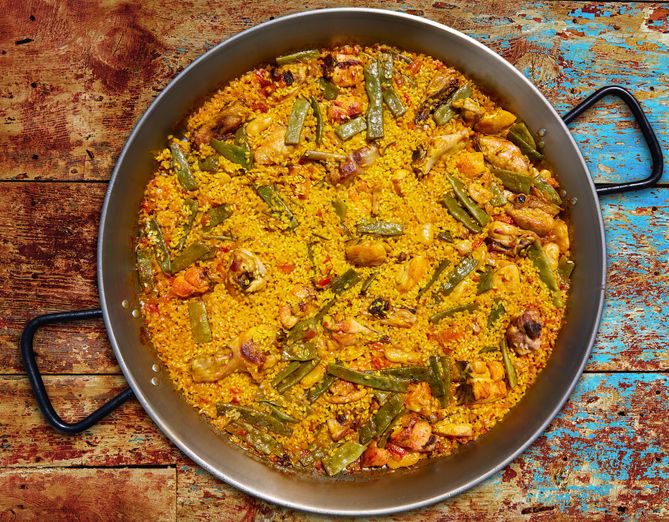
Now you may think you’ve tried some version of paella, chances are it contained a mix of seafood, maybe some chorizo, a sprinkling of peas, or – God forbid – risotto rice. But until you sample the OG, many would argue you’ve never come close to tasting the true ambrosia of the Valencians.
“What is it? What is it?!” You may be asking, disillusioned from all those visits to Spain, your regular trips to favourite tapas restaurants – so allow us to shatter your world. For a true Valencian paella, short-grain Valencian rice such as bomba is paired with rabbit, chicken, green beans, butter beans and simple, traditional seasoning, including paprika and the liquid gold of beautiful, fragrant saffron. Sometimes you’ll find snails included, and, if in season, artichokes. Once cooking begins, it should not be stirred, allowing the prized socarrat (the perfectly crisp base) to form.
Of all the region’s staggering examples, we suggest you get your fix from Casa Carmela. Famed for their plump, briny oysters and traditional paella – theirs must be booked in advance – they also offer a seafood alternative, packed with sweet, meaty prawns and langoustine. Founded in 1922, this beachfront institution still cooks its paella over orange-wood flames, as generations have done before, each pan arriving at the table with a whisper of smoke and that perfectly burnished socarrat.
Must try: Paella, of course
Book ahead: Casa Carmela
Take home: A vial of saffron
Andalucía: The Art of Tapas
Where to stay: Our villas in Andalucía place you close to some of the region’s most captivating destinations. Stay in Malaga for golden beaches, lively tapas bars and effortless coastal charm, choose Ronda for dramatic mountain scenery and historic streets perched above the famous gorge, or head to Almeria for wild natural landscapes, quiet beaches and a wonderfully unspoilt side of southern Spain.
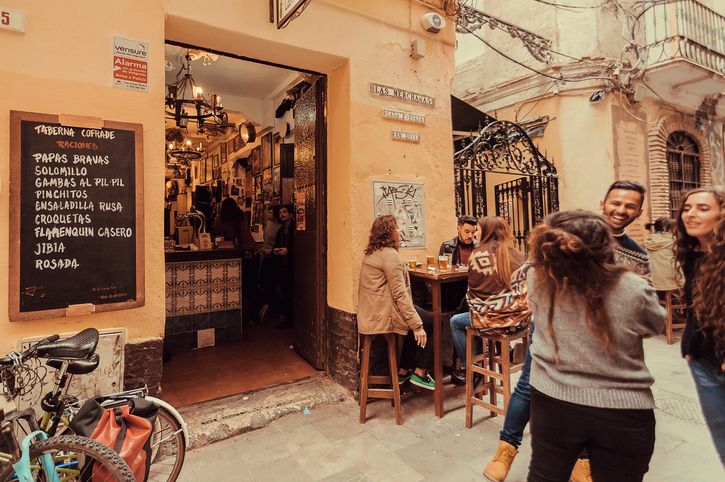
The art of tapas is a masterpiece so refined it has inspired an entire movement of modern dining. Across your city, you’ll no doubt have noticed the promise of “small plates” – dishes crafted for sharing, delicate bites constructed with precision and flair, becoming all the more satisfying in their abundance. After all, a taste of things, magic in their variety, is sometimes all you need.
But this story begins in the birthplace of tapas: Andalucía in the early 19th century. Draped along Spain’s southern coastline, this sun-soaked region has long been shaped by a rich tapestry of cultures – Romans, Moors and Christians – each leaving their mark on the plate. From the Moors came fragrant spices, the generous use of olive oil, and the sweet depth of dried fruits simmered in sauces until plump and fleshy. Aromatics drift through the cuisine; cumin, saffron and smoked paprika lend warmth, smoke and flavour.
Traditional Tapas Dishes to Try in Andalucía
We’re sure you already have a favourite. Perhaps it’s gambas pil pil, prawns gently sizzling in olive oil with lots of garlic and a flicker of chilli heat. Or maybe gazpacho: chilled, silken and bright, the refreshing taste transporting you, every time, to a shaded square in Seville where you tasted it first. But beyond the well-trodden classics lie dishes that feel altogether more rooted in Andalucía’s coastal and countryside traditions.
Take tortillitas de camarones, lacy shrimp fritters from Cádiz – impossibly crisp, feather-light, and tasting faintly of the Atlantic. Or rabo de toro, a slow-braised oxtail stew born in Córdoba, rich and glossy with deep, savoury intensity. Even ensaladilla rusa, a spin on Russian potato salad found on almost every bar top, becomes something special here – creamy, comforting, and best enjoyed with a cold glass of fino sherry.
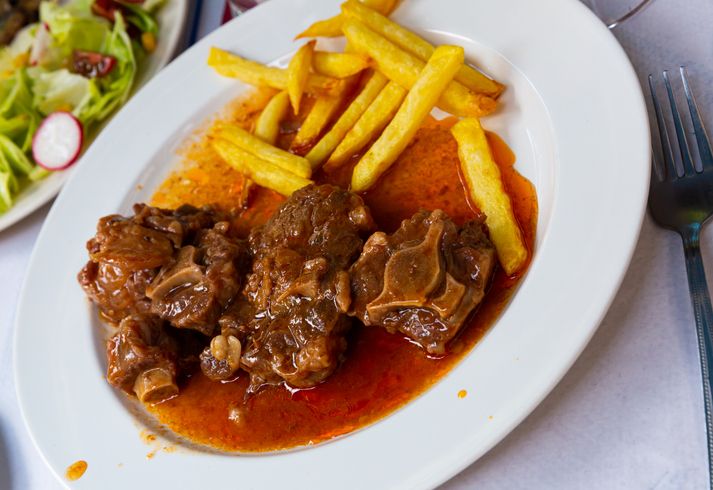
And for a place to sample these delicacies? We suggest El Pimpi. Famed for its traditional Andalusian atmosphere, this Málaga institution is all terracotta tiles, barrel-lined walls and bustling courtyards. Come for the jamón carved to order, the seafood fresh from the coast, and the steady pour of local wines.
Must try: Rabo de toro
Book ahead: El Pimpi
Drink: Fino sherry
Galicia: Shaped by Seafood
Where to stay: Our villas in Galicia
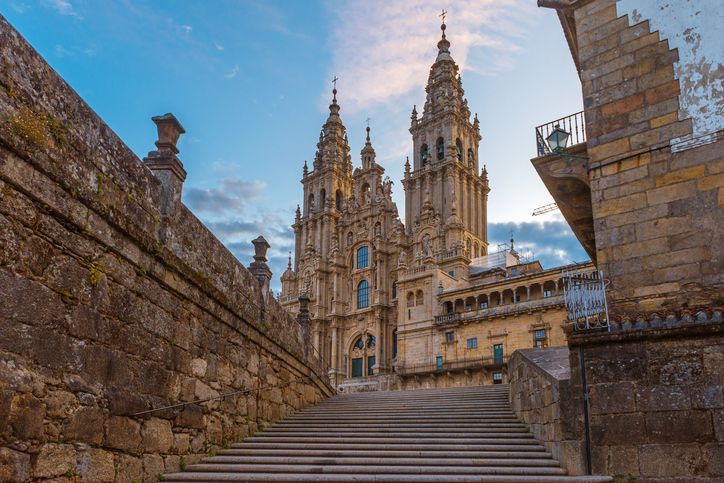
Why Galicia Is Spain’s Seafood Capital
The sea shapes so much of life in Galicia. The Romans called this rugged Atlantic outpost Finis Terrae, “the end of the earth,” believing that beyond its jagged headlands lay nothing but endless ocean. Tucked into Spain’s northwestern corner, Galicia is one of the country’s most ancient regions.
Its landscapes are strikingly varied: lush green valleys, dramatic Atlantic cliffs, wild beaches, and, inland, mountain ranges often dusted with snow in winter. Galicia is also the final destination of the Camino de Santiago, one of Christianity’s most important historic pilgrimage routes. Each year, more than 400,000 pilgrims complete the journey to Santiago de Compostela, where the remains of St James are said to rest.
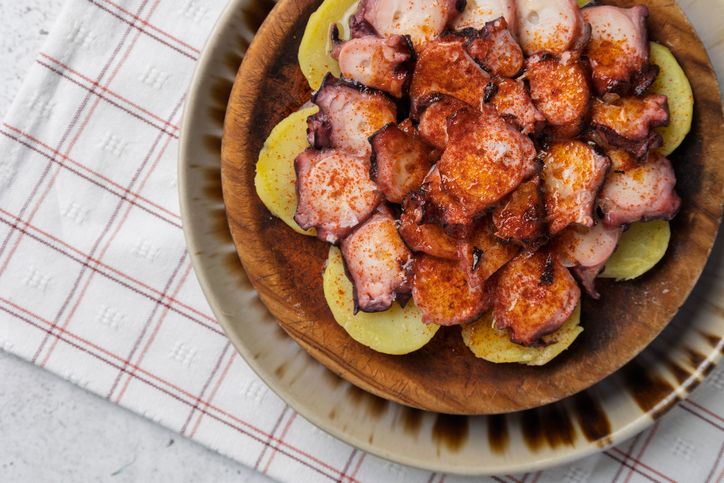
Traditional Galician Dishes to Try
This is an incredibly diverse corner of Spain – but the Atlantic still reigns supreme. Galicia’s cool, mineral-rich waters produce some of Europe’s finest seafood, and the cuisine is refreshingly unfussy, built on pristine ingredients treated with reverence. You’ll see it in pulpo a la gallega (or pulpo á feira): tender octopus, snipped into coins and dusted with paprika, sea salt and a generous gloss of olive oil, served simply on a wooden board. Then there are percebes – goose barnacles harvested from wave-battered rocks along the Costa da Morte – briny, subtly sweet, a taste of the ocean. Plump scallops (vieiras), baked with breadcrumbs and jamón; silky spider crab (centollo); and mussels steamed open with white wine are staples on menus from fishing villages to city dining rooms.
And to drink? Albariño, of course. Grown in the Rías Baixas, this crisp white wine cuts beautifully through the richness of shellfish – all citrus, stone fruit and crisp freshness.
For a memorable table in Santiago de Compostela, book Abastos 2.0, a market-led restaurant known for its daily-changing seafood plates and thoughtful Galician wines. For something more traditional, O Curro da Parra serves refined versions of regional classics just steps from the cathedral.
Must try: Pulpo a la gallega
Book ahead: Abastos 2.0
Take home: A bottle of Albariño from Rías Baixas
Reading about food in Spain is one thing, experiencing it is another. From beachfront villas in Valencia to countryside retreats in Andalucía and design-led stays in Barcelona, our Spain portfolio places you at the heart of each region’s culinary identity. Now is the perfect time to explore our Spain villa holidays. The finest homes, especially in Mallorca, Ibiza and along the Costa del Sol, book early. Browse our full collection of luxury villas in Spain, discover our handpicked destinations, and start planning your escape today.