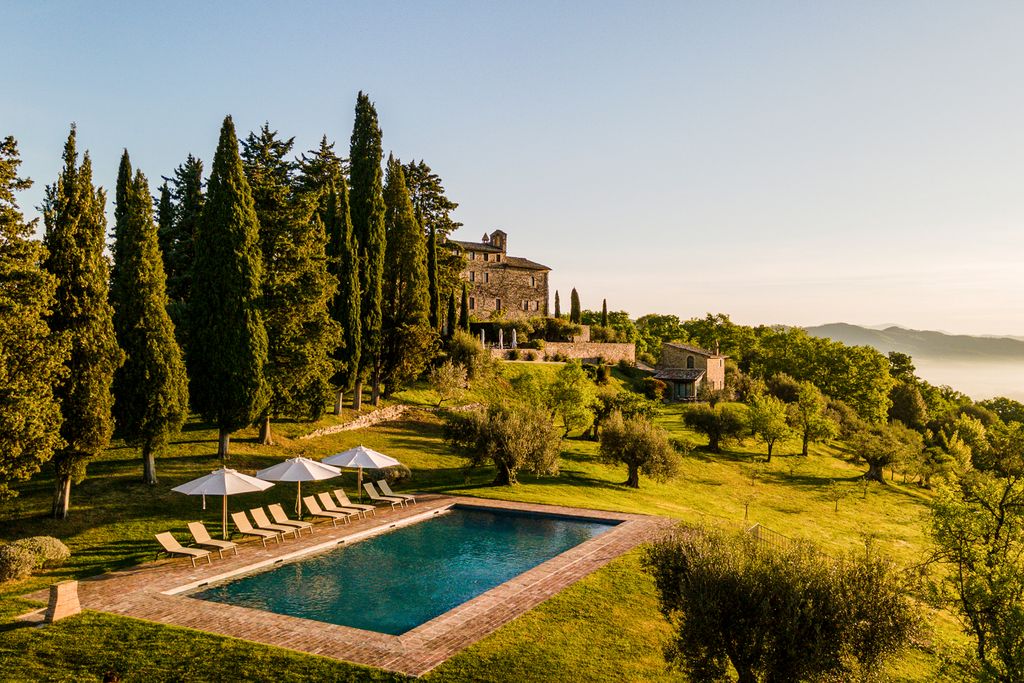
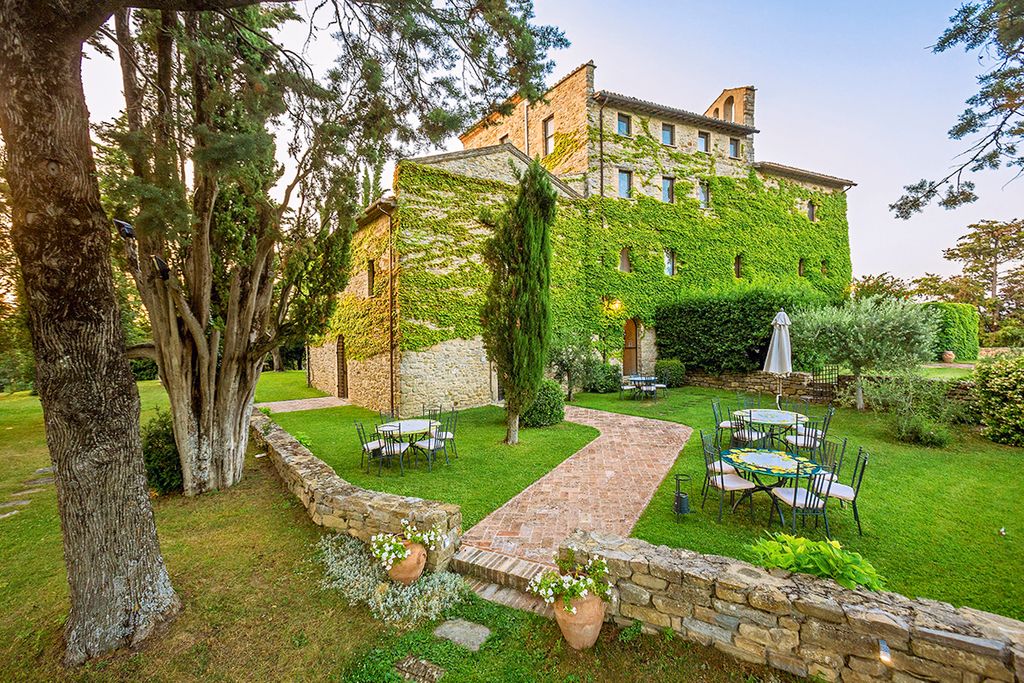
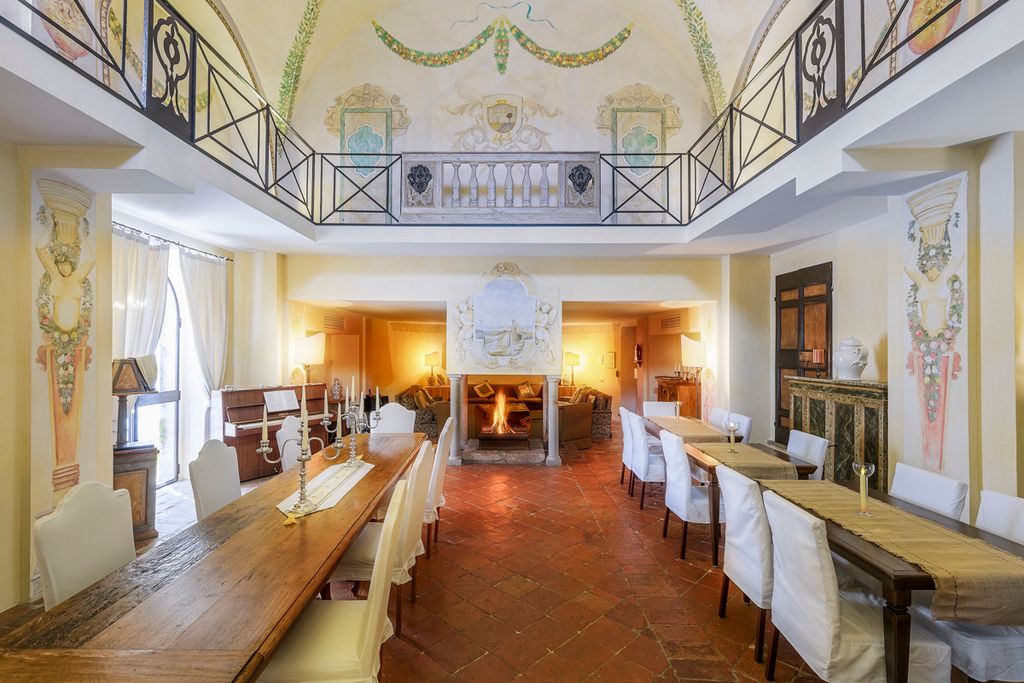
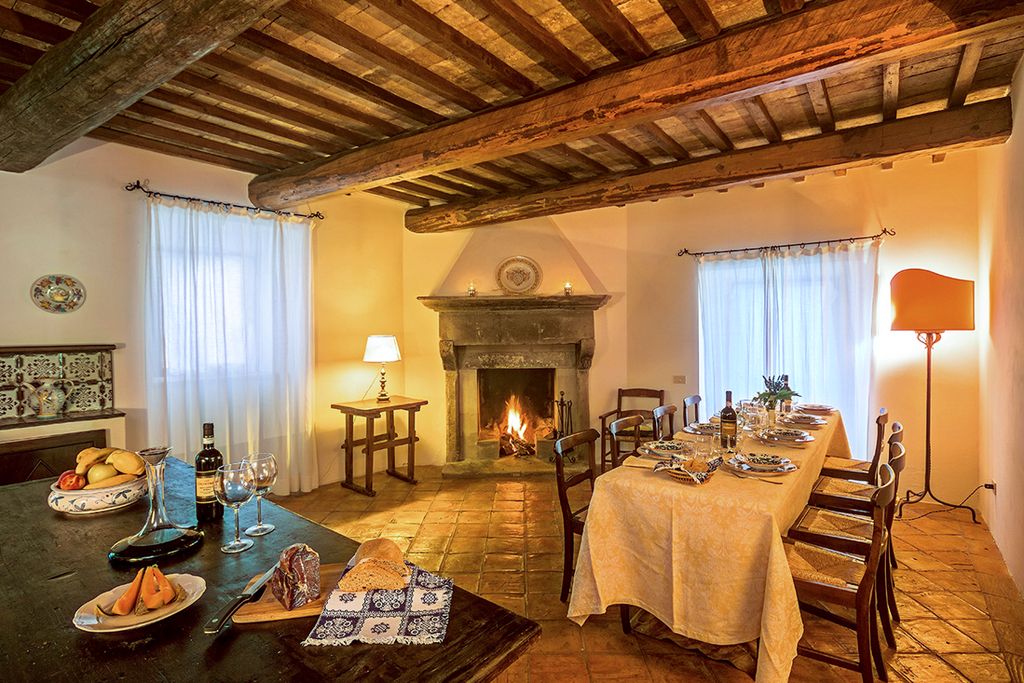
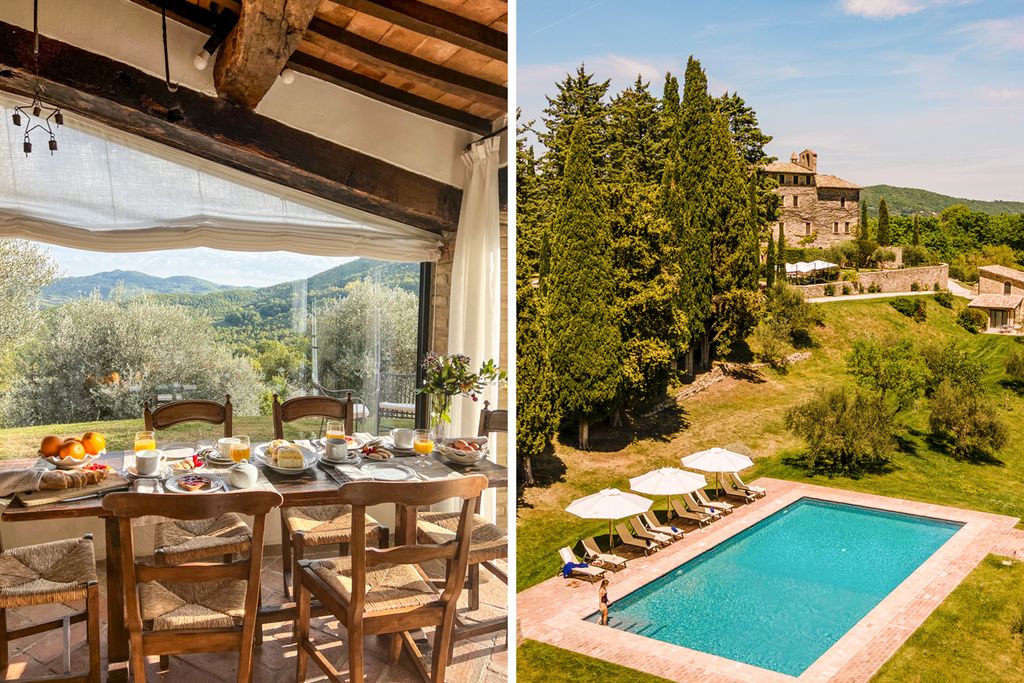
Perfectly located between Umbria and Tuscany, La Rustica is situated on the top of a hill with a spectacular 360 degree view of the rolling countryside overlooking the historic Niccone Valley, North of Perugia (the capital of Umbria). This historic hamlet dates back to 1433.
Umbria & the Niccone Valley
Umbria well deserves its description as the ‘green heart of Italy’. More lush and less developed than Tuscany, its cities and medieval hill top towns are steeped in centuries of fascinating history.
Despite being one of the smallest regions in Italy, Umbria has a wealth of attractions, with enchanting towns and beautiful countryside.
Those seeking relaxation will find it in abundance amid the tranquillity of Umbria’s rolling hills, covered with vines and olives, cypresses and Aleppo pines, oaks and chestnut trees. Painters in particular will relish the seasonal splashes of colour – the brilliant red of poppies or rich yellow of sunflowers in summer, and the browns and golds of autumn. Walkers can enjoy the splendours of Umbria’s mountain and hill scenery.
Few summer visitors will want to miss a visit to Lake Trasimeno, central Italy’s largest lake. They may choose to relax on the beaches, enjoy the restaurants of the lakeside towns, or take a ferry to one of the lake’s islands. Throughout the year, Lake Trasimeno offers particular delights to naturalists, who may observe at leisure grebe and duck or catch a glimpse of osprey. Even those with a more casual interest in wildlife may see hoopoes, or buzzards and hawks wheeling in the clear blue skies. At night, guests may enjoy occasional sightings of wild boar or porcupine and in early summer, the magic of fireflies and the song of the nightingale.
For those wishing to combine relaxation with more active pursuits, Umbria offers a fascinating history. From Etruscan through Roman, medieval and Renaissance times, the region contains a wealth of evidence of its varied past. Assisi, Perugia and Orvieto are artistic centres renowned worldwide, but the discerning visitor may find much to enjoy in a host of smaller towns and villages, such as Gubbio, Todi, Bevagna, Spello, Citta di Castello and many more.
Home to St. Francis, Umbria holds many reminders of the Saint’s presence, from the great basilica at Assisi, with its frescoes by Giotto, to the colourful fresco cycle by Benozzo Gozzoli in Montefalco. In the region’s arts and crafts, past meets present, seen in the centuries-old pottery centres of Deruta, Gubbio and Gualdo Tadino, or in summer music festivals presenting symphonic or chamber concerts, opera and jazz.
A chance to meet local people and share in their love of good food and wine is provided by the numerous festivals, or sagre, held in small villages throughout the region each summer. Besides its wealth of attractions, Umbria is the ideal base for a wider exploration of central Italy. Florence, cradle of the Renaissance, and Rome are easily accessible by road or rail a couple of hours away.
The area where Borgo Bastia Creti is situated is called the Niccone Valley. The Tiber River runs through the entire length of the valley for 50 km, bestowing fertility on the soil.
The Niccone Valley is named for the stream that flows through it, spilling into the Tiber River at its eastern terminus near Umbertide. Part of the valley is in Umbria and part is in Tuscany. At either end are the Umbrian towns of Lisciano Niccone and plain Niccone. A small section from Mercatale to La Mita is in Tuscany.
The valley was a much traveled route throughout Italy's history, and evidence of its strategic position can be seen in the castles that dot the hilltops, facing off from both sides across the border.
It is in the northern-most Umbrian territory, a border zone between Umbria and Tuscany repeatedly crossed by cultural and artistic influences that have determined its particular development in comparison to the neighbouring regions.
The entire district teems with splendid works of art and a happy balance has been achieved between ancient and modern, traditional and progressive.
Citerna, Montone, Pietralunga and Monte Santa Maria Tiberina, all deeply imbued with ancient civilization, combine the panoramic beauty of their position with sober medieval town planning. In Umbertide, S. Giustino and Lisciano Niccone, the many castles, parish churches, and abbeys bear witness to a past history of intense social upheaval and artistic and religious lifestyles. Città di Castello is a rare Umbrian example of Renaissance art and culture which harmonises perfectly with the events of national importance organised through the year.
The area is also considered a great gastronomic point, with specialties that can be tasted in the typical restaurants and trattorias of the Umbria region.
Staying in La Rustica will give guests the opportunity to visit Tuscany and its beautiful towns such as Cortona, Montepulciano, Siena, Arezzo or Sansepolcro.
The Region
Umbria, often referred to as the "Green Heart of Italy," is a picturesque region located in the heart of the Italian peninsula.
Nestled between Tuscany, Lazio, and Le Marche, Umbria boasts a unique blend of natural beauty, historical charm, and cultural richness.
With its rolling hills, lush vineyards, and medieval towns, this region offers a diverse array of attractions and activities that make it a hidden gem in Italy.
Check out our range of beautiful villas in Umbria to start planning your holiday, now!