For all the global acclaim of European food, Portuguese cuisine remains almost mysteriously under-the-radar. We’re fluent in the poesy of paella, wax lyrical about pasta, queue for croissants still warm from the oven. Yet, just next door, Portugal’s dishes are quietly confident; lesser known – yes – but by no means less delicious.
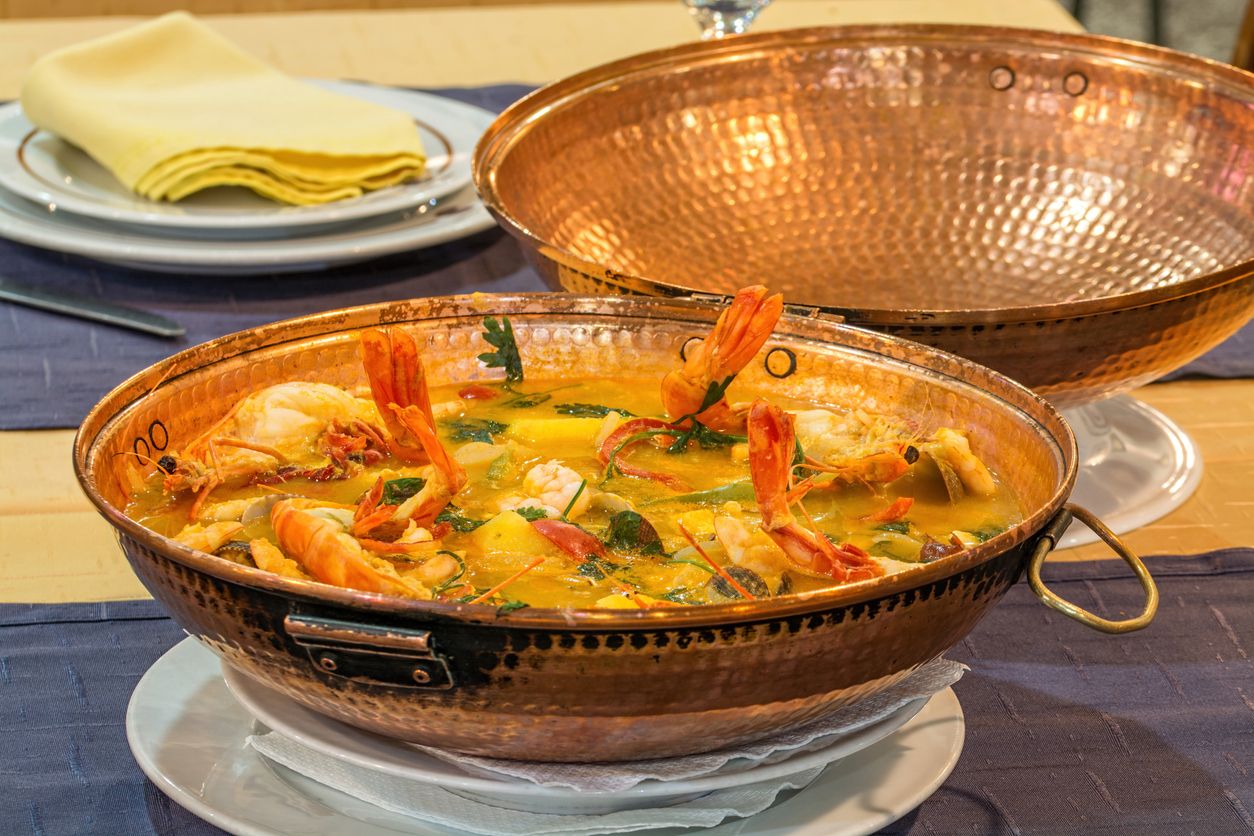
In the Algarve, the cataplana arrives at the table like a secret waiting to be revealed: its copper shell unclasped like a clam, releasing a rush of steam scented with rich garlic and white wine. Inside, plump fish and shellfish swim in a sweet, slick, deeply savoury broth, while potatoes or rice soak up every last drop.
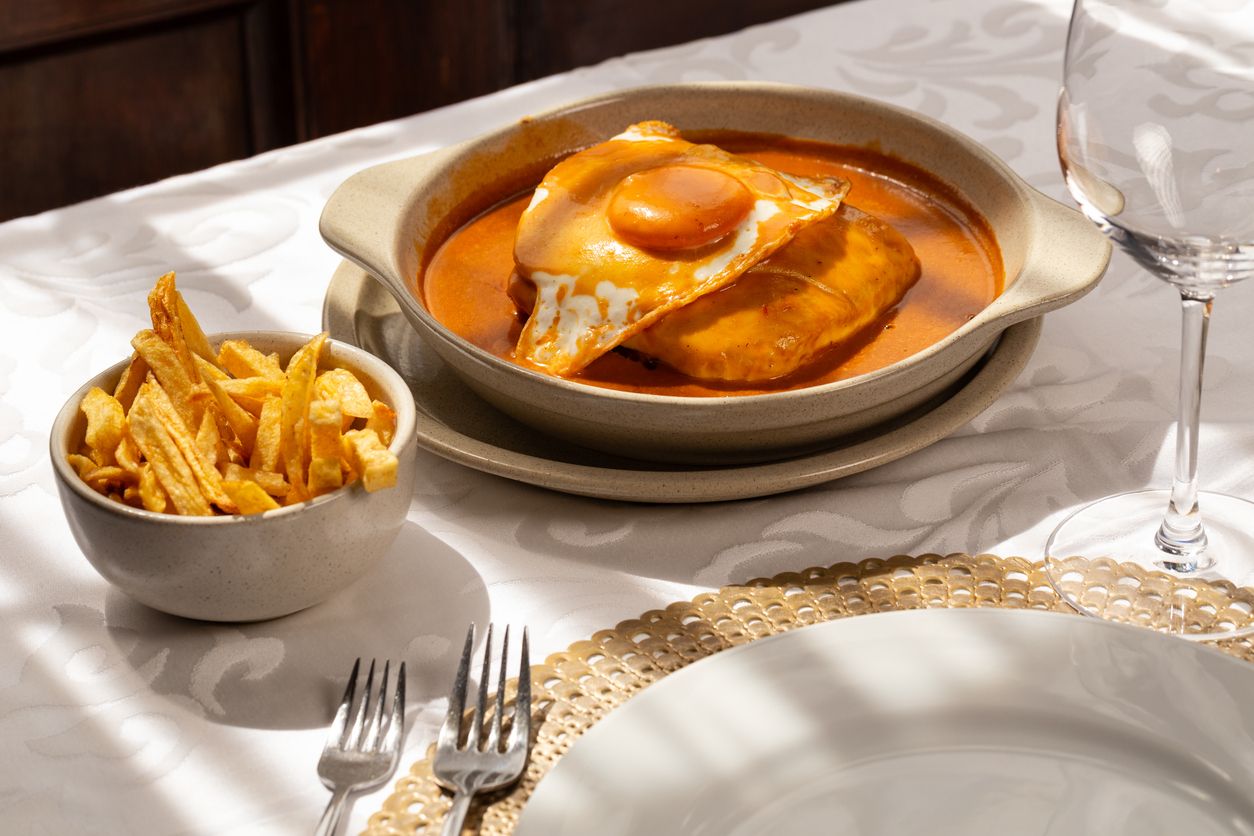
Elsewhere, there’s the bifana – thin slices of pork marinated in garlic and wine, tucked into soft bread and dripping with flavour. In Porto, the francesinha leans into indulgence without apology: a sandwich inspired by the French croque monsieur (hence the name), but taken somewhere altogether more decadent with its layered meats, molten cheese, thick, spiced gravy, and a final, perfect fried egg on top.
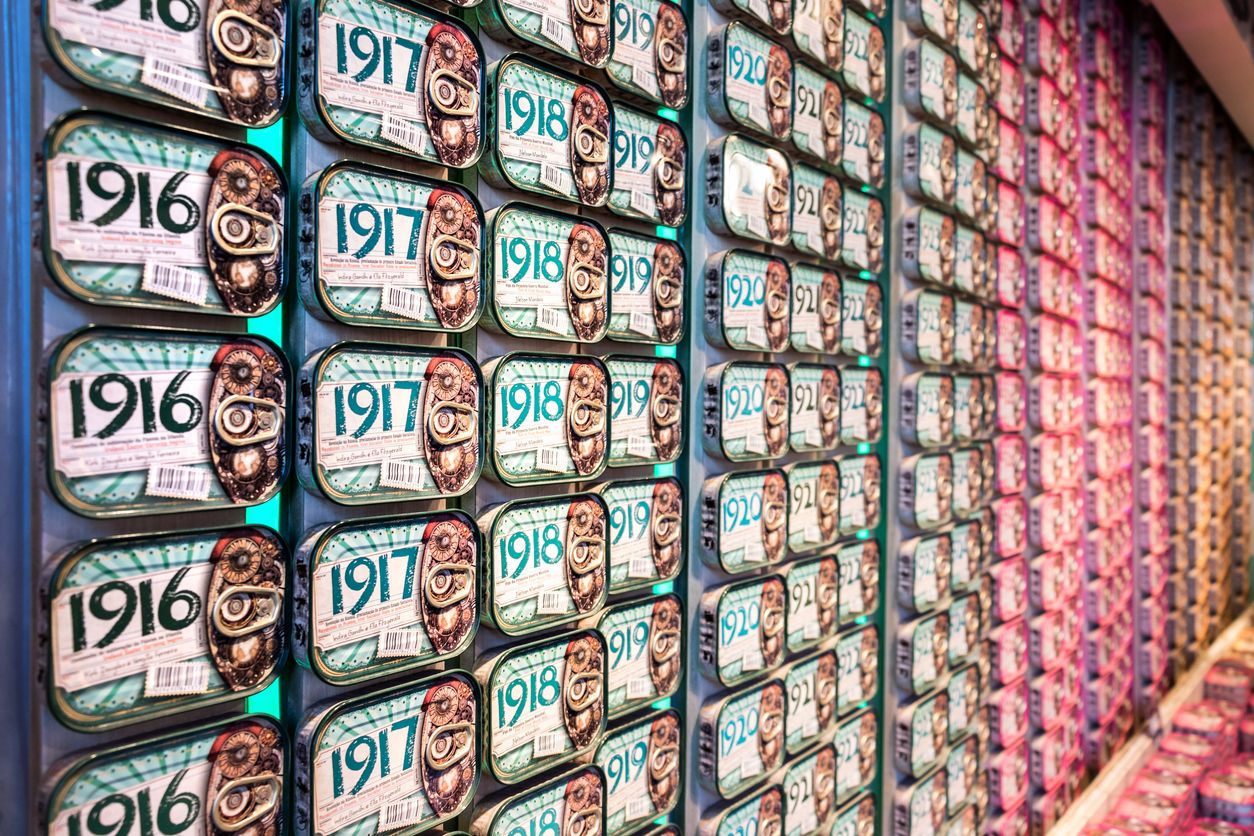
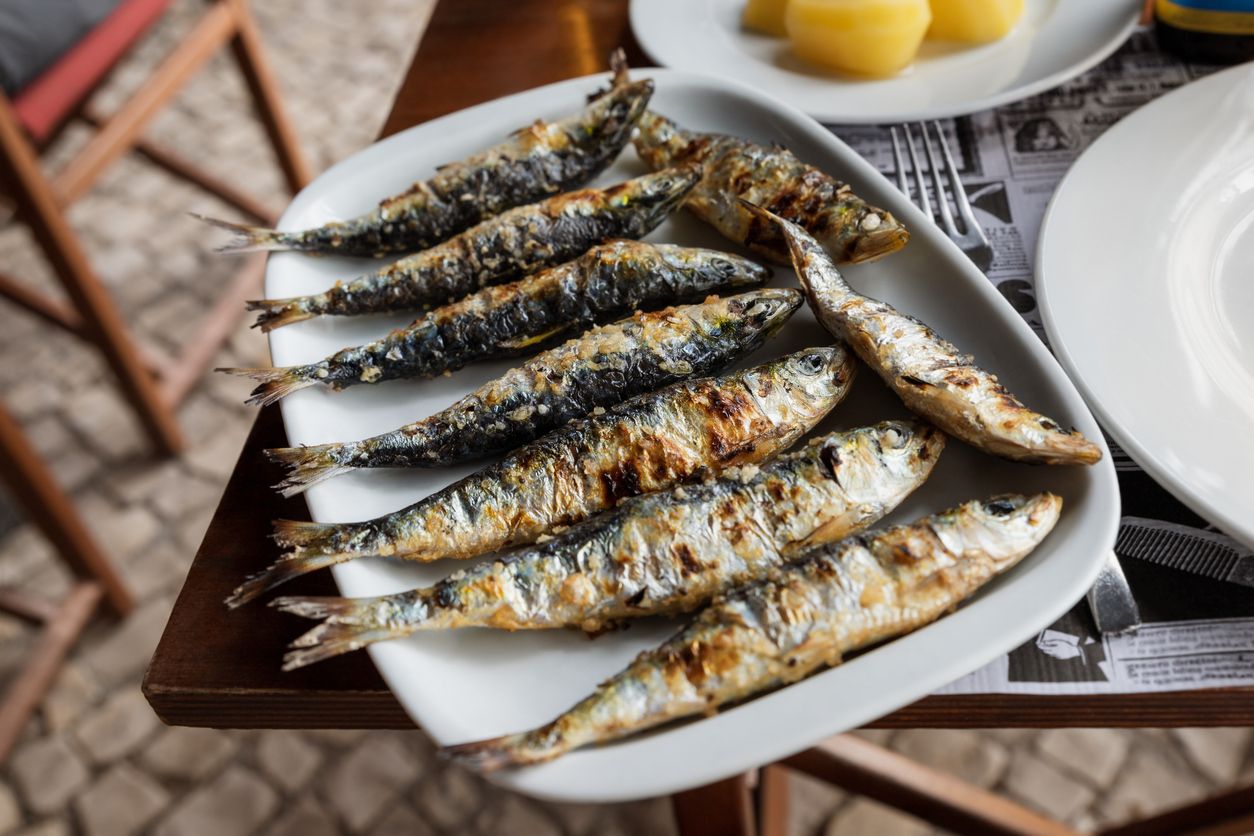
Then there’s the magic of Portugal’s coast where sardines blister over open flames, their skins crackling, flesh impossibly tender. Octopus appears everywhere – grilled, braised, or preserved in exquisitely illustrated tins. Step into one of Lisbon’s conservas and you’ll find them displayed like small shrines, each a nod to a centuries-old industry that once fed explorers setting out across the Atlantic.
Portuguese cuisine doesn’t announce itself loudly. It reveals itself plate by plate – and once it does, it’s impossible to forget.
Portuguese Cuisine by Region
Region
Climate
Cooking Style
Key Identity
Lisbon
Coastal, warm-temperate
Traditional with modern revival
Petiscos & tinned fish culture
Porto
Atlantic, cooler
Rich, hearty, indulgent
Francesinha & wine heritage
Algarve
Hot, southern coast
Seafood-led, rustic
Cataplana & grilled fish
Douro Valley
River valley, continental
Seasonal, produce-led
Wine country & refined tradition
Madeira
Subtropical island
Fire-cooked, bold flavours
Espetada & Atlantic seafood
Portuguese Cuisine in Lisbon: Tinned Fish and Tramlines
Lisbon is a city of light and hills, tiled facades and tramlines. Trams rattle past azulejo-lined streets, viewpoints open onto terracotta rooftops, and in its kitchens, old and new exist in harmony.
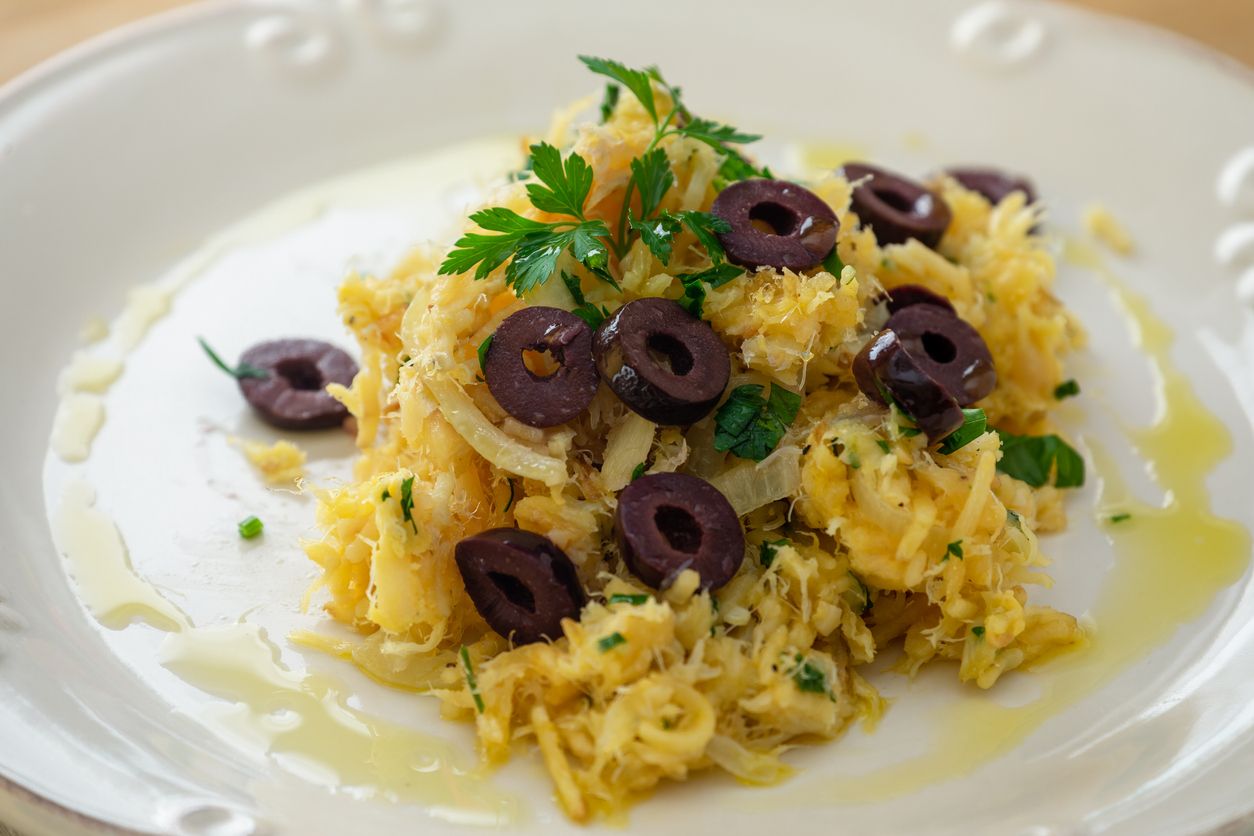
Lisbon’s culinary identity is built on petiscos, plates designed to be shared: garlicky clams, slow-cooked pork, salted cod fritters (pastéis de bacalhau). The latter’s preserved meat, once essential for long sea voyages, is now an unexpected backbone of the nation’s cuisine – and you’ll no doubt meet its many forms: fried in fritters, spiking stews with layers of salt, served fresh in salads.
Bacalhau à brás (salt cod with egg and potato)
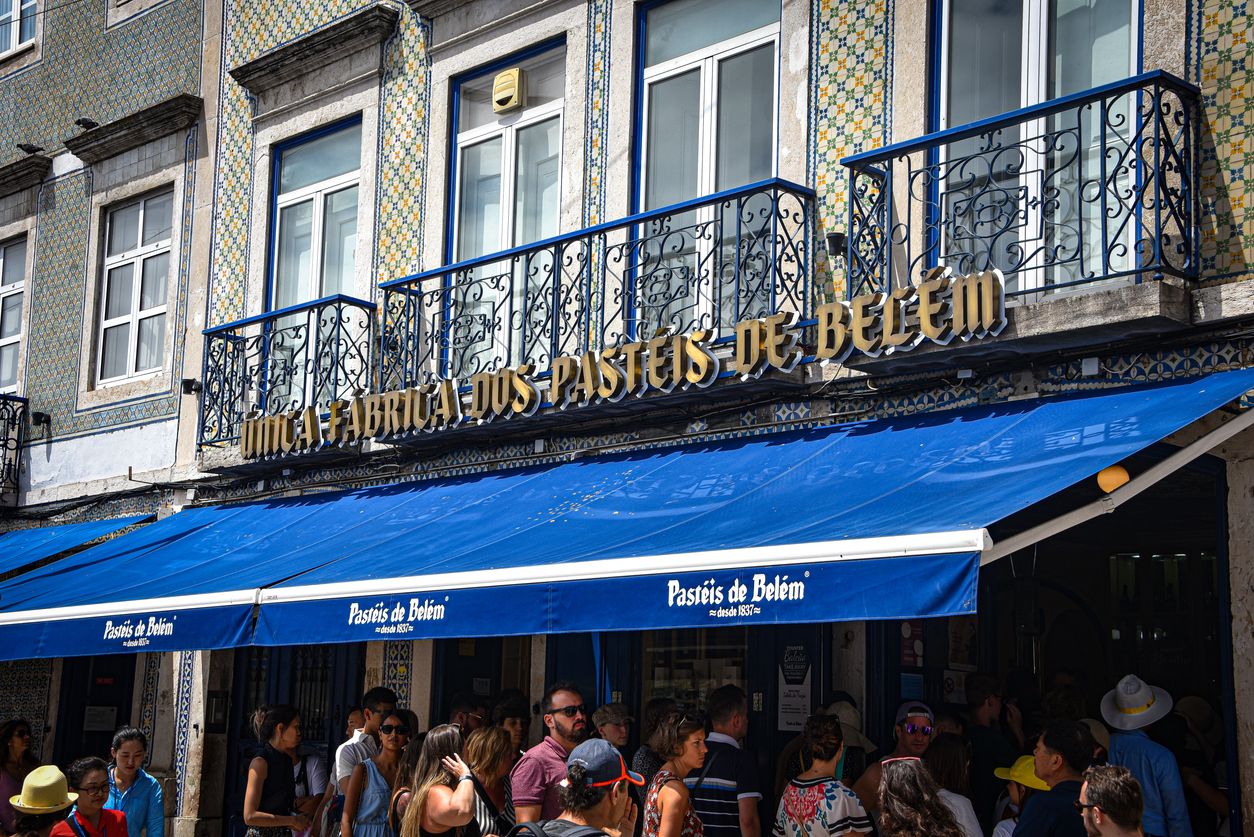
One thing is certain – no matter where you go – you’ll come face to face with the pastel de nata. Its roots are in Portugal’s convent kitchens, where egg yolks – left over from starching linens with egg whites – were transformed into these caramelised custard icons. Blistered and golden, their perfect pastry shatters at first bite, giving way to a soft-set custard, rich with egg yolk and delicately sweet.
Crowds of visitors outside the historic Pasteis de Belem bakery and cafe
On the fringes of the city, in Belém, you’ll find its most storied expression. Since 1837, monks from the nearby Jerónimos Monastery have been making Pastéis de Belém.
Pastel de nata
Beyond the tart, Lisbon’s tinned fish culture runs deep. Shops like Conserveira de Lisboa feel almost ceremonial. Rows of beautifully wrapped tins – sardines, mackerel, octopus – preserve a lineage that stretches back to the 19th century, when Portugal’s canning industry flourished, feeding both local communities and long sea voyages.
Once a necessity, born of preservation and exploration, tinned fish shops have since become more refined. Today, they are celebrated for their longevity and quality; the fish hand-packed, oils carefully chosen, and recipes perfected over generations. It’s one of Portugal’s most enduring and understated culinary traditions.
Tinned fish shop in Lisbon
Where to eat:
For a modern take on tradition, head to Taberna da Rua das Flores. The menu changes daily, guided by what’s fresh and available.
Must try:
Bacalhau à brás (salt cod with egg and potato)
Don’t miss:
Pastéis de Belém and Lisbon’s historic tinned fish shops
Where Lisbon feels light and expansive, Porto turns inward. The air carries the weight of ageing barrels, river mist, and kitchens that favour depth over delicacy.
The Home of the Francesinha
The Francesinha
The francesinha is its most famous expression, and rightly so – but like much of Porto, it tells a story that stretches far beyond the plate. Created in the mid-20th century by Daniel da Silva, a Portuguese emigrant returned from France and Belgium. Inspired by the croque monsiuer, he reimagined the recipe for the city.
Layers of cured meats and steak are sealed beneath molten cheese, then drenched in a hot, spiced beer sauce that seeps into every corner. It’s the sauce that defines it – a closely guarded blend, often built on beer, tomato, spices and sometimes a touch of port, a quiet nod to the city’s most famous export. Each version is slightly different – some sharper, some sweeter, some built on a slow-building heat – and every kitchen will insist theirs is the one to try.
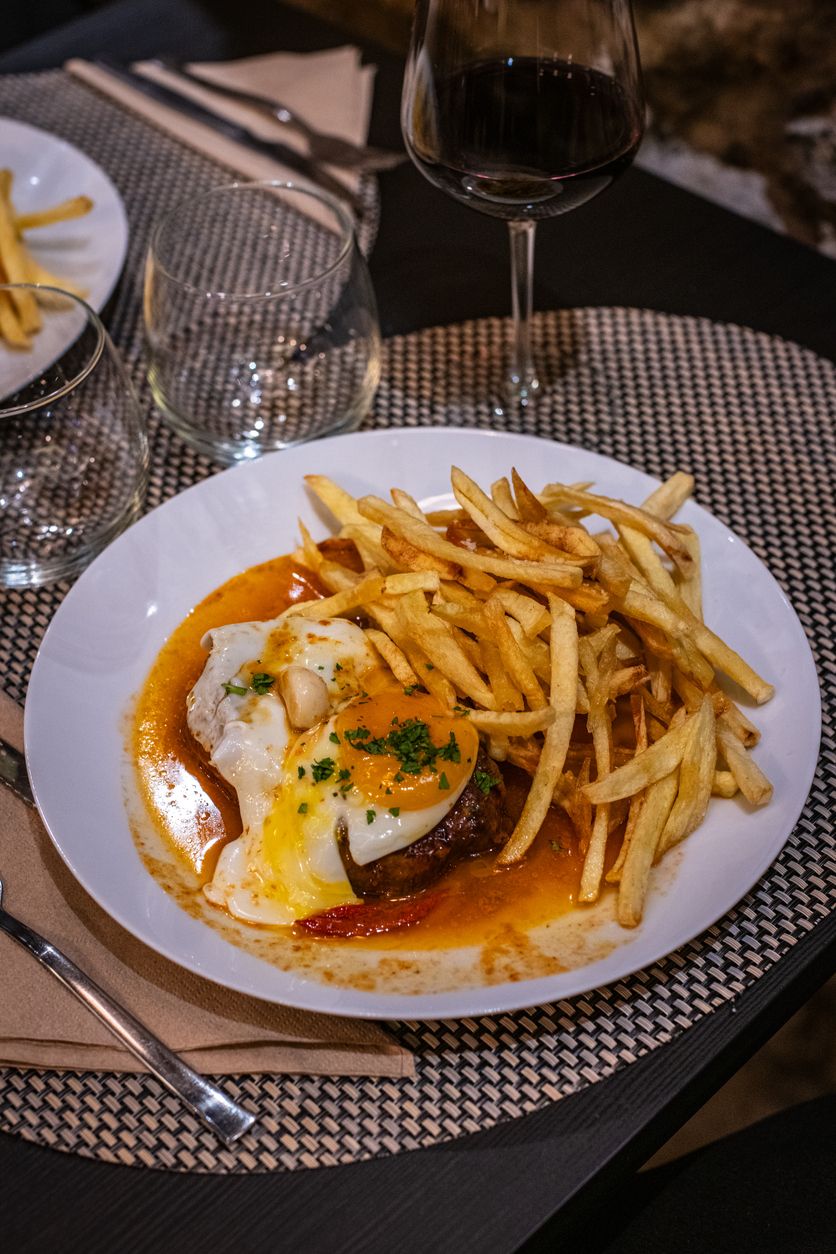
Porto is also one of the best places to understand Portuguese steak – bife à portuguesa – in its purest form.
Portuguese steak, or bife à portuguesa
In the north of Portugal, cattle farming has long been part of rural life. Beef is treated with reverence, and its preparation reflects that. Lots of garlic, butter, a slick of oil, sometimes a splash of wine or port. The addition of a fried egg feels almost instinctive – the yolk slipping into the sauce, enriching it with a soft emulsification.
And then, just a few steps from the city’s heavier plates, the Douro softens everything again. Along the river, grilled fish and octopus arrive simply dressed with olive oil and herbs – a reminder that even here, in a city known for its depth, restraint is never far away.
Where to eat:
Don’t miss Café Santiago, widely regarded as one of the best places to try a francesinha; while riverside restaurants offer excellent seafood with a view.
Must try:
Francesinha
Drink:
A glass of Port by the Douro
Portuguese Cuisine in the Algarve: Coastal Cooking
In the Algarve, everything bends towards the sea. The light is brighter, the air warmer, the food simple and generous.
The Cataplana
Cataplana
The cataplana is the region’s defining dish, but like much of the Algarve, its roots stretch beyond Portugal itself. The name comes from the distinctive copper vessel it’s cooked in, believed to have been influenced by the North African tajine, a reminder of the centuries of Moorish presence in southern Portugal.
Designed to seal tightly, the cataplana traps steam as it cooks, gently coaxing flavour from its ingredients. Shaped by climate and resourcefulness, its a method that makes the most of what was available, intensifying taste.
It arrives at the table closed. And when opened – ceremoniously, by the waiter – a rush of fragrant steam escapes – garlic, tomato, white wine, herbs, the unmistakable scent of the sea. Inside, the seafood is tender and plentiful, the broth rich yet clean, designed to be soaked up with potatoes or rice.
But the Algarve is just as much about what happens over fire. Sardines blister over open flames, their skins crisping, the flesh soft and sweet. Plates arrive with bread and salad, generous bottles of high-quality olive oil, and red wine vinegar.
Grilled sardines
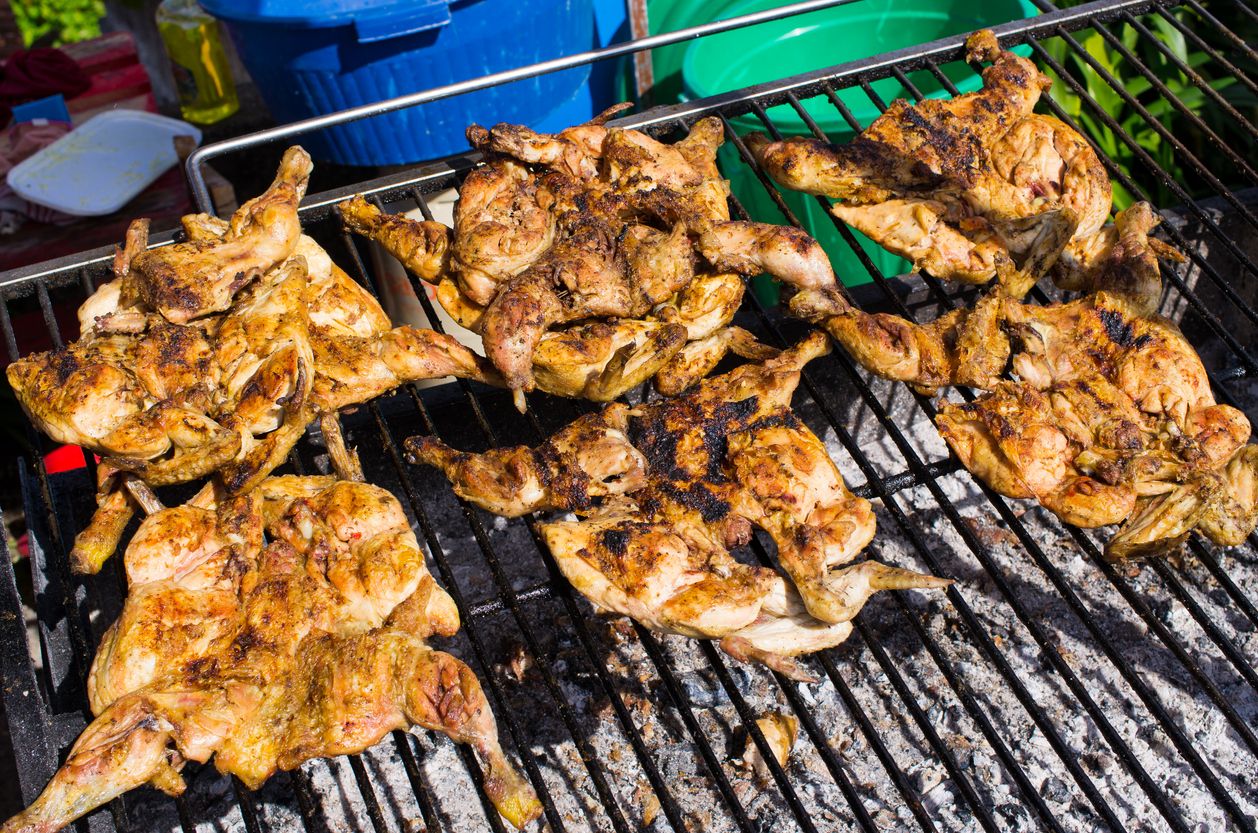
And then there is piri-piri. Its story, too, begins far from here. The chilli itself was brought back to Portugal from southern Africa during the Age of Exploration, later finding a natural home in the Algarve’s warm climate. Here, it’s used with restraint and understanding. Chicken is split, flattened, grilled low over charcoal, then brushed repeatedly with a sauce of chilli, garlic, oil and citrus as the skin crackles and the heat builds gently. It’s best eaten with hands – as was intended.
Traditional Portuguese piri piri chicken
Where to eat:
Beachfront restaurants across the Algarve serve fish caught that same morning, often cooked just metres from the ocean.
Must try:
Cataplana de marisco
Don’t miss:
Piri-piri chicken; grilled sardines in peak summer
Portuguese Cuisine in the Douro Valley: Food Meets Wine
This is wine country, yes – but not in a polished sense; the Douro somehow feels older than that. Terraced vineyards carve their way down steep hillsides, the river moves slowly below, and everything – food included – follows that same, unhurried pace.
It is, after all, one of the world’s oldest demarcated wine regions, formally established in 1756, when the Marquis of Pombal drew its boundaries to protect the integrity of Port. That sense of regulation and care is still preserved in the vineyards and in the cuisine.
Cooking in the Douro is shaped by what the land gives, and when it gives it. Menus shift with the seasons: in cooler months, slow-roasted meats arrive tender and deeply flavoured, often accompanied by potatoes and olive oil. In warmer weather, dishes lighten – river fish simply grilled, vegetables pulled straight from nearby gardens.
But the Douro is defined by its wine, and the food along with it. Rich cuts of meat are softened by long cooking, their depth matched by structured reds. Lighter dishes pair with something fresher, brighter; a crisp glass, a Vinho Verde.
You’ll often find posta mirandesa – thick-cut beef from native northern breeds, traditionally reared on the region’s rugged terrain – grilled simply, its quality doing the work. And always, olive oil: peppery, golden, poured generously, tying everything back to the land.
Where to eat:
Quinta restaurants offer some of the most memorable dining experiences in Portugal – long lunches overlooking the vines, each course paired thoughtfully with estate-grown wines.
Must try:
Posta mirandesa or slow-roasted meats with Douro reds
Floating in the Atlantic, Madeira feels more elemental than the mainland. Volcanic soil, dramatic cliffs, and the ocean shapes everything it touches. The cuisine is a result of that, bold, direct, and built around fire.
Its food is shaped by movement. Settled in the 15th century as a strategic stop along Atlantic trade routes, Madeira became a place of exchange, as ingredients, techniques, and ideas were carried between continents. That influence is still felt in the island’s food.
Cooking Over Flame
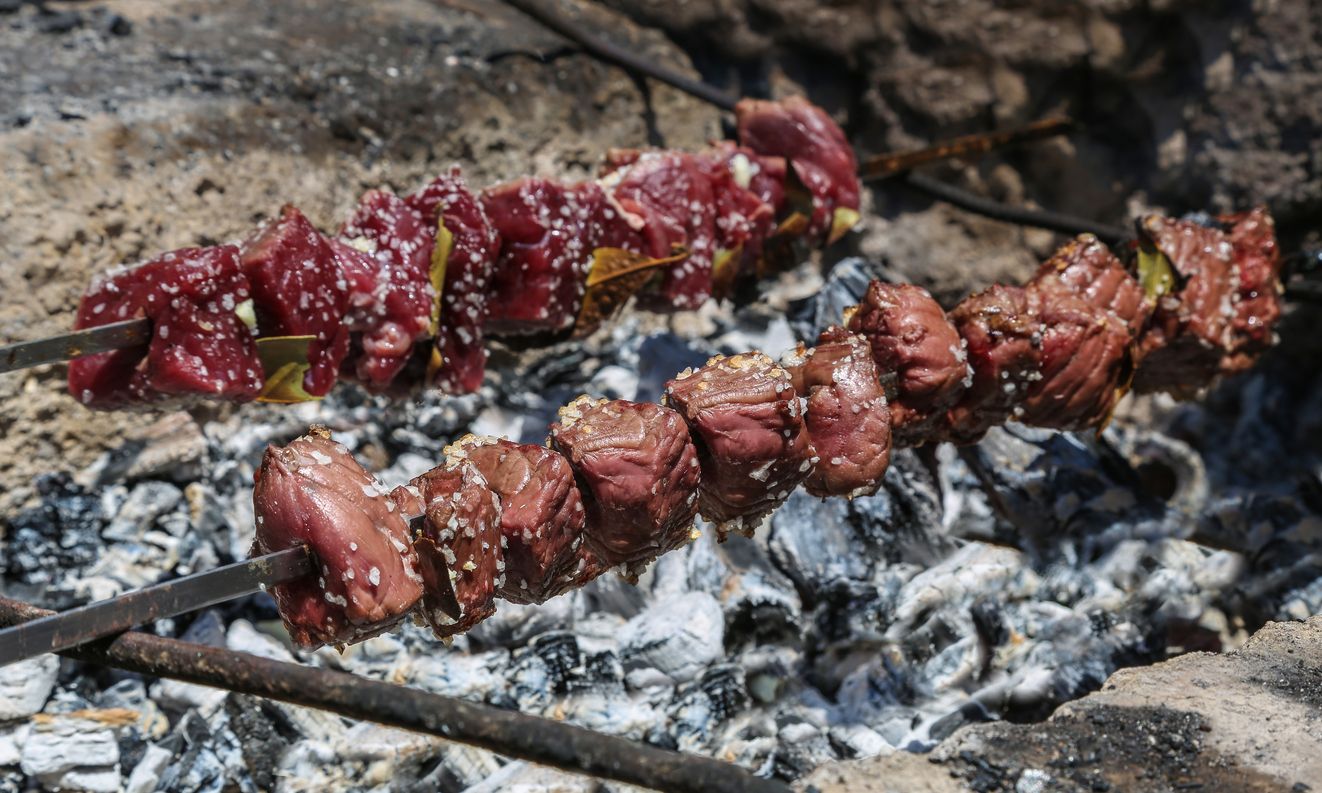
Traditional cooking on Madeira. Espetada, skewers made from beef, salt and bay leafs, grilled on charcoal.
Espetada is the island’s signature, and it tells you everything you need to know. Skewers of beef, traditionally threaded onto bay laurel branches, are seasoned simply and cooked over open flames, the fat dripping and flaring as it cooks. It arrives hanging from a metal stand, juices still running, served with milho frito – crisp on the outside, soft within – and a glass of local wine.
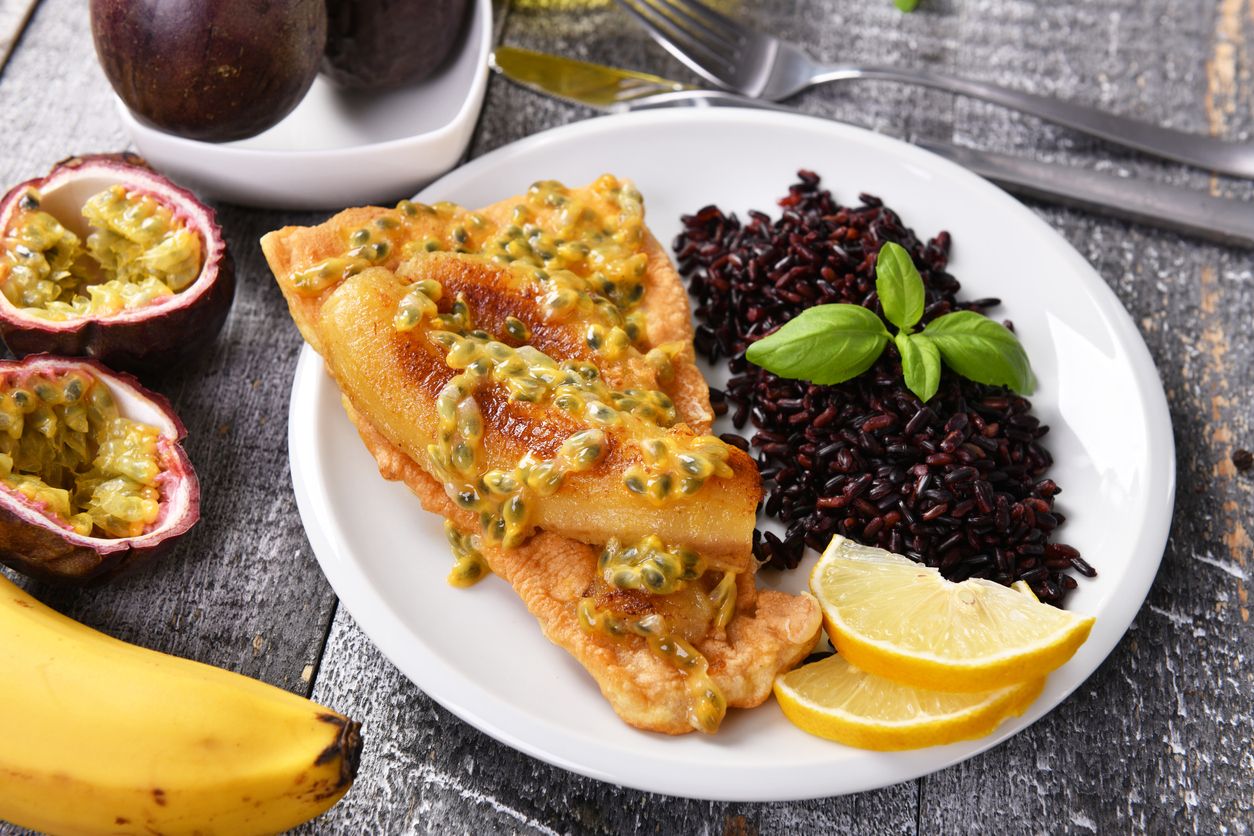
From the surrounding Atlantic comes black scabbardfish (espada), dark and delicate, most famously paired with banana – a combination that feels surprising at first, then entirely natural, a reflection of the island’s subtropical climate.
Black sabbardfish with bananas and passion fruit
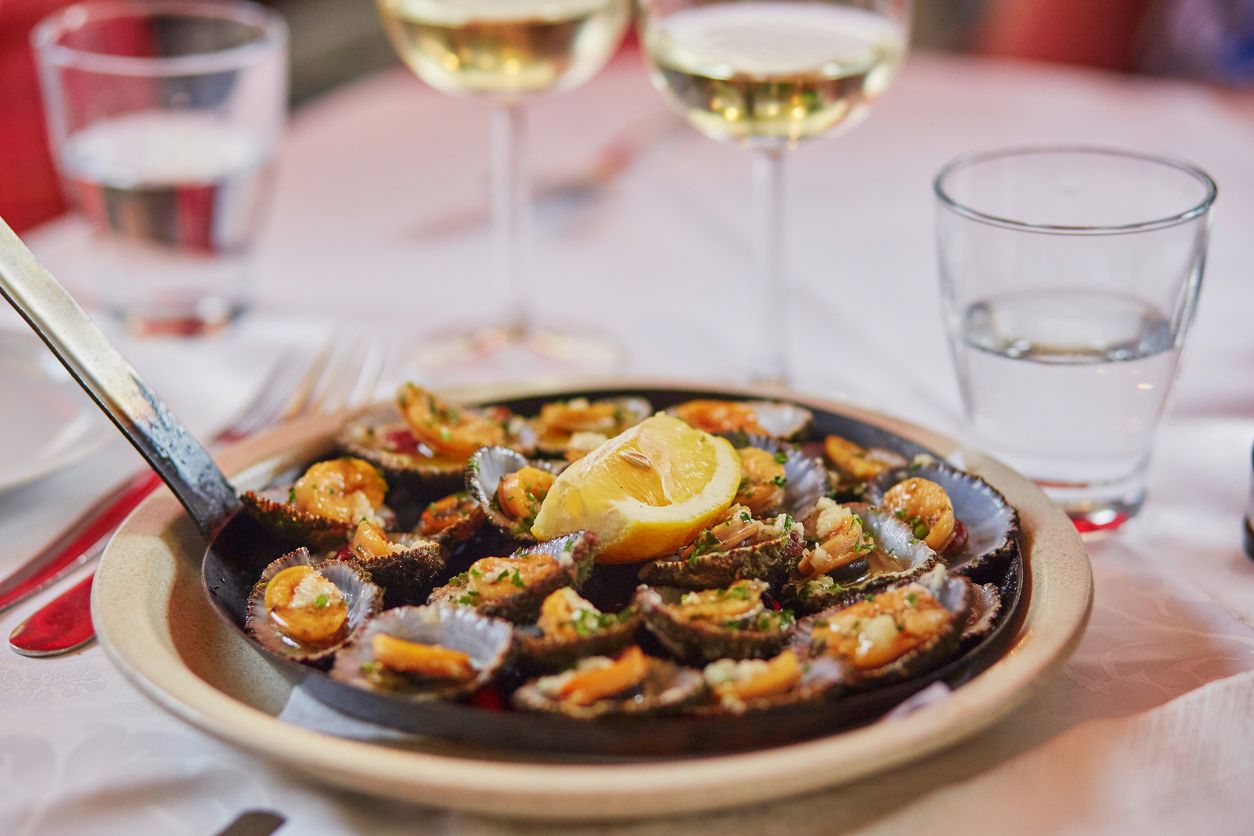
Elsewhere, limpets (lapas) sizzle in butter and garlic, served straight from the shell, while tuna steaks and other Atlantic fish are grilled simply, with little more than salt and oil.
Limpets, served with lemon
And then there is Madeira wine – fortified, complex, and one of the world’s most enduring styles. Once carried on long sea voyages, its flavour deepened by heat and time as barrels crossed the tropics. Today, that same character is recreated deliberately, but the result remains unchanged: a wine shaped by journey, exposure, and patience – much like the island itself.
Must try:
Espetada and black scabbardfish with banana
Portuguese cuisine is best discovered slowly, plate by plate, paired with a deep red or glass of Vinho Verde. One often finds it where you’d least expect, hidden in a tucked-away tasca, at an unassuming seaside grill, or by opening a tin of beautifully packaged sardines.
From the sun-drenched Algarve to the vineyard-lined Douro, our Portugal portfolio places you at the heart of it all. Explore our villas across Lisbon, Porto and beyond, and discover a country where every meal feels like a revelation.
Previous
Portugal for Families: Best Areas & What to Expect
Next
Best Beaches in Portugal: Algarve, Madeira and the Silver Coast
Popular Articles
The 10 Best Beaches in Cyprus
Cyprus has beaches for almost every kind of holiday, from soft, pale sands and shallow family bays to turtle-nesting shores, watersports hubs, and quiet coves beneath cliffs. Better still, the island makes it easy to combine time beside the sea with ancient ruins, mountain villages, and lunches in coastal tavernas. The best beaches in Cyprus […]
The 10 Best Beaches in Mykonos
Mykonos may be known for its whitewashed lanes, late-night parties, and famous beach clubs, but its coastline has more range than the headlines suggest. Long sandy bays curve around the south of the island, while the north coast feels wilder, more exposed to the Aegean wind. The best beaches in Mykonos cover almost every mood. […]
10 Best Villas in Ibiza
The fabled ‘White Island’ is a place of many faces. On the one hand, Ibiza is renowned as a prime clubbing destination with a vibrant nightlife that’s a magnet for partygoers. But there’s more to the island than exclusive clubs and dancing ’til dawn! Further inland, you’ll find there’s a much more laid-back atmosphere among […]
Annual leave is one of the year’s more finite pleasures. Used without much thought, it can quickly disappear into the occasional Friday and a handful of Mondays. Place it more strategically, however, and the same allowance can turn four days away from your desk into nine or even ten days elsewhere. Easter falls early in […]
Sense and Sensibility: Where to stay for a Jane Austen-inspired escape
On 25 September, this year’s Sense and Sensibility will introduce Jane Austen’s razor-sharp wit and biting social commentary to a whole new generation of gooey-eyed romantics. Like Emma Thompson’s much-loved 1995 adaptation and the novel long before it, the new film promises fierce heroines, men whose charms cannot always be trusted and – of course […]
Venice Film Festival 2026: Where to Stay
Every September, Venice – a city already accustomed to grand entrances – becomes the stage for cinema’s most anticipated arrivals. First held in 1932, the Venice International Film Festival is the oldest in the world. Its 83rd edition runs from 2–12 September 2026 on the Lido, the long barrier island separating the Venetian Lagoon from […]
10 European City Breaks and Where to Stay
One of the great pleasures of living in the UK is its access to the rest of Europe. It is easy to forget quite how extraordinary it is until you hear it from someone who has crossed an entire ocean to get here. The distinctly American idea of “doing Europe”, which tends to mean a […]
7 Days In… Corfu
In the turquoise Ionian, just off the coast of Albania, lies Greece’s greenest island. Stand at the north-west of the peninsula at Paleokastritsa, and you will see the whole landscape open before you. Lush, green hills rise from every angle, their cypress trees fringing the rocky bay out into endless azure, the old monastery above […]
Solar Eclipse 2026: Best Places to Watch in Spain & Where to Stay
On 12 August 2026, the solar eclipse will sweep across Spain, coinciding with the peak of the Perseid meteor shower on the same summer night. Near sunset, the moon will pass across the sun, drawing a narrow band of darkness over the country. Hours later, beneath an almost moonless sky, the Perseids will reach their […]
Edinburgh Festival Fringe & International Festival 2026: What to See and Where to Stay
Every August, artists and visitors from around the world flock to the Scottish capital for the Edinburgh International Festival and the Edinburgh Festival Fringe. For a few weeks, the city gives over its lecture halls, churches, music venues, theatres and pub basements, turning them into stages for one of the year’s most interesting arts events. […]
7 Days in… Mallorca
The largest of the Balearic Islands has long worn its paradisiacal reputation with confidence. Along Mallorca’s south coast, there is white sand and calm, turquoise water. In the north, olive terraces and ochre villages climb towards the ridges of the Tramuntana, the mountain range that runs along the island’s north-west coast. Between them, pine-covered hillsides […]
The Odyssey: Where to Visit in Greece
In Book XII of the Odyssey, Odysseus’ men bind him to the mast of the ship, beeswax in their ears, as he listens to the song of the Sirens. No man, they say, has heard the tune and lived to tell the tale. But this is Odysseus; he has already outwitted the Cyclops Polyphemus, survived […]
England’s Most Beautiful Towns for a UK Escape
Take the train to St Ives and you see one of England’s most beautiful towns from above. The track runs high over the bay, carrying you past the pale sweep of Porthminster Beach and its turqouise waters, before the town appears in a jumble of whitewashed houses and cobbled streets. There is a feeling, in […]