Key Highlights
Private Pool
Air-Con
Wi-Fi/Internet
- Experience the charm of Söğüt, with its quiet beaches, scenic trails, and authentic seaside dining.
- Wake up to sweeping sea vistas and enjoy tranquil moments on the private terrace.
- Cool off with a swim, relax under the sun, or enjoy alfresco meals with breathtaking surroundings.

Accommodates4
Bedrooms2
Bathrooms3
Private Pool
Air-Con
Wi-Fi/Internet
Seaview
Ideal for Kids
Working Fireplace/Woodburner
Hairdryer
TV
Microwave
Ideal for Teens
Villa
Walking/Hiking Paths
Boat Trips
Historical Sites
Wow Factor
Outstanding Landscapes
Outdoor Pursuit & Activities
Tourist Towns & Villages
The Villa
With two bedrooms and three bathrooms, this modern escape blends comfort with contemporary design, creating a seamless space for relaxation.
Interior Grounds
- Open-plan kitchen, living, and dining area
- Double bedroom with a balcony, sofa, jacuzzi, and an en-suite shower room
- Twin bedroom with balcony and an en-suite shower room
Exterior Grounds
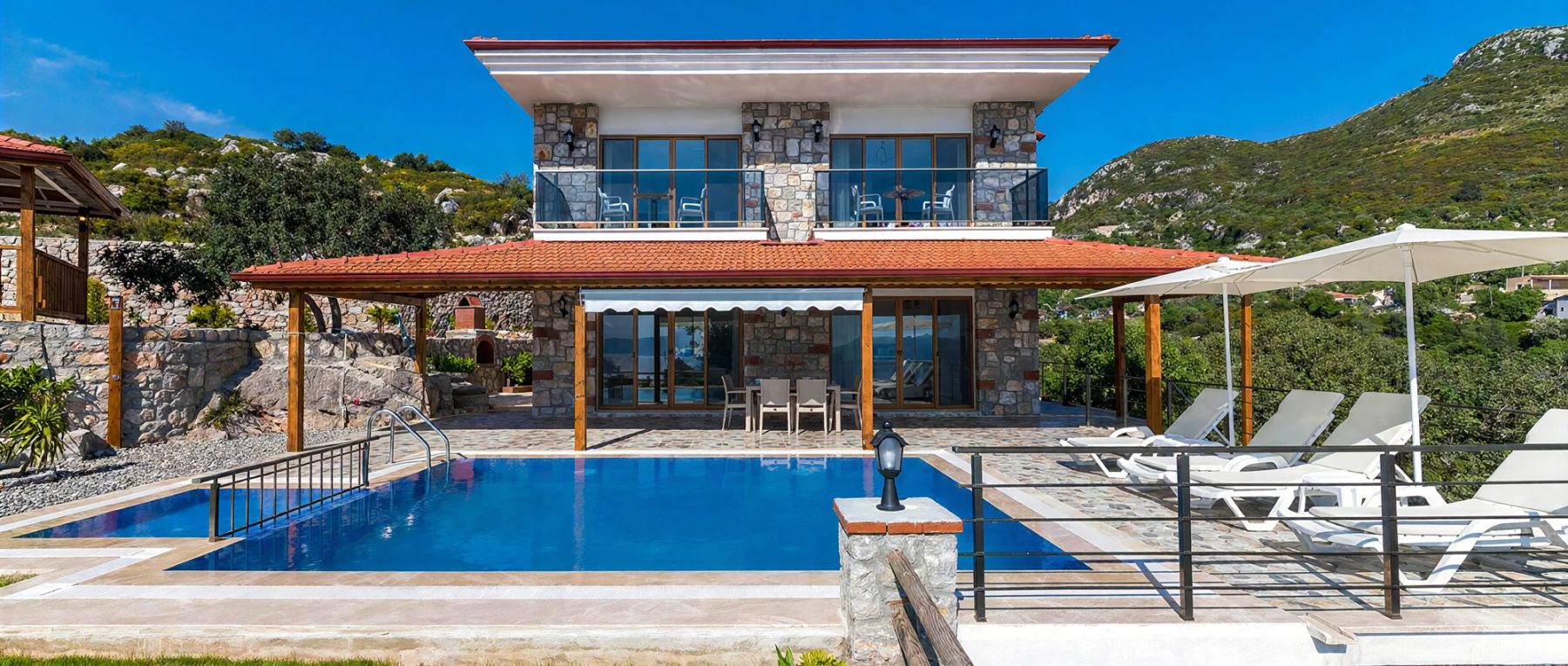
- Private swimming pool with children's shallow area
- Outdoor dining area
- Sun loungers
- Hammock
- Separate covered decking area with outdoor furniture
Additional Facilities
- Wi-fi
- Air conditioning
- BBQ
- Hairdryer
- Kettle
- Microwave
- Oven
- Toaster
- Tv's
Interior Grounds
- Open-plan kitchen, living, and dining area
- Double bedroom with a balcony, sofa, jacuzzi, and an en-suite shower room
- Twin bedroom with balcony and an en-suite shower room
Exterior Grounds
- Private swimming pool with children's shallow area
- Outdoor dining area
- Sun loungers
- Hammock
- Separate covered decking area with outdoor furniture
Additional Facilities
- Wi-fi
- Air conditioning
- BBQ
- Hairdryer
- Kettle
- Microwave
- Oven
- Toaster
- Tv's
Set against the stunning backdrop of Söğüt’s tranquil coastline, Villa Sahra offers a stylish retreat for up to four guests. With two bedrooms and three bathrooms, this modern escape blends comfort with contemporary design, creating a seamless space for relaxation.
Inside, you'll find the open-plan living area, leading to a private terrace where breathtaking Aegean views unfold. A fully equipped kitchen, including an oven, stove, and microwave, makes self-catering effortless, while the outdoor BBQ invites alfresco dining under the stars. The private pool offers the perfect spot to cool off and unwind in the sun.
Each bedroom is thoughtfully designed for restful nights, with a master suite featuring a double bed and an additional room with two singles—ideal for families or friends. The three sleek bathrooms provide added convenience, ensuring a comfortable stay.
Whether sipping your morning coffee on the terrace, enjoying a refreshing swim, or embracing the peaceful atmosphere, Villa Sahra is a haven of relaxation where every moment lingers a little longer.
Inside, you'll find the open-plan living area, leading to a private terrace where breathtaking Aegean views unfold. A fully equipped kitchen, including an oven, stove, and microwave, makes self-catering effortless, while the outdoor BBQ invites alfresco dining under the stars. The private pool offers the perfect spot to cool off and unwind in the sun.
Each bedroom is thoughtfully designed for restful nights, with a master suite featuring a double bed and an additional room with two singles—ideal for families or friends. The three sleek bathrooms provide added convenience, ensuring a comfortable stay.
Whether sipping your morning coffee on the terrace, enjoying a refreshing swim, or embracing the peaceful atmosphere, Villa Sahra is a haven of relaxation where every moment lingers a little longer.
- While the villa offers stunning views of the Aegean coastline, please note that you’ll need to travel a little further to reach sandy beaches.
- We highly recommend renting a car to fully explore Marmaris and the surrounding wonders, especially as the areas hilly terrain can be challenging on foot.
At Oliver’s Travels we pride ourselves on going that little bit further for our guests. From private chefs to travel services we can help you arrange those little extras that make it a truly memorable holiday. Simply fill in the concierge request form or contact the Oliver’s Concierge Team who will be happy to help. We can typically help you arrange any of the following:
- Maid service/extra cleaning
- Food delivered /catering
- Local day-trips or tours
- Airport transfers
Simply fill in the concierge request form or contact the Oliver’s Concierge Team.
Please note that all extras are subject to availability and must be requested in advance of the holiday (prices on request). Due to some rural/remote locations, not all services will be available at all properties. However, we will always do our best to fulfill your requests!
- Maid service/extra cleaning
- Food delivered /catering
- Local day-trips or tours
- Airport transfers
Simply fill in the concierge request form or contact the Oliver’s Concierge Team.
Please note that all extras are subject to availability and must be requested in advance of the holiday (prices on request). Due to some rural/remote locations, not all services will be available at all properties. However, we will always do our best to fulfill your requests!
