
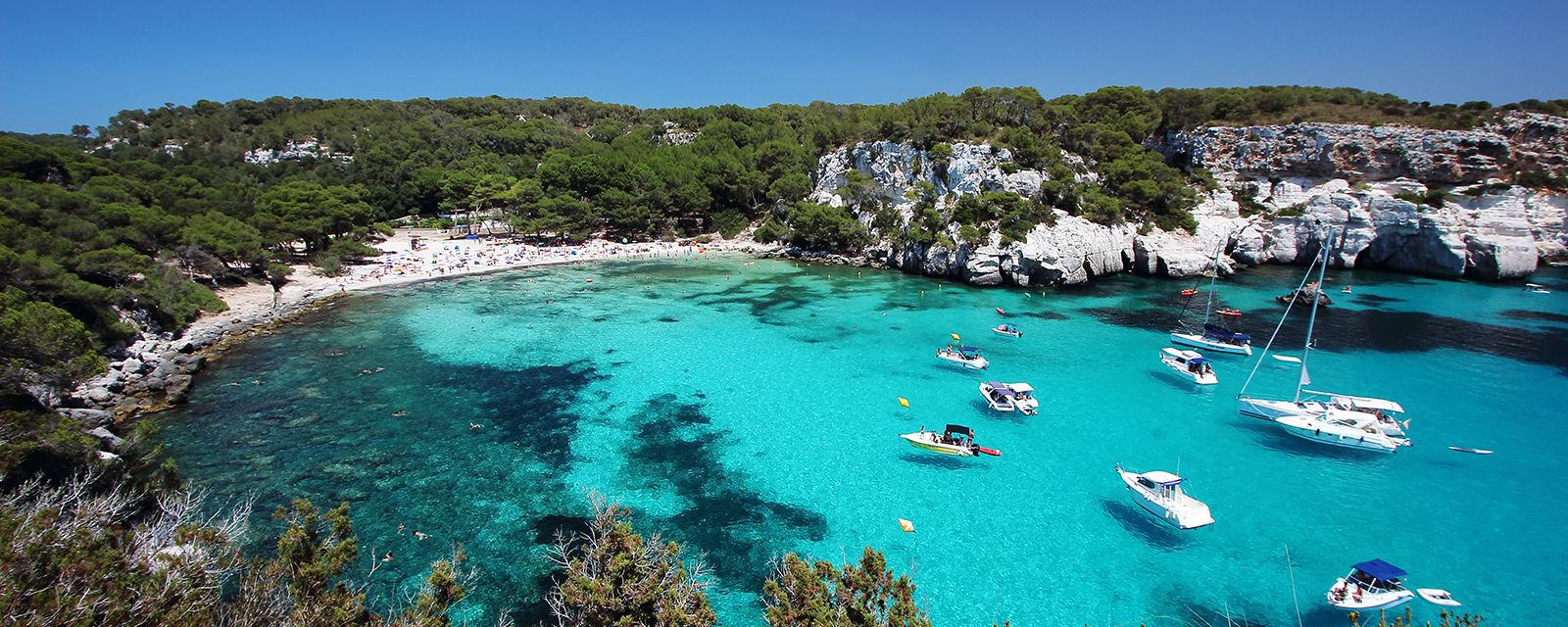
Beach in Menorca

Villas in Menorca

Find Your Extraordinary

Menorca Villa Holiday

Forget overcrowded tourist hotspots and step into the enchanting island of Menorca. More low-key than its Balearic neighbours, Ibiza and Mallorca, this stunning Spanish island offers sparkling beaches, dazzling Mediterranean waters, and seriously sensational seafood.

Crowned a UNESCO Biosphere Reserve, you’ll also be treated to floral meadows and picturesque views across the rolling hills. Wander through white-washed villages, explore fascinating archaeological sites, and toast to the sunset with the island’s famed Xoriguer Gin.

For a truly authentic experience, choose from our luxury stays, family-friendly options, or villas with private pools and discover the island like a local.

Why stay with us?

Discover the Oliver’s Travels way, where style and character define every handpicked luxury villa in Menorca. Our destination experts curate unique homes in beautiful locations that are perfect for families and guaranteed to ‘wow’.

Once you book a holiday, the service doesn’t stop there. Our Concierge Service can help with arranging in-house chefs, fridge stocking, housekeeping, and so much more, to make your stay truly extraordinary.

Why visit Menorca?

  • Due to strong coastal winds, Menorca is the perfect place for water sports.
  • Try Menorca’s most famous delicacy, caldereta de langosta – a delicious lobster stew cooked in tomato, garlic and onion sauce.
  • Whether you’re visiting the zoo, splashing in the waterpark or roaming the nature reserve, Menorca is a family-friendly destination.

Menorca has long been considered the sleepy sibling of the Balearic family – but this tiny island is waking up. It may not have the buzzy beach bars of Mallorca or the clubby vibes of Ibiza, but Menorca dances to an entirely different beat.

Tranquil, unspoiled beaches wrap around its coastline, while inland over 400,000 miles of dry-stone walls stitch together a patchwork of rolling hills and rural farmland. Two medieval port cities, Mahón and Ciutadella, sit at opposite ends of the island, with a smattering of mysterious ancient ruins and traditional fishing villages in between.

A UNESCO biosphere reserve since 1993, Menorca’s crystal-clear waters teem with marine life, including hammerhead sharks and Moray eels. A clutch of converted fincas and boutique villas in Menorca are replacing the tired package hotels, opening up the island to visitors who want a calmer, more authentic experience.

Food and drink

One to watch on the foodie scene. Must-try local dishes include caldereta de langosta (lobster stew) and arroz caldoso (seafood soup); try these at long-running stalwarts Café Balear in Ciutadella or Es Cranc in Fornells.

Food markets are the best places to sample Menorcan delicacies, including sharp, salty Mahón cheese and sugar-dusted ensaïmada pastries. In Mahón, the old fish market of Portal de Mar has been converted into a dining hub, while the cloisters of former convent Claustre del Carme have been reimagined with delicatessens and cafés.

What Oliver loves

Beautiful beaches, boutique villas, medieval cities, Bronze Age ruins, gastronomic restaurants: Menorca may well be the Med’s most underrated destination.

Best time to visit

  • Early spring or autumn is the best time to visit Menorca. Prices drop considerably outside peak season – mid-July to mid-September – though the weather remains mostly warm and sunny, yet cool enough to hike the coastal paths.
  • October is a good month to visit Menorca for near-deserted beaches but note that the later you visit in the year, the more likely you’ll hit a rainy patch.
  • If you want to experience a local flavour, time your trip with the Fiesta de Sant Joan, a raucous mix of vibrant parades, Menorcan horses, jousting and fireworks, in late June.

Top Tips

  • Fly out of season for bargain flights and empty beaches.

  • To save money, pick a seat at the bar over table service for tapas or drinks; note that outside tables come at a premium rate.

  • For meals, tip between 5% and 10% – considered generous by local standards.

Family friendly Menorca

Just a few hours by plane from the UK and with year-round sunny weather, the Balearics is a perfect destination for travellers with kids. The most laid-back of the islands, Menorca is also the most family friendly.

Self-catering holidays in Menorca combine luxury with practicality; think more space, multiple rooms and perhaps a private swimming pool or barbecue area. A wave of boutique rentals and new Menorca villas have opened in recent years, catering to families who want a local experience without jeopardising style and comfort.

With a 135-mile-long coastline, Menorca has more than its fair share of beaches. Beautiful bays are lapped by calm, clear shallows, which are safe for kids to splash about in.

Snorkelling, kayaking and paddleboarding will keep teens occupied. The shore-hugging Camí de Cavalls, a 115-mile defensive trail connecting watchtowers, cannons and fortresses, can be explored on foot, by bike or on horseback.

Thousands of megalithic sites peppered across the island can’t fail to stir the imagination of all ages; these imposing stone structures, caves and structures were built by the Talayotic people between 1500 and 123BC. Throw in water parks and jousting-filled festivals, and you can see why Menorca is one of the best family-friendly destinations in the Mediterranean.

Kayaking in Menorca

Why it’s perfect for families

For babies

Many beaches have gently shelving sands and balmy shallows that are ideal for baby’s first swim.

For kids

Water parks, lighthouses, caves and coves will all stoke the interest of young travellers, while there are plenty of Menorca villas with private pools for daytime hangouts.

For teens

For adventure, there’s horse riding, snorkelling, kayaking and island safaris. Teens will love Fiesta de Sant Joan, a mix of colourful parades, Menorcan horses, jousting and fireworks, as well as Torre d’en Galmés, the ancient ruins of a Talayotic village that thrived from 1100 BC to the Roman conquest of Menorca in 123 BC.

Things to do in Menorca

It’s all about embracing the slow life in Menorca. Days are spent hiking through olive and orange groves down to secret coves, shopping for leather sandals in artisan stores, and feasting on fresh seafood at harbourfront restaurants. A new generation of creatives are shaking up the scene, reimagining centuries-old sandstone quarries as arts and cultural centres, and transforming Menorca villas into boutique boltholes.

And if you want adventure, there’s plenty of it. Menorca may only be 30 miles long, but it’s home to the Med’s largest protected marine reserve. The sea teems with marine life, thanks to local conservation initiatives such as the Underwater Atlas project preventing boat anchors disturbing the seagrass beds. Snorkelling and diving are the best way to explore this watery playground, while back on dry land, you can hike, bike or horse ride the historic Camí de Cavalls.


Oliver's Hidden Gem

Near Cala Turqueta, Playa des Talaier is a horseshoe-shaped bay with soft sands and shady pines offering respite from the midday sun. Rocky ledges flank the water, creating a natural diving board for swimmers. The surrounding undulating landscape provides a soul-soothing backdrop for long, lazy beach days.

Oliver's Hidden Gem

Es Migjorn Gran is a sleepy rural village with narrow streets lined with candy-coloured houses. While its centuries-old historic core doesn’t look particularly remarkable at first glance, scratch beneath the surface to discover a thriving gastronomic scene. A cluster of excellent restaurants and tapas bars, many overlooking the countryside, serve tasty Mediterranean plates.

Boats and beach in Es Migjorn Gran

Towns and villages in Menorca

At opposite ends of Menorca, Ciutadella and Mahón are connected by a strand of history that stretches across the island. Wedged into the western flank, Ciutadella’s narrow streets are arranged around a grand Gothic cathedral, the sole architectural survivor of a ruthless Ottoman attack in 1558 and witness to various power battles between France, Britain and Spain throughout the 18th century.

To the southeast, the thread loops further back in time to the Talayotic era with the remains of Torre d’en Galmés, a prehistoric village that thrived between 1100 BC to the Roman conquest of Menorca in 123 BC.

At the eastern tip of the island, the gigantic natural harbour at Mahón was transformed into a military base by the Royal Navy when the British arrived at Menorca in 1708. In between, the thread loosely wraps around a smattering of traditional whitewashed fishing villages, such as northern gems Es Grau and Fornells, and southern coastal resort towns like Cala En Porter and Punta Prima.

Menorca villa holidays are the best way of getting an insight into authentic Menorcan life; pick a beachfront bolthole for toes-in-the-sand days or a classic finca for laid-back rural charm.

Ciutadella

Springing up like a pop-up town on the shores of western Menorca, Ciutadella is a medieval maze of cobblestone lanes and sandstone houses. The island’s former capital is dominated by a grand Gothic cathedral, around which narrow alleys unfurl into handsome squares lined with pavement cafés. Stock up on traditional leather avarcas sandals, before feasting on platters of shellfish at a harbourside seafood restaurant.

Mahon seafront
Mahón

From Bronze Age mystery to British Naval stronghold, the rich history of Menorca is etched into the stones of its capital, Mahón. Presiding over the Mediterranean’s largest natural harbour, the city’s prime perch explains its allure to the Royal Navy when they arrived in 1708. Today, its streets are lined with handsome 18th-century mansions that nod to the period under British rule.

Terrace of white washed building in Binibeca, Menorca
Binibeca

Around five miles from the Menorcan capital, Binibeca is a quirky development dating to the Seventies. Design fans will be awed by the Moorish architecture, the work of esteemed Spanish architect Antonio Sintes Mercadal, who wanted to replicate a traditional Spanish fishing village. A knot of cobbled lanes and whitewashed houses, the small town gazes out over a pocket-sized harbour flanked by sea-view restaurants.

Top Tips

  • Even with a car, beaches are often only accessible on foot; you may have to park and walk the final 1km to 3km (15 to 30 minutes).

  • Though usually free, car parks are often quickly packed out in high season; arrive early or travel by bus where possible.

  • You can hike, bike or horse-ride the whole way around the island using the Camí de Cavalls, taking around seven to ten days on foot. However, most people hire a villa in Menorca as a base and tackle different parts of the route with day hikes.

Menorca travel: Getting there and around

Several airlines connect the UK with Menorca: British Airways runs flights from Heathrow; easyJet serves Bristol, Gatwick, Liverpool, Luton and Southend; and Ryanair offers services from the East Midlands. Jet2 connects Belfast, East Midlands, Edinburgh, Glasgow, Leeds/Bradford, Manchester and Newcastle.

From Menorca’s airport, a shuttle bus runs regular services to Mahón’s main bus station at Placa de S’Esplanada (every hour, October to May; every half-hour, June to September). A taxi to the centre costs about €10.

The easiest way to get around Menorca is by car. A good highway – the 45km ME1 – links Mahón, at the eastern end of the island, to Ciutadella at the western end. From this main thoroughfare, roads run to the main resorts, beaches and villas in Menorca.

By car

Hiring your own car is the best way of getting around Menorca, as you’ll be able to easily reach the hidden corners of the island. Local car hire companies, such as Autos Ciutadella, Autos Mahon Rent and Sol Car Hire, offer the best rates, with daily fees starting from around £30, though you’ll pay more for higher-category cars. The main rental companies are located at the airport, with some additional offices in Ciutadella.

By public transport

You can get around Menorca by public transport, though it’s not as flexible or easy as having your own car. A reliable bus network connects the main towns and beaches in high season, though services elsewhere on the island are generally patchy.

The main bus companies serving Mahón and Ciutadella are TMSA and Autocares Torres, with Autos Fornells also running services from the capital. The bus between the two towns takes around an hour, or the express option shaves 15 minutes off this time.

By boat

A water taxi service runs from Cala Galdana and Sant Tomàs, providing scheduled (and scenic) services to Trebalúger and Fustam beaches.

From the blog…

Loading reviews...