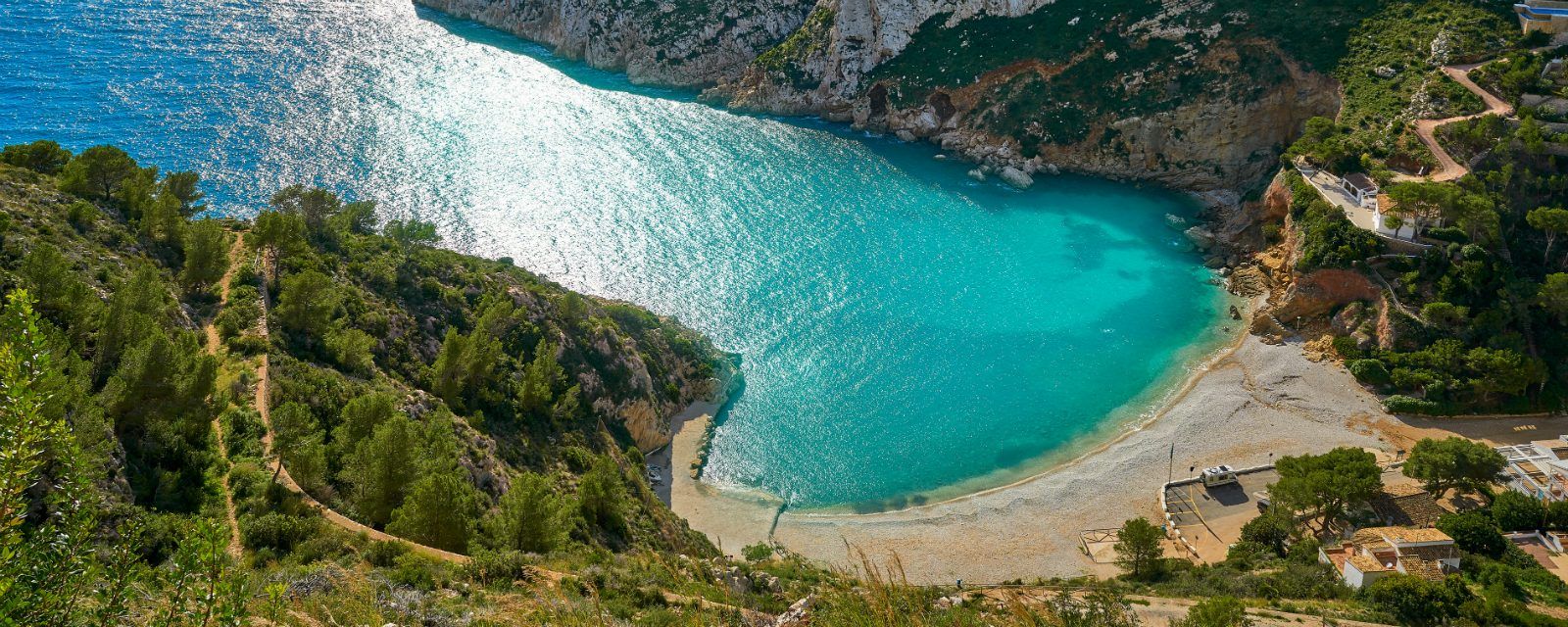
Beach in a cove on the Costa Blanca

Villas in Costa Blanca

Find Your Extraordinary

Costa Blanca Villa Holiday

One of the most popular of the Spanish Costas, Costa Blanca stretches over 200km of coastline along the Mediterranean, with golden sand, plenty of beachside amenities, and family-friendly resorts. This region caters widely to tourists, so you’ll find everything you need from this sun-soaked destination. It may be well-known for its beaches and nightlife, but you can still find some quaint fishing villages and old towns if you want to soak up authentic Costa Blanca. Our selection of family-friendly villas and villas with pools are within easy access of beaches, restaurants and villages, so you can experience the best this region has to offer.

Why stay with us?

Discover the Oliver’s Travels way, where style and character define every handpicked luxury villa in Menorca. Our destination experts curate unique homes in beautiful locations that are perfect for families and guaranteed to ‘wow’.

Once you book a holiday, the service doesn’t stop there. Our Concierge Service can help with arranging in-house chefs, fridge stocking, housekeeping, and so much more, to make your stay truly extraordinary.

Our Top Areas

Why Visit Costa Blanca?

  • Costa Blanca is great for families, with lots of family-friendly beaches, resorts and activities.
  • It’s an affordable spot to go on holiday – it’s good value, easily accessible and well-connected.

Laced with pearlescent beaches, the Costa Blanca ribbons from the pastel-painted fishing town of Dénia to Pilar de la Horadada in the south. While dazzling sand is the first thing that springs to mind for this 124-mile stretch of Mediterranean coastline, there’s more to the White Coast than the name suggests.

As you travel north from Alicante, the landscape becomes greener and more mountainous. Beyond the towering high rises, you’ll discover a string of quaint Spanish villages, from the precipitous medieval streets of Guadalest to the flower-draped houses of Benissa.

Festivals bring the region alive in a spectacle of music and performance, with classic favourites including the carnival of Hogueras de San Juan and the historic Moors and Christians Fiesta. Live like a local with a Costa Blanca villa rental, many of which come with private pools.

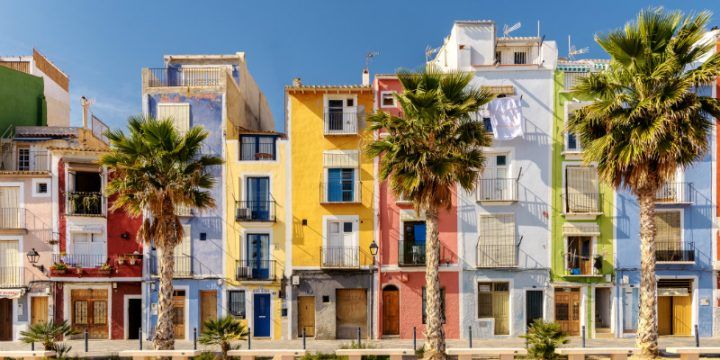
Colourful homes in VillajoyosaVillajoyosa

Food and drink

Fresh fish and seafood naturally dominate menus along the coast; standouts include grilled tuna from Dénia and baby squid from Moraira. Rice dishes are a Spanish staple, from arroz negro cooked in squid ink to arroz a banda, a paella-style dish made with fish. In the mountainous regions, rich stews are cooked in earthenware pots. A popular sweet treat is turón, the local honey and nut nougat.

Alicante is an underrated wine region, which is in fact designated as a Spanish Denominación de Origen. Don’t miss Moscatel Alicante, a pale white wine made from Muscat grapes.

Highlights of Costa Blanca

  • Alicante – Dance until dawn in the city’s legendary nightlife spots. Elche – Visit Europe’s largest date plantation. Benidorm – Soak up the sun in this classic holiday resort.

  • Blue Flag Beaches – Lounge on the sand or try your hand at water sports.

  • Denia – Climb up to the castle for panoramic views of the city.

  • Villajoyosa – Literally meaning ‘jewelled town’, this traditional fishing village is paved with brightly-coloured seafront houses.

  • Jávea – Sit in a seafront café and watch the fishing boats chug into the traditional town.

  • Theme parks – Feel your stomach in your throat at one of several excellent theme parks.

  • Valencia – Tuck into a paella in a seafront restaurant.

Best time to go

Costa Blanca flaunts 300 dry, sunny days a year so there’s rarely a bad time to visit. If you’re there to hike or cycle, October to May are cooler with temperatures rarely exceeding 25°C.

The mercury hovers around 30°C from June to September, with July and August the hottest months – perfect for beach days but perhaps too hot for sightseeing. Temperatures remain mild even through December, making it a popular winter getaway, though January and February can be chilly with rain showers.

Top tips

  • If you prefer your beaches more messy than manicured, head north along the Costa Blanca where the sands become more wild and untamed.

  • There’s a whole world away from the famed coast: travel inland to discover tiny hamlets cradled in the belly of river-threaded valleys.

  • Pick a villa in Costa Blanca for an authentic home-from-home experience, many of which are located within easy access of the beach and the mountains.

Oliver approved stamp

What Oliver Loves

Sun, sea and sand – it might be a cliché, but Costa Blanca delivers the quintessential Spanish getaway.

Oliver's Hidden Gem

Though many hike Montgó Natural Park, fewer make it to Cova Tallada, accessed by a final 30ft scramble down a sheer cliff face. If this is too fearsome, you can access the cave by kayak or by the cliff-top trail from Dénia – worth the effort for its incredible sea life.

Montgó Natural ParkMontgó Natural Park

Things to do

While its glorious beaches are Costa Blanca’s main calling card, look beyond the coastline to discover a rich culture and natural beauty. Immerse yourself in local traditions at lively fiestas and dine on sea-to-plate cuisine at unassuming waterside restaurants. National parks protect cragged mountains pitted with ravines and secluded coves accessible only by water.

Wide valleys conceal quaint hamlets and meandering rivers, which can be explored on foot or by car. Hiking isn’t the only way to explore the landscape; discover remote caves by kayak or cycle climbs worthy of La Vuelta a España – one of the toughest cycling races in the world.

For something a little out of the ordinary, wander the walled town draped across the tiny Isla da Tabarca, or take a day trip to Valencia for its arts and culture scene.

Top 10 things to do in Costa Blanca

Go to a fiesta

Dénia celebrates more fiestas than any other town in Spain, from the electrifying carnival of Hogueras de San Juan in June to the historic Moors and Christians Fiesta in August. The highlight for many, however, is Santissima a Sangre in July, which involves a Toros a la Mar bull running around the seafront as young men dart out of its path.

Hike in Orba Valley

Near Jávea, the river-threaded Orba Valley is dotted with tiny hamlets tucked into the folds of foothills. While away a day exploring the ‘Rectoría’, a string of five picturesque villages – Tormos, Rafol, Benidoleig, Sagra and Pedreguer. The mountains are great for hiking: try Sierras del Recingle and the neighbouring Caval and Migdía sierras.

Take a day trip to Valencia

Take a day trip to Valencia to discover its art and culture scene, and excellent restaurants and bars. A hotbed for innovation, the city diverted the flow of its flood-prone river and converted the riverbed into a huge, meandering green space, peppered with futuristic architecture.

La Manzanera, Valencia

Try a cycle climb

Torrevieja hosted the official start of the 74th edition of La Vuelta a España, one of the toughest cycling races in the world, against a backdrop of pink lagoons. Test your mettle on Xorret de Catí, a calf-shredding climb north of Alicante, or start from Calpe beach and scale the Sierra de Bernia and Cumbre del Sol.

Take a dip in the waterfalls at Fonts de l’Algar

One of the last things you’d expect to encounter on a holiday to the Costa Blanca is a gushing tropical oasis. Yet just north of Altea, a short drive from the hubbub of the coastal beaches, the River Algar pours through an orchard-filled valley and thunders down the cliffs in a spectacular series of waterfalls. A 1.5-kilometre trail guides you around the nature park where you can discover natural springs, wild herbs and refreshing pools that just beg to be swum in.

Travel back in time at L’Alcúdia Archaeological Park

The sprawling archaeological complex just outside of modern day Elche is one of the most important in all of Spain. It’s famed as the discovery site of the stone bust known as ‘The Lady of Elche’, a well-known piece of Iberian art. It has a prehistory that dates back centuries and spans the Stone Age all the way through to Iberians, Romans, Visigoths and Byzantines.

Play a round or two at Las Colinas Golf & Country Club

The Costa Blanca is rather proud of its world-class golf courses, and rightly so. Keen golfers have long carted their clubs to this neck of the woods to enjoy the sunny weather and impeccable facilities. Las Colinas Golf and Country Club weaves through the nearby valleys and has been created with environmental protection at its fore.

Explore Isla da Tabarca

Visit Isla da Tabarca, a tiny islet cast adrift from mainland Alicante, to wander its walled town and picturesque port. Explore the cove-bitten coastline before feasting on bowls of caldero overlooking the sea.

Street in Isla Da Tabarca

Wander through a protected oasis

Stroll through the palms at Palmeral of Elche, a UNESCO World Heritage site. This tranquil park on the outskirts of the town of Elche is a calm labyrinth of pathways through thousands of varieties of palms and plant-life.

Explore the underwater kingdoms of Costa Blanca

The snorkelling and diving in Costa Blanca is exceptional, thanks to its protected marine nature reserve. Nisos Diving take tours out daily.

Towns and villages

There’s more to Costa Blanca than high-rise beach resorts. Beyond the buzzy cities of Benidorm and Alicante lies a string of unassuming beauties. Medieval villages cling to sheer cliffs, while inland, terraced hillsides and fruit orchards wrap around authentic Spanish towns.

Xabia, Javea
Jávea

Neighbouring Jávea, or Xàbia, is another quaint portside town, draped across a sloping hill. Narrow streets, brimming with tosca sandstone houses, wrap around a Gothic fortress church. The whitewashed buildings of the old town hook around a brilliant blue bay, where terrace cafés offer a front-row seat to fishermen hauling in their catch and sailing boats gliding through the water.

Moraira
Moraira

Moraira hugs the northeastern tip of the Costa Blanca, where forested mountains plunge to turquoise bays. Originally a fishing village, the town is peppered with waterside seafood restaurants, where the menu changes depending on what the local fishermen have caught that day. A pair of Blue Flag-awarded beaches are edged by powdery sands and clear shallows – perfect for kids.

Calpe
Calpe

The Gibraltar of Costa Blanca, the dramatic limestone formation of Peñon de Ifach rears out of the sea like a giant’s tooth, looming above the town of Calpe. From here, you can see two crescent bays kissing in the middle, along with the salt lagoon, often filled with pink flamingo. With long powdery beaches, it’s a great family resort.

Top Tips

  • Local bike shops can provide rentals by the day or by the week.

  • If you’re driving to the beach, set off early to avoid traffic and to secure a place in the car park (or pick a Costa Blanca villa on the coast).

  • If you plan to visit the Benissa coves, Benibus runs a complimentary shuttle service from the town centre.

  • If you’re planning to travel around the region by rail to Alicante, check out seat61.com.

Costa Blanca: Getting there and around

The gateway to the Costa Blanca is Alicante airport, with regular flights from several UK airports, including London Gatwick, Manchester, Newcastle and Bristol. If you’re travelling around Spain, Alicante is easily reached from the rest of the country by high-speed Renfe trains.

It is also possible to fly into Valencia airport, which may be useful if you’re heading to Jávea (the same distance to Alicante, 100km). A train station in nearby Gata De Gorgos connects Valencia and Benidorm.

We recommend, however, hiring a car for ease of getting around the region. If you’re looking to rent a car in summer, book well in advance of your journey. The AP-7 motorway connects Valencia and Alicante.

In addition, ferries connect the port town of Dénia to the Balearic Islands. Boats ply routes to Ibiza and Mallorca, with additional services to Formentera throughout the summer.

Getting around by public transport

A light-rail train line connects most of the towns along the Costa Blanca between Dénia and Alicante, with the exceptions of Moraira and Jávea. If you want to reach these two towns, the nearest tram station is in neighbouring Teulada, from where you’ll need to hire a taxi or rent a car.

Getting around by car

The best way to get around Costa Blanca is by car, which offers flexibility in exploring the beaches and villages of the region. Car rental centres are situated at the airport, and the AP-7 motorway connects Valencia and Alicante.

From the blog…

Loading reviews...