Key Highlights
- The uninterrupted, panoramic views of the Elounda Gulf and Spinalonga Island are absolutely incredible from almost every room and space in this magical villa
- The villa offers many treats including a gym, hamman, infinity swimming pool and a playground for young children
- The villa is very luxurious with unique furnishings and gorgeous artworks thoughout
- Guests will receive welcome drinks on arrival
- A villa concierge service is available 24/7. They are incredibly helpful and can arrange private chefs and masseuse if desired

The Villa
Villa Plaka Danae is a luxurious 5-bedroom villa sleeping 10 guests, located on the outskirts of the village of Plaka and within easy reaching distance of Elounda and Agios Nikolaos.
Lower Ground Floor
- Bedroom with king-size bed, en-suite shower room and garden access
- Bedroom with king-size bed, en-suite shower room and garden access
- Bedroom with king-size bed, high level window
- Bathroom
- Hammam
- Outside gym area
Ground Floor
- Open-plan living and dining area
- Fully-equipped kitchen
First Floor
- Bedroom with king-size bed, balcony and en-suite shower room
- Bedroom with king-size bed, balcony and en-suite shower room
Exterior Grounds
- Private infinity pool
- Terrace
- Dining facilities
- Sun loungers
- Barbecue
- Children's play equipment
Additional Facilities
- Wi-Fi
- Air conditioning
- Travel cot & highchair available on request
- Parking
Bedrooms
Bedroom 1
1 King Size Bed
Bedroom 2
1 King Size Bed
Bedroom 3
1 King Size Bed
Bedroom 4
1 King Size Bed
Bedroom 5
1 King Size Bed
The pretty village of Plaka is located in the Mirabello Bay, opposite Spinalonga and 16km north of Agios Nikolaos. Plaka was originally a quaint fishing village which offered access to Spinalonga Island when it was a colony for lepers. Now it is a sophisticated, peaceful resort with natural beauty and spectacular views. Hikers enjoy the numerous caves around the mountains. Plaka offers a good selection of seaside bars and restaurants and is in close proximity to the cosmopolitan, buzzy town of Elounda. Elounda and Plaka host two of the most important archaeological sites in Crete, the sunken city of Olous and the Venetian Fortress of Spinalonga Island.
Villa Plaka Danae enjoys a very spacious open plan living, dining and kitchen space. It is very sophisticated with a formal dining table where you will feel like royalty. The living area is very smart and the neutral walls are covered in elegant, modern art, mostly with a seaside theme. You will find metal fish wall plaques, striking shell art alongside striking, intricate mirrors. The furnishings are a fabulous blend of traditional pieces alongside contemporary wonders. The chef in your group will be delighted with the high-spec kitchen which offers top notch appliances and plenty of space. The wine fridge will ensure you always have chilled wine on hand. You can throw the doors open to access the terrace and enjoy a very special view out to sea.
The five bedrooms are calm, serene and full of beautiful furnishings. The decor is classy and sophisticated and each enjoys an immaculate marbled ensuite bathroom with the very best in fittings. They are luxurious havens where you can slip into your robes and slippers and relax. Two of the bedroom suites are located on the first floor with their own sea-facing balconies, wonderful spots for your early morning cup of coffee or a late night glass of wine. The remaining three bedrooms are on the lower ground floor and open onto the beautiful internal garden with its lush palms and with the sea beyond.
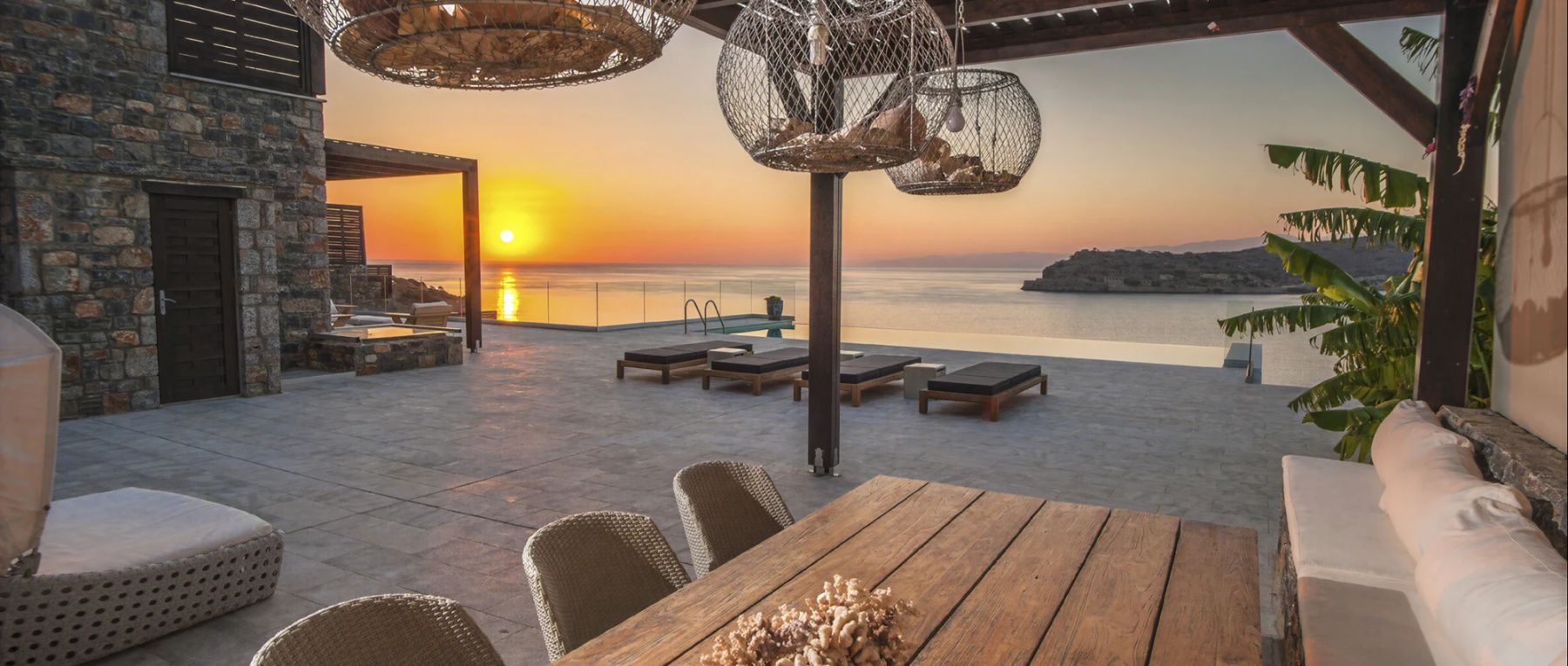
The outside spaces of Villa Plaka Danae are absolutely stunning. The gorgeous stone exterior of the villa and silvery stone terrace blend beautifully with the bright turquoise waters beyond and the mostly cloudless skies. The terrace is enormous with a gorgeous contemporary infinity pool drawing your eye. Guests can laze on superior loungers and day beds admiring the spectacular seascapes over to the island of Spinalonga and the Elounda Gulf. If you haven’t already read it, you should pack ‘The Island’ by Victoria Hislop so that you can imagine life on Spinalonga. The shaded alfresco dining area is superb with luxurious furnishings and a fabulous barbecue and outdoor kitchen area. There is also another shaded alfresco lounge area, the perfect spot for early evening cocktails and watching the sun go down. The lower garden section offers a lush lawn and children’s playground as well as some beautiful planting. Steps lead down through the terrace and gardens to the waterfront. This is truly a very magical spot with the architectural design making you feel very secluded and private.
The villa also offers some extra treats. There is a very well equipped gym and a hamman. Perhaps you may like to pay for a personal masseuse for a pampering session. If you can bear to leave this wonderful villa, you can wander into Plaka with its authentic traditional Greek appeal to visit one of the alluring tavernas.
- A path leads directly from the villa to the water’s edge. You will enjoy numerous delightful walks around Plaka, through olive groves and to other small fishing villages
- If Villa Plaka Danae isn't available check out Villa Plaka Dimitra or Villa Plaka Gina
- The 5th bedroom doesn't have an en-suite bathroom but the shower room is close by on the same floor by the Hammam
Oliver's Extras
- Chef/Cook Available
- Transfers Available
- Maid service/extra cleaning
- Private chef/cook/catering
- Welcome hamper/pre-stocked fridge
- Local day-trips or tours
- Airport pick-up/drop-off
- Babysitting/childcare services
Please note that all extras are subject to availability and must be requested in advance of the holiday (prices on request). Due to some rural/remote locations, not all services will be available at all properties. However, we will always do our best to fulfill your requests!
