Chateau Des Roses was built as the family seat for a famous Count and was completed on the eve of the French Revolution. Today’s chateau stands on the vestiges of a medieval building dating back to the 11th century and unusually the chateau and the estate, (350 acres) which includes a farm, remained in the same family for generations until it was recently bought and lovingly restored by an American woman from New York.
Since 2005 the entire residence has been extensively renovated marrying the charm and style of France’s elegant past with the most modern conveniences and comforts. The chateau is centrally heated and all rooms have en-suite bathrooms. The result is a property with the atmosphere of a welcoming family home which is large enough to host family celebrations, and intimate enough to make everyone feel relaxed and happy. Furthermore, the Chateau is listed on the National Register of Historic Monuments.
The castle is conveniently situated, just a couple of hours west of Paris by car or train and within easy reach of the Normandy coast offering guests an ideal base from which to explore Normandy’s rich heritage. Local activities and nearby towns provide cultural and recreational fun. Farther afield, you are only two hours from the D-day Beaches, Mont Saint-Michel, Giverny and the Chateaux of the Loire.
Alternatively, you may just want to relax locally, explore the Chateau’s private parklands, sip wine in the Cour D’honneur, or explore the surrounding countryside by bicycle or on foot. The property offers something for everyone who wants to experience the French ‘savoir vivre’ and the best of Normandy country life.
The village is just a few minutes away and offers a full range of local services, including a boulangerie which still bakes bread in a traditional wood oven, a local café where you can enjoy a coffee or a simple lunch, and a local cider producer. There are regular open-air markets in the village offering you a chance to meet local producers selling fresh, seasonal vegetables and a wide variety of cheeses.
During the ‘Ancien Regime’ (pre-revolution) the Chateau and its estate was completely self-sufficient and a wander around the private grounds reveals traces of this rich past. Throughout the grounds guests will find buildings that bear witness to chateau life - the glacière which was used for making and keeping ice, the spring house where the chateau laundry was washed, the Orangerie which was built to grow exotic fruit, and an exceptional 17th-century Protestant chapel.
The Chateau can be enjoyed as a self-catered venue or we can organise full-service support for guests who are looking for an increased level of attention during their stay. Additional services, which need to be pre-booked, can include on-site concierge, housekeeping, catering or private chef, and special event management for celebrations such as weddings and family gatherings. We also offer tailor made packages for conferences and meetings. No customer requirement is too big or too small so don’t hesitate to contact us to discuss your needs.
What Oliver loves...
The surrounding area is great for day trips! Beaches, historical sites and even Paris itself are close by, and the monastry of Mont St Michel has to be seen to be believed
The local town (only 10 minutes walk away!) provides an amazing, authentic French holiday experience with a wine cave and charcutier, and the market on Sundays sells some mouthwatering local produce
Light flooded rooms with fine views across the country park and farmland
Furnished to a very high standard with a focus on elegance and comfort
Professionally equipped kitchen to make catering a pleasure
Ensuite bathrooms and thermostatically controlled central heating in each bedroom
What you should know
The chateau is perfect to host weddings and special events. However, please note there is surcharge for the use of the stunning Orangerie. See our 'Features', 'T&C's and 'Events' tabs for details.
Please note that the walking route to the nearest village is a country road with no footpath and car hire is strongly recommended for ease.
The Estate features a working farm and the caretaker lives on the Estate on the Stud Farm
Meticulously selected. Rigorously approved. Our experts have reviewed over 100,000 holiday homes; only the very best make it into our collection.
4.7/5 Rated Excellent
Voted one of the Best Villa Rental Companies in the World by Condé Nast Traveller readers for nine years running.
As seen in:
Loading reviews...
The Local Area
About the surrounding area of Chateau Des Roses
Walk to Village
Walk to Restaurant
Rural Location
The closest train station is called L'Aigle which can be reached directly from Paris. The closest international airport is Paris Charles de Gaulle, which is 160km away.
The local town is just 10mins walk from the chateau and has two boulangeries (one with a wood-fired brick oven), a wine cave (where you can also buy the local calvados and cider for which Normandy is famous), an excellent butcher and charcutier, a mercerie (where the town’s hospitable mayor presides over sewing supplies), a pharmacy, a convenience store, a bank and a bar.
On a Sunday, you’ll be able to buy locally-produced camembert and foie gras, fresh vegetables and locally-raised meat and poultry. You’ll also note the 19th Century church with its stained windows of the saints of France and ornately carved altars. On hallowed ground outside the church is the obligatory war monument to the France’s lost generation of 1914-1918. Outside the mairie is artillery from the Battle of Normandy of 1945.
A 15-minute drive away is the charming cathedral town of Seés, one of the oldest diocese in France. The twin towers of its 13th-century gothic cathedral, lit from within at night, are a luminous beacon for miles around. Today, Seés is a bustling small town with a lively Saturday market.
Bayeux: This lovely town combines the roots of Norman history with proximity to the D-Day beaches of World War II. The Bayeux Museum displays one of oldest and certainly most famous embroidered “tapestries” (it is actually a cloth, not a woven tapestry) in the world. The 11th-century tapestry depicts the Norman conquest of England in 1066 and is said to have been embroidered by William the Conqueror’s Anglo-Saxon queen, Mathilda. The soaring cathedral, dating from the same epoch, was built by William’s half-brother, Bishop Odo.
Numerous D-day beaches, museums and memorial sights are located along the Normandy coast, about 100km to the north of the chateau.
Not just for history enthusiasts, people also visit the seaside and coastal towns of Normandy for the sandy beaches and excellent seafood. You will find the best oysters in Courseulles!
Mont St Michel: Monastery and fortress, Mont Saint Michel rises from the sea just off the coast of Normandy: “like a fantastical manor, like a palace in a dream, eerily strange and beautiful” wrote Guy de Maupassant. You can walk to Saint-Michel at low tide. The abbey was founded in 708, one of the first sites consecrated to the Archangel Michael. The abbey is a textbook example of medieval architecture and its gardens, where the intrepid monks cultivated vegetables for their austere meals, are magnificent. You’ll eat richer fare in one of the harbor town’s many restaurants. Be sure to visit the boutique of Mère Poulard, known to generations of French schoolchildren for her buttery cookies.
Paris: The ultimate day trip from the Chateau is, of course, Paris. Only 1.5 hours on the train you can spend the day in Paris exploring the fast-paced City of Light and return back to the quiet French countryside for a locally prepared dinner and restful night’s sleep.
The Region
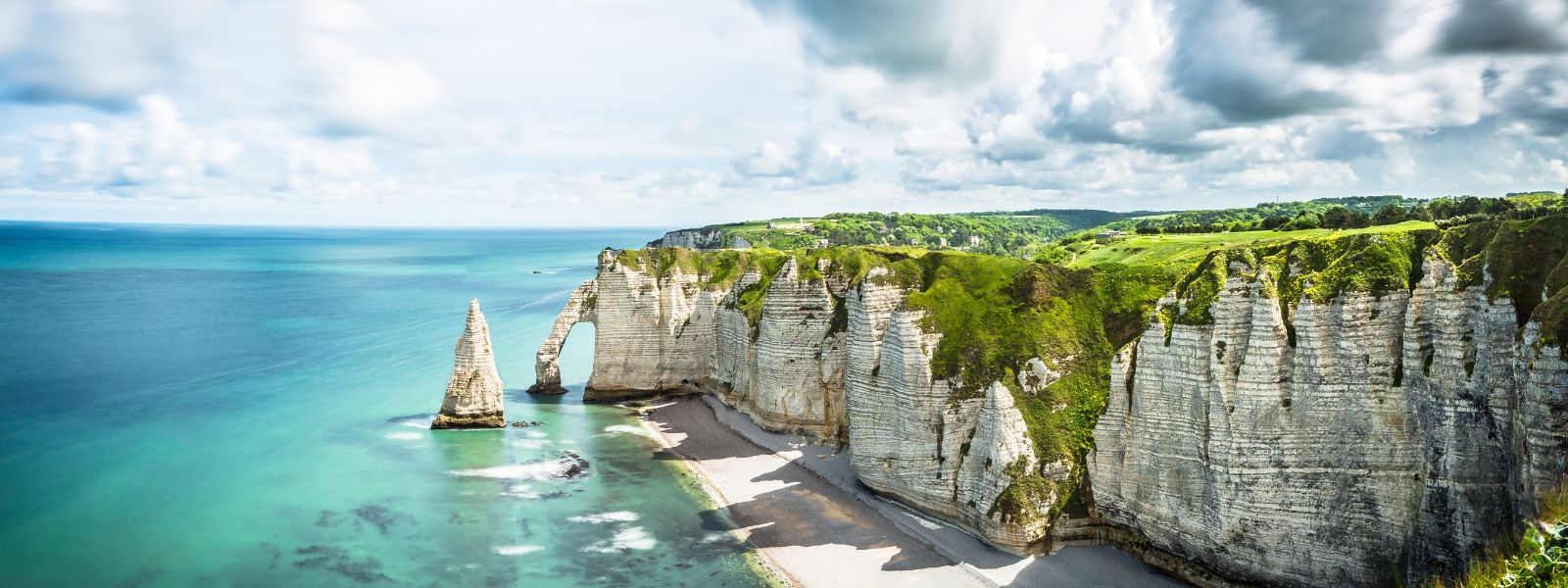
History and gastronomy go hand-in-hand in Normandy, making it a great choice if culture and fine dining are what you’re looking for in a holiday! There’s still plenty on offer besides the food and tales of yesteryear, however – you can take a tour around some of the beautiful inland towns and villages or head to the coast, where you’ll find a mixture of wide sandy beaches and rugged, romantic cliffs.