Easter jumps around the calendar like a bunny (it can fall anywhere between March 2nd and April 25th) but the religious festival is celebrated worldwide in one form or another.
Easter might be a moveable feast, but its myriad influences (both religious and secular) have ensured a tonne of traditions have grown up around it – and they’re definitely not all chocolate eggs and hot cross buns. We’ve gone on an Easter egg hunt of our own and found 10 things people do to celebrate and commemorate Easter. Some seem to make a kind of sense, while others are so unusual you’ll wonder how they ever sprung up…
1) Get kooky at the bonnet parade in the UK
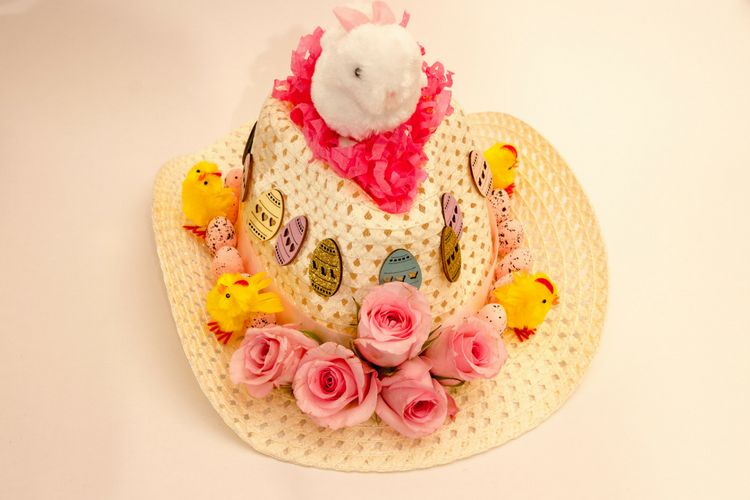
Oh, the wonderful Easter bonnet parade. In the UK, children will build and decorate bonnets before Easter. It doesn’t sound competitive – but it can get pretty heated – we learnt that the hard way.
Typically, the children are meant to design the bonnets themselves, but parents are known to get involved to help show off their little angel. They’ll then wear their creations in the school parade or the local parade – this varies among towns and villages. Will your bonnet be best in show?
Easter Tradition in the UK
2. There’s bad news for carnivores in Germany
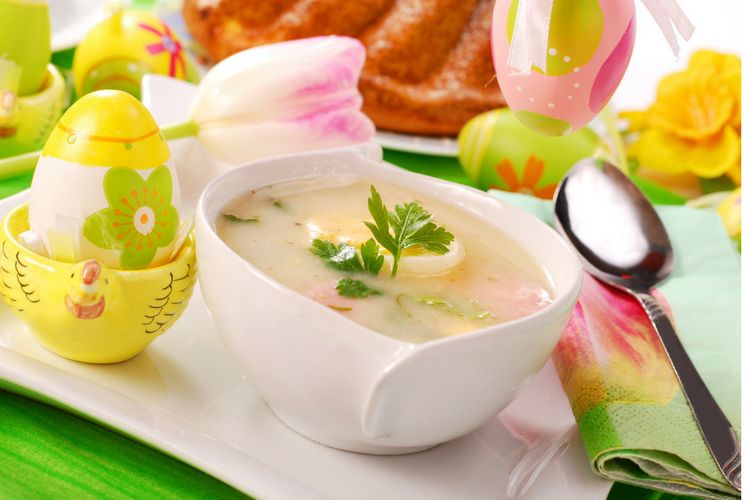
On the Thursday before Easter in Germany, it’s tradition to only eat green. You might think this has something to do with the German translation of Maunday Thursday, ‘Gründonnerstag’ (literally ‘Green Thursday’) and it may well do, although it’s more likely to be a corruption of ‘grienen’ – the German word for weeping or grief.
It’s traditional to eat salad and a dish known as ‘Green Thursday Soup’, which is made from a mix of herbs that can include chervil, dandelion, nettle and parsley. Console yourself with the fact that it’s better for you than chocolate.
Easter Tradition in Germany
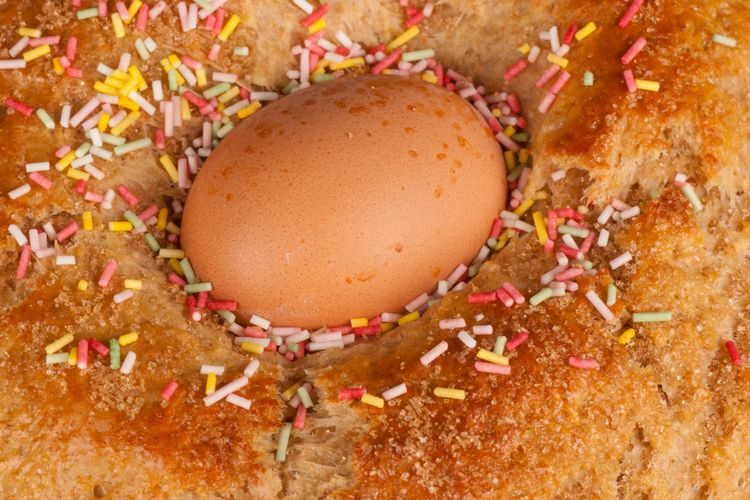
3. Whip up an eggtastic cake in Spain
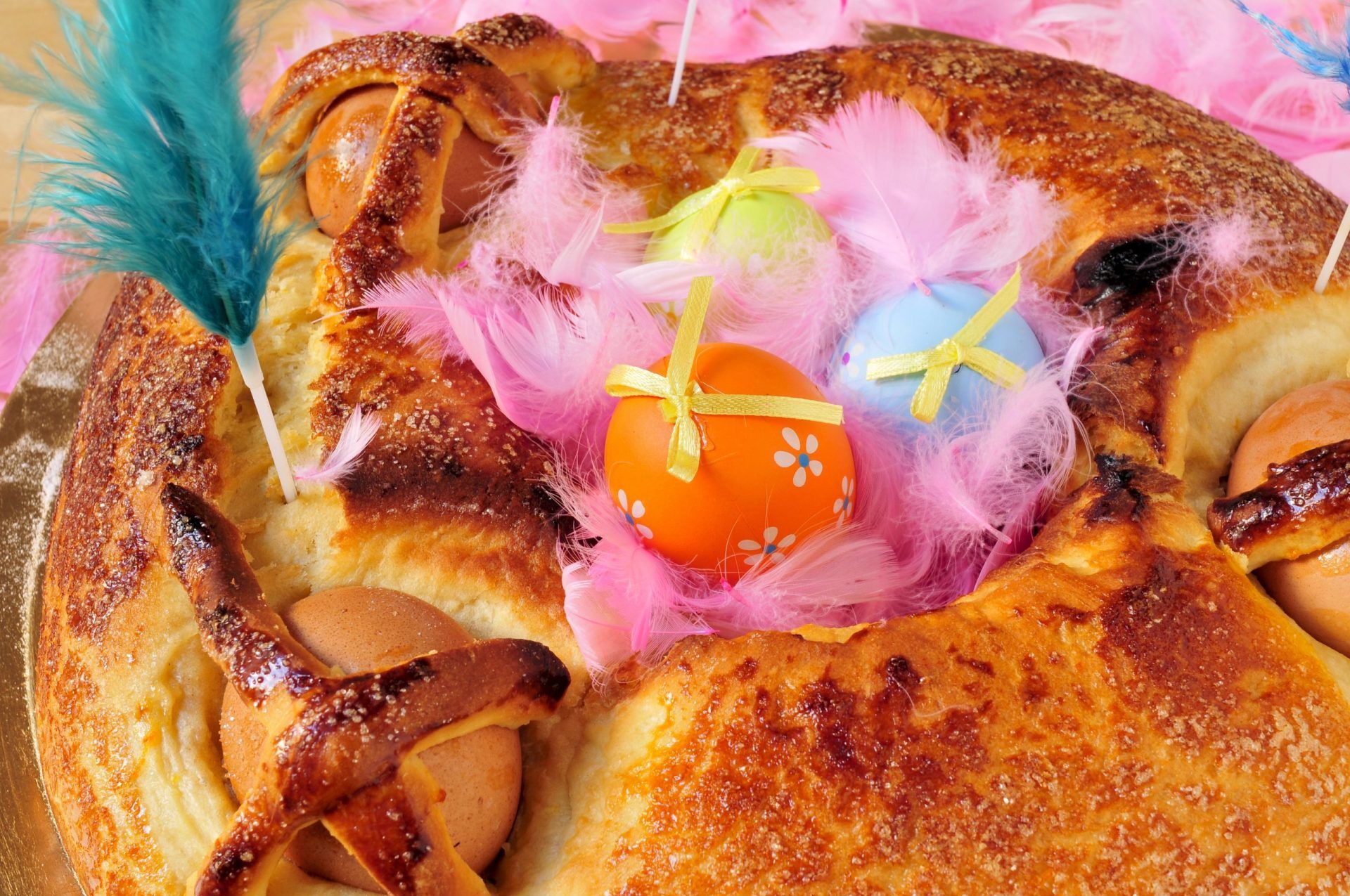
Easter is a means to an end of a tiresome and gruelling 40 days of Lent. Finally, you can indulge in a piece of chocolate cake or two, or maybe you can start snapchatting again – regardless, you get to be you again. The Spaniards have a slightly different approach when it comes to celebrating Easter, in many regions, they’ll savour the day with a mouth-watering Mona de Pascua.
The traditional cake is shaped like a doughnut topped with boiled eggs. It may sound a little out of the ordinary, but many Catholics would go without eating eggs during the religious period – so, the eggs were then saved for the cake and added as a symbol of abstinence. Today, bakers have begun to use chocolate eggs instead – sounds much more appealing, doesn’t it?
Easter Tradition in Spain
4. Listen out for the Easter bells in France
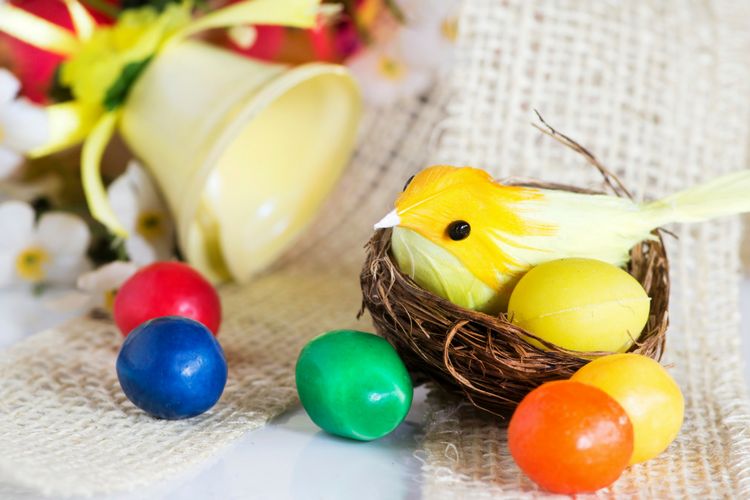
The sound of church bells ring every day of the year in France, except during Easter. It’s quite juxtaposed but the bells are silent from Good Friday to Holy Saturday, to commemorate Jesus’s death. The old tale, and what a lot of parents tell their little ones, is that the bells are silent because they’re flying all the way to Rome for a special blessing by the Pope. The bells then return Easter morning and begin to chime again. The Easter bells (les cloches de Pâques) are believed to bring chocolate and other sweet treats on their return.
The French are predominately Roman-Catholic, so for those in small villages, the sound of the chimes is enough to embrace a stranger in celebration.
Easter Tradition in France
5. Take an umbrella to Poland
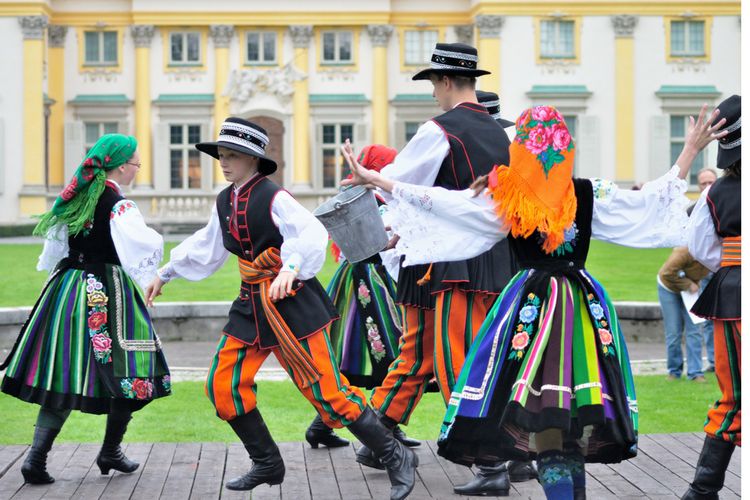
If you’re out and about in Poland on Easter Monday (where the day itself is known as Smigus-Dyngus) you’d better come prepared with some waterproof clothing. Tradition dictates that youngsters are given free rein to soak whoever they please with buckets, water balloons and water pistols, though the young at heart are free to join in on the chaos too!
It’s believed the tradition dates back to fertility rituals, and in former times it was only girls and young women who could expect a soaking – so we’re just glad the custom is a little more equal opportunities these days.
Easter Tradition in Poland
6. See red in Greece
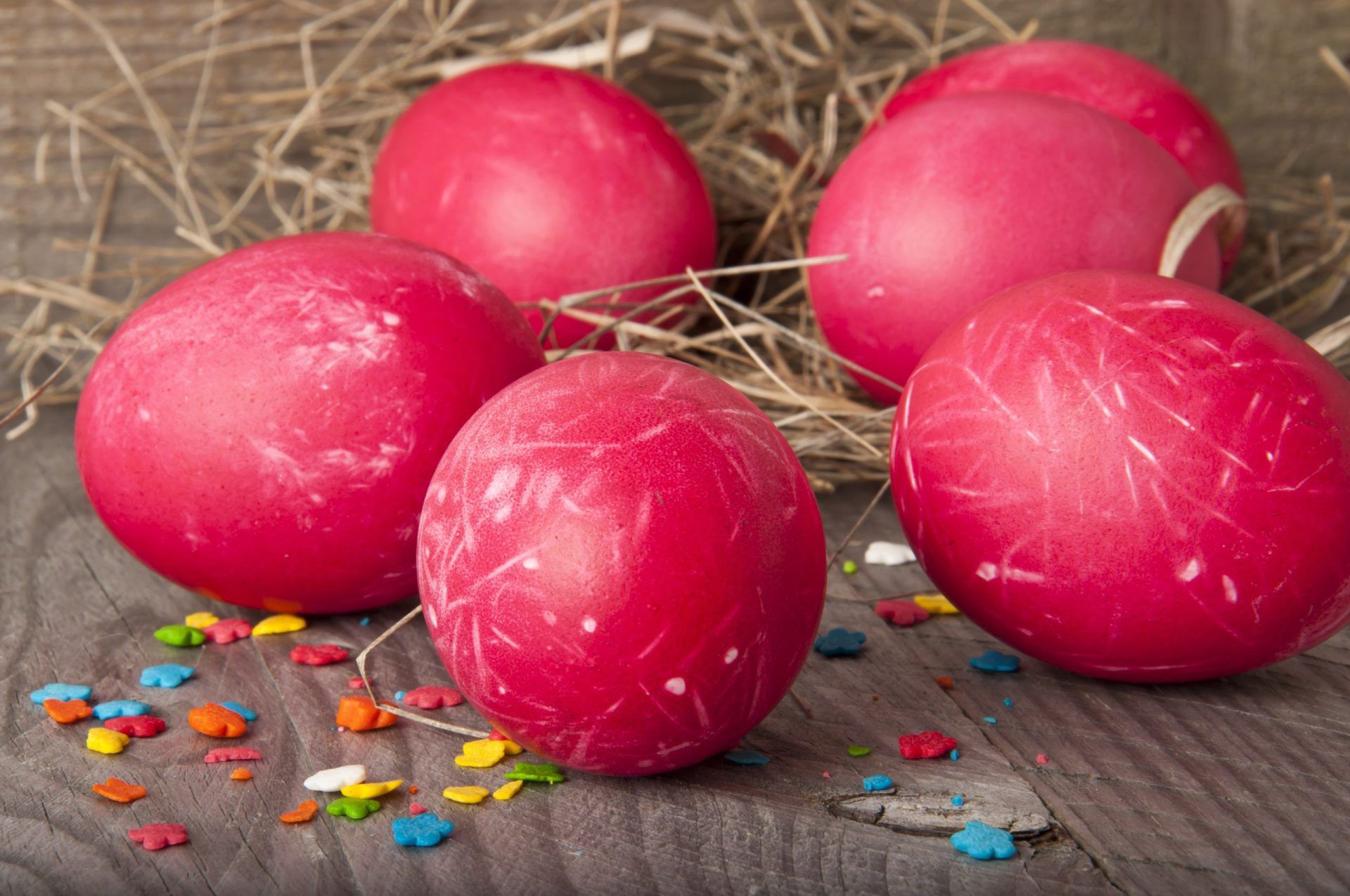
For Greek Orthodox Christians, one of the oldest withholding Easter traditions are red-dyed eggs. The eggs are a staple for the Easter table and are associated with the crucifixion and resurrection of Jesus. The red is interpreting the blood Christ shed, but also a colour that represents life and triumph. Many will dye their eggs red on Holy Thursday to follow the story of the Last Supper. It is common belief that the eggs will stay edible for forty days without a fridge, but if a priest blesses them on Easter Sunday, the eggs can last a whole year.
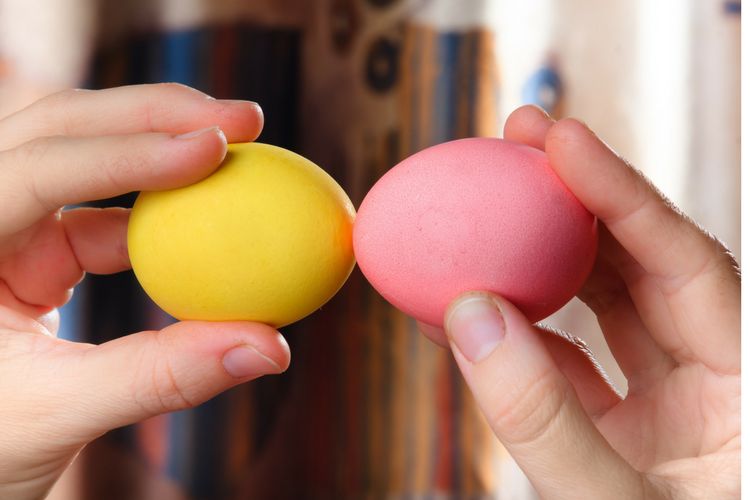
It’s not all doom and gloom though, Greeks (especially children) will play a game with the eggs, taking it in turn to hit the ends of each other’s eggs. If yours doesn’t crack by the end, you’re proudly declared the winner!
Easter Tradition in Greece
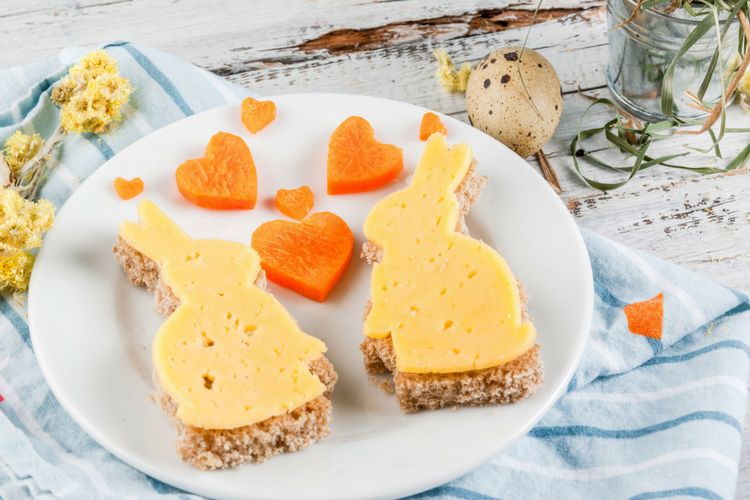
7. Swap chocolate bunnies for cheese in Italy
The holy pinnacle of the world; Italians are proud believers of their faith and celebrations differ region to region. In Florence, on the morning of Easter Sunday, an old-fashioned cart is festooned with fireworks and set alight – a tradition dating back over 350 years symbolising a good year ahead. Though quirky, the Umbrian hill town of Panicale steals the show with a cheese-rolling competition.
The game known as Ruzzolone is very simple, competitors will roll a massive wheel of cheese, weighing about 4 kilos (roughly the same weight as a domestic cat) around the village walls. The objective is to get around the course in the fewest strokes. The winner gets the cheese – not that we know what you would do with a battered cheese. Following the cheese rolling, there is a band in the piazza, free wine and boiled eggs! Buona Pasqua.
Easter Tradition in Italy
8. Gastronomical delights in Portugal
Forget all you know about Easter – bunnies, eggs and the whole shebang. Domestic traditions include Folar da Páscoa, a sweet or savoury bread that contains hard-boiled eggs in the middle. The eggs represent the rebirth and resurrection of Christ. Regions will add their own spin on the bread, lemon zest or other spices but the egg remains the same, held tightly in place by a cross of bread dough.
On Good Friday and Holy Saturday, many Portuguese families will opt for a fish dish, in the tradition of abstaining from meat until Easter Sunday – the preferred pick is codfish, but it honestly doesn’t matter. But, on the day itself, the smell of lamb will overcome houses in Portugal. Another tradition that takes place is the visit of a priest, which now only tends to happen in the smaller villages. The local parish priest will visit homes with a figure of Christ which is kissed by the faithful.
Easter Tradition in Portugal
9. A spiritual fire in Croatia
Easter bonfires are a common tradition in Croatia. Villages gather together to sing songs and celebrate the season, all around the fire which symbolises Christ. On Holy Saturday, Christians prepare the fire cutting stone on stone and once the fire is lit followers will burn their own piece of wood that they then take home to transfer the holy fire.
When bonfires aren’t burning, Croatians are colouring Easter eggs, typically they were coloured naturally using beetroot and spinach, but that just isn’t the case anymore. One more interesting custom is the so-called ‘egg fighting’ a game that tests the strength of the egg.
Easter Tradition in Croatia
10. Going into battle – with an egg
Egg jarping crops up in a fair few cultures across the globe around Easter time, though it’s particularly popular in the North-East of England, Romania and the Netherlands. It’s a simple game quite similar to conkers, where two players go head-to-head with a pair of hard-boiled eggs, tapping them against each other until one gets cracked. If you fancy yourself as a contender, there’s even a World Jarping Championship held in Hartlepool each year.
Easter Traditions in Romania & Netherland
Whatever the season or the celebration, Oliver’s Travels has a huge range of luxury holiday villas in France, the UK, Italy and beyond – have a browse and start planning your next amazing break today!
Previous
Lanzarote Travel Guide
Next
Best Foodie Experiences in Costa Blanca
Popular Articles
The 10 Best Beaches in Cyprus
Cyprus has beaches for almost every kind of holiday, from soft, pale sands and shallow family bays to turtle-nesting shores, watersports hubs, and quiet coves beneath cliffs. Better still, the island makes it easy to combine time beside the sea with ancient ruins, mountain villages, and lunches in coastal tavernas. The best beaches in Cyprus […]
The 10 Best Beaches in Mykonos
Mykonos may be known for its whitewashed lanes, late-night parties, and famous beach clubs, but its coastline has more range than the headlines suggest. Long sandy bays curve around the south of the island, while the north coast feels wilder, more exposed to the Aegean wind. The best beaches in Mykonos cover almost every mood. […]
10 Best Villas in Ibiza
The fabled ‘White Island’ is a place of many faces. On the one hand, Ibiza is renowned as a prime clubbing destination with a vibrant nightlife that’s a magnet for partygoers. But there’s more to the island than exclusive clubs and dancing ’til dawn! Further inland, you’ll find there’s a much more laid-back atmosphere among […]
Annual leave is one of the year’s more finite pleasures. Used without much thought, it can quickly disappear into the occasional Friday and a handful of Mondays. Place it more strategically, however, and the same allowance can turn four days away from your desk into nine or even ten days elsewhere. Easter falls early in […]
Sense and Sensibility: Where to stay for a Jane Austen-inspired escape
On 25 September, this year’s Sense and Sensibility will introduce Jane Austen’s razor-sharp wit and biting social commentary to a whole new generation of gooey-eyed romantics. Like Emma Thompson’s much-loved 1995 adaptation and the novel long before it, the new film promises fierce heroines, men whose charms cannot always be trusted and – of course […]
Venice Film Festival 2026: Where to Stay
Every September, Venice – a city already accustomed to grand entrances – becomes the stage for cinema’s most anticipated arrivals. First held in 1932, the Venice International Film Festival is the oldest in the world. Its 83rd edition runs from 2–12 September 2026 on the Lido, the long barrier island separating the Venetian Lagoon from […]
10 European City Breaks and Where to Stay
One of the great pleasures of living in the UK is its access to the rest of Europe. It is easy to forget quite how extraordinary it is until you hear it from someone who has crossed an entire ocean to get here. The distinctly American idea of “doing Europe”, which tends to mean a […]
7 Days In… Corfu
In the turquoise Ionian, just off the coast of Albania, lies Greece’s greenest island. Stand at the north-west of the peninsula at Paleokastritsa, and you will see the whole landscape open before you. Lush, green hills rise from every angle, their cypress trees fringing the rocky bay out into endless azure, the old monastery above […]
Solar Eclipse 2026: Best Places to Watch in Spain & Where to Stay
On 12 August 2026, the solar eclipse will sweep across Spain, coinciding with the peak of the Perseid meteor shower on the same summer night. Near sunset, the moon will pass across the sun, drawing a narrow band of darkness over the country. Hours later, beneath an almost moonless sky, the Perseids will reach their […]
Edinburgh Festival Fringe & International Festival 2026: What to See and Where to Stay
Every August, artists and visitors from around the world flock to the Scottish capital for the Edinburgh International Festival and the Edinburgh Festival Fringe. For a few weeks, the city gives over its lecture halls, churches, music venues, theatres and pub basements, turning them into stages for one of the year’s most interesting arts events. […]
7 Days in… Mallorca
The largest of the Balearic Islands has long worn its paradisiacal reputation with confidence. Along Mallorca’s south coast, there is white sand and calm, turquoise water. In the north, olive terraces and ochre villages climb towards the ridges of the Tramuntana, the mountain range that runs along the island’s north-west coast. Between them, pine-covered hillsides […]
The Odyssey: Where to Visit in Greece
In Book XII of the Odyssey, Odysseus’ men bind him to the mast of the ship, beeswax in their ears, as he listens to the song of the Sirens. No man, they say, has heard the tune and lived to tell the tale. But this is Odysseus; he has already outwitted the Cyclops Polyphemus, survived […]
England’s Most Beautiful Towns for a UK Escape
Take the train to St Ives and you see one of England’s most beautiful towns from above. The track runs high over the bay, carrying you past the pale sweep of Porthminster Beach and its turqouise waters, before the town appears in a jumble of whitewashed houses and cobbled streets. There is a feeling, in […]