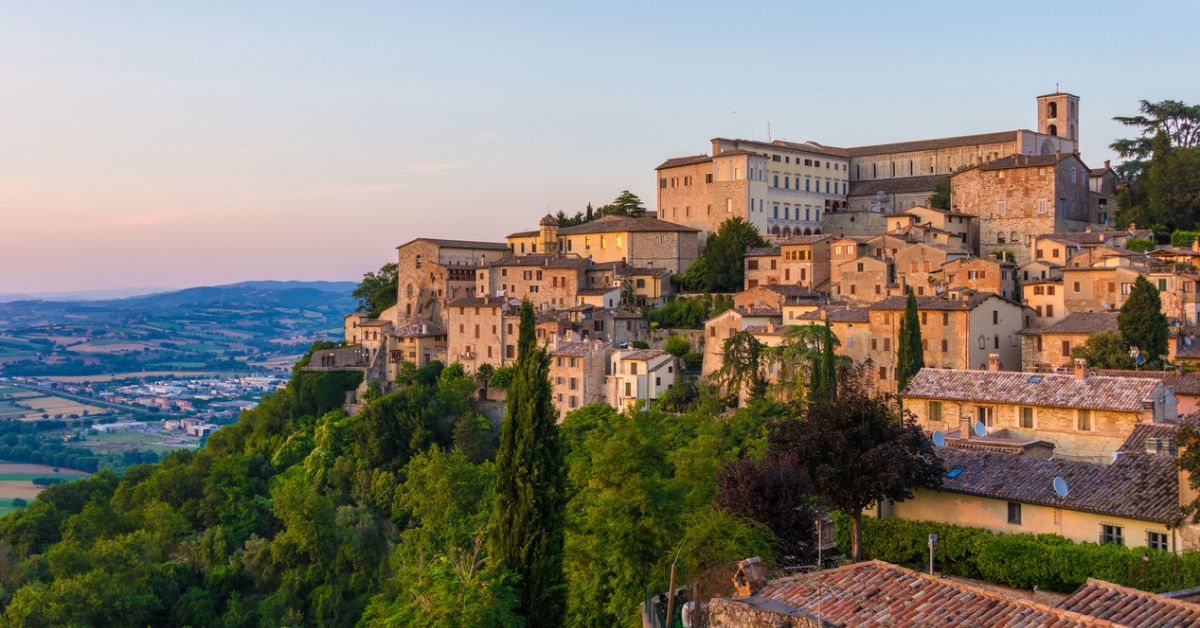
Umbria is a region that reveals itself gradually. Medieval hill towns such as Assisi, Spoleto and Perugia sit high above valleys, their stone streets leading to grand cathedrals, ancient fortresses and quiet piazzas where daily life unfolds at an unhurried pace. History is everywhere, from the streets you walk on to the ancient wonders you quietly pass by.
Nature plays an equally central role. Often called the green heart of Italy, Umbria offers landscapes that invite exploration – olive groves, vineyards, wooded hills and shimmering lakes. Lake Trasimeno provides a softer, waterside counterpoint to the hills, while the dramatic Marmore Waterfalls showcase the region’s more powerful side. Walking, cycling and scenic drives are all part of the experience, with routes that feel refreshingly uncrowded.
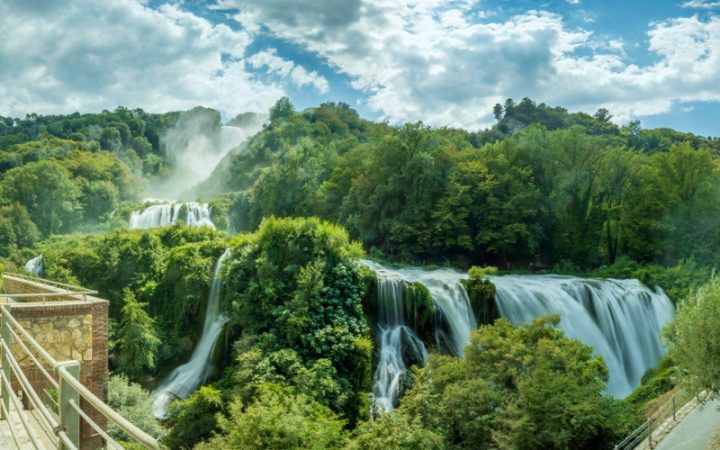 Cascate delle Marmore – the world’s largest man-made waterfall system
Food in Umbria is deeply connected to the land. Truffles, olive oil, lentils and cured meats form the backbone of local cooking, served simply and seasonally. Meals are rarely rushed – and whether you’re dining in a village trattoria or cooking at your villa with ingredients from a local market, the emphasis is always on quality rather than show.
Unlike some of Italy’s better-known regions, Umbria remains relatively untouched by mass tourism. With fewer crowds, a strong sense of tradition and a calendar dotted with small festivals and cultural events, it offers a quietly rewarding alternative for travellers seeking an authentic Italian escape.