
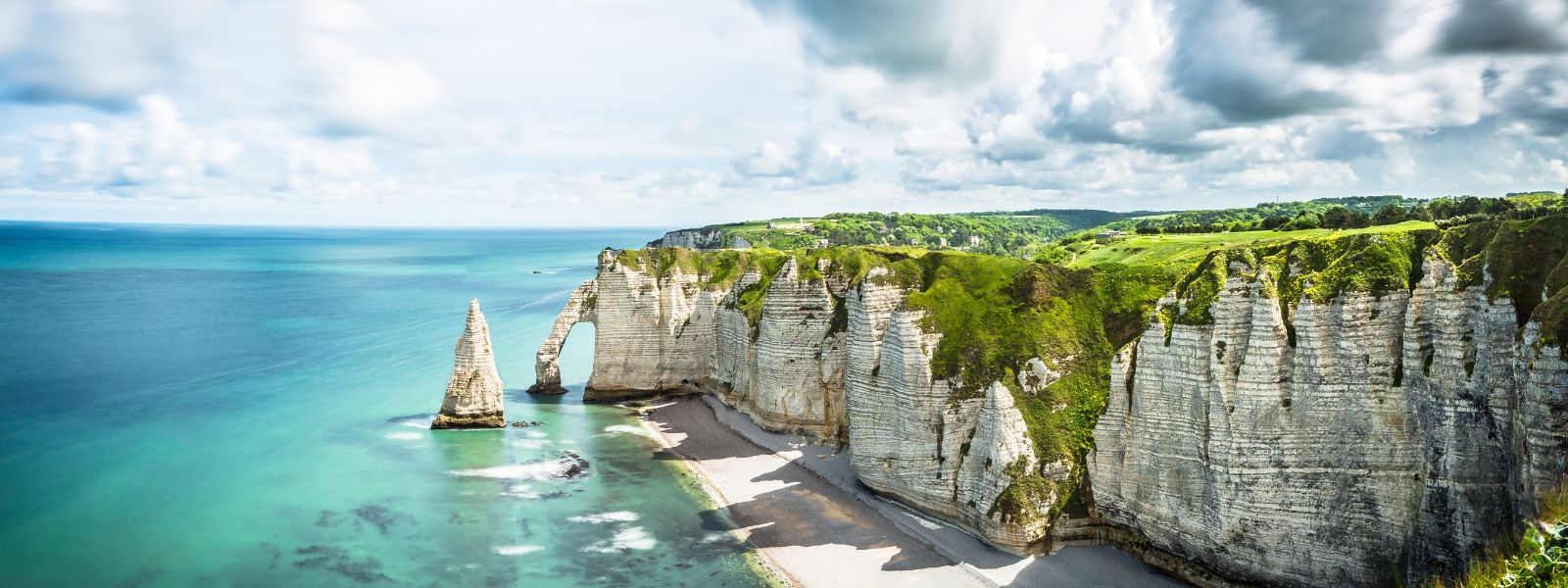
White cliffs in Normandy

Villas in Normandy

Find Your Extraordinary

Normandy Villa Holiday

Sweeping cliffs, wide sandy beaches and apple-orchard countryside set the tone for a memorable escape in Normandy. This storied region of France blends cinematic coastline with half-timbered villages, grand châteaux and a deep-rooted culinary heritage. Perfect for relaxed family holidays, days might begin exploring rock pools along the Alabaster Coast, continue through Monet’s gardens in Giverny and end with supper on the terrace of one of our beautiful villas with pools in France.

Explore our curated collection of villas in Normandy, including spacious family villas, elegant farmhouses and historic estates surrounded by rolling pasture. You can also discover more across northern France for countryside charm paired with cultural depth. From the D-Day beaches to the chic seaside elegance of Deauville, Normandy offers space to reflect, explore and truly unwind.

Why stay with us?

Style and character define every Oliver’s Travels home in Normandy. Our destination experts know the region inside out – from coastal retreats near Honfleur to countryside estates close to historic landmarks – carefully selecting properties for their location, individuality and ability to deliver unforgettable family stays.

Once you book a holiday, our Concierge Service is here to help with all things planning and recommendations to make your stay truly extraordinary.

Why visit Normandy?

Normandy is a region where landscape and history are inseparable. The dramatic cliffs of Étretat rise above the Channel, while the vast D-Day landing beaches remain places of remembrance and reflection. Arromanches, Omaha Beach and the American Cemetery draw visitors from around the world, offering moving insight into World War II history.

Beyond its wartime legacy, Normandy enchants with medieval towns and artistic heritage. Rouen’s cathedral inspired Monet’s celebrated series of paintings, while the harbour town of Honfleur continues to attract artists with its pastel façades and shifting coastal light. Inland, timber-framed villages and sleepy market towns are surrounded by orchards and grazing cattle.

Food is central to the Norman identity. The region is famed for Camembert, Pont-l’Évêque and Livarot cheeses, rich cream sauces and apple-based specialities including tarte normande and crisp cider. Calvados, the local apple brandy, is often enjoyed as a warming digestif after long countryside lunches.

Festivals animate the calendar throughout the year – from music and arts events to food celebrations dedicated to cider and cheese. In September, Deauville hosts its renowned American Film Festival, adding a touch of glamour to the elegant seaside resort.

For further inspiration, explore our dedicated Normandy Travel Guide on the blog.

What Oliver Loves

The interplay of art and landscape – standing in Monet’s garden at Giverny and recognising the colours and light that shaped an entire artistic movement.

Normandy: At a Glance

A historic and scenic northern French region known for dramatic coastline, pastoral countryside and rich culinary traditions.

  • Landscape – Chalk cliffs, expansive beaches, apple orchards and rolling farmland.

  • Heritage – D-Day landing sites, Gothic cathedrals, medieval towns and Impressionist roots.

  • Food and Lifestyle – Creamy cheeses, cider, Calvados and hearty regional dishes.

  • Activities – Coastal walks, historic tours, cycling routes and garden visits.

  • Atmosphere – Reflective, picturesque and deeply authentic.

Top Tip

Pair a visit to the D-Day beaches with the excellent museums in Caen for a deeper understanding of the region’s wartime history.

Getting there and around Normandy

By plane

Paris airports provide the most convenient international access, with onward trains to Caen, Rouen and other Norman towns.

By ferry

Regular ferry routes from southern England arrive into Caen, Cherbourg and Dieppe, offering a relaxed and scenic way to reach the region.

By car or train

Driving offers flexibility for exploring rural villages and coastline, while regional trains connect major towns comfortably and efficiently.

From the blog…

Loading reviews...