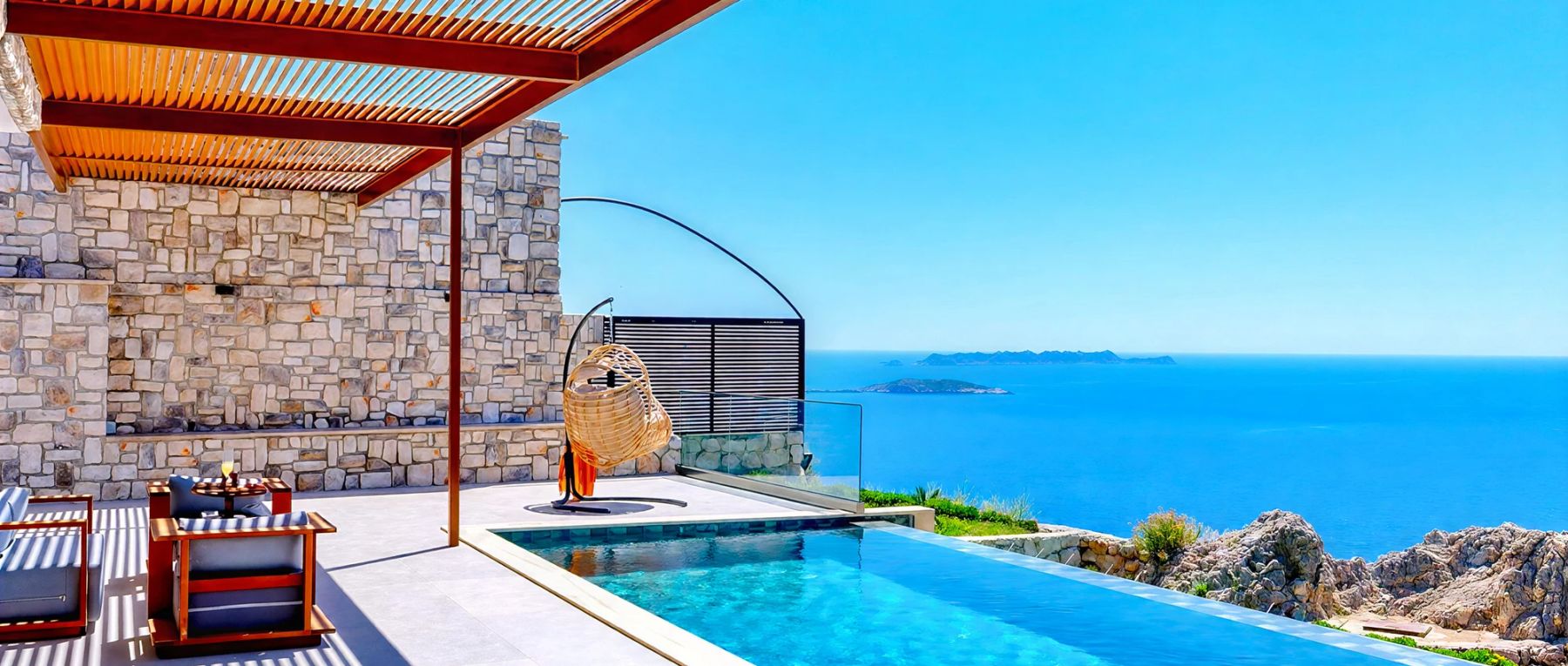
Set in Gökseki near Kaş, Villa Gokseki is a private stone retreat with sea views and an infinity pool.
Key Highlights
- The jacuzzi, sauna and Turkish bath provide a spa-like experience within the villa.
- Situated in Gökseki, away from busy areas, the villa offers a quiet environment surrounded by nature.
- The cinema room and billiards table provide activities within the villa, which is particularly useful for evenings or relaxed days at home.

The Villa
Two bedroom villa sleeping up to 4 guests, with private pool and sea views
Interior
- Open-plan living room
- Fully equipped kitchen with island and dining table
- Cinema room
- Bedroom 1: Double bed, en-suite bathroom, jacuzzi, wardrobe, air conditioning and private balcony
- Bedroom 2: Double bed, en-suite bathroom, wardrobe, air conditioning and private balcony
Exterior
- Infinity swimming pool
- Pool terrace
- Jacuzzi
- Sauna and Turkish bath
Additional Facilities
- Billiards table
- Sunbeds
- Umbrellas
Located in the peaceful area of Gökseki, this elegant two-bedroom villa offers a comfortable and contemporary base for up to four guests. Designed with relaxation in mind, the property combines modern amenities with inviting indoor and outdoor spaces, making it well suited to couples, small families or friends travelling together.
Inside, the villa features a bright living area with a television and cinema setup, creating a cosy space to unwind after a day of exploring. The fully equipped kitchen includes an oven, refrigerator and dishwasher, along with practical additions such as a kettle and washing machine to support convenient self-catering. Two bathrooms provide added comfort and flexibility for guests during their stay.
Outside, the private swimming pool offers a refreshing spot for leisurely swims, while the barbecue area and garden swing create a relaxed setting for outdoor dining or quiet moments in the sun. For an added touch of indulgence, the villa also includes a traditional Turkish bath and sauna, ideal for unwinding at the end of the day.
With air conditioning and Wi-Fi available throughout, the villa provides both comfort and connectivity in a tranquil setting, making it a welcoming retreat in the beautiful surroundings of the Turkish Riviera.
- Access roads may be narrow or winding, which can make driving slightly challenging for some guests.
- Although only 5 km from Kaş, the villa is not within walking distance of restaurants, shops or beaches. Guests will likely need a car or taxi to get around.
Oliver's Extras
- Maid Service Available
- Pre-Stocked Fridge Available
- Transfers Available
At Oliver’s Travels we pride ourselves on going that little bit further for our guests. From private chefs to babysitters we can help you arrange those little extras that make it a truly memorable holiday. Simply fill in the concierge request form or contact the Oliver’s Concierge Team who will be happy to help. We can typically help you arrange any of the following:
- Maid service/extra cleaning
- Private chef/cook/catering
- Welcome hamper/pre-stocked fridge
- Local day-trips or tours
- Airport transfers
- Babysitting/childcare services
Please note that all extras are subject to availability and must be requested in advance of the holiday (prices on request). Due to some rural/remote locations, not all services will be available at all properties. However, we will always do our best to fulfil your requests!
