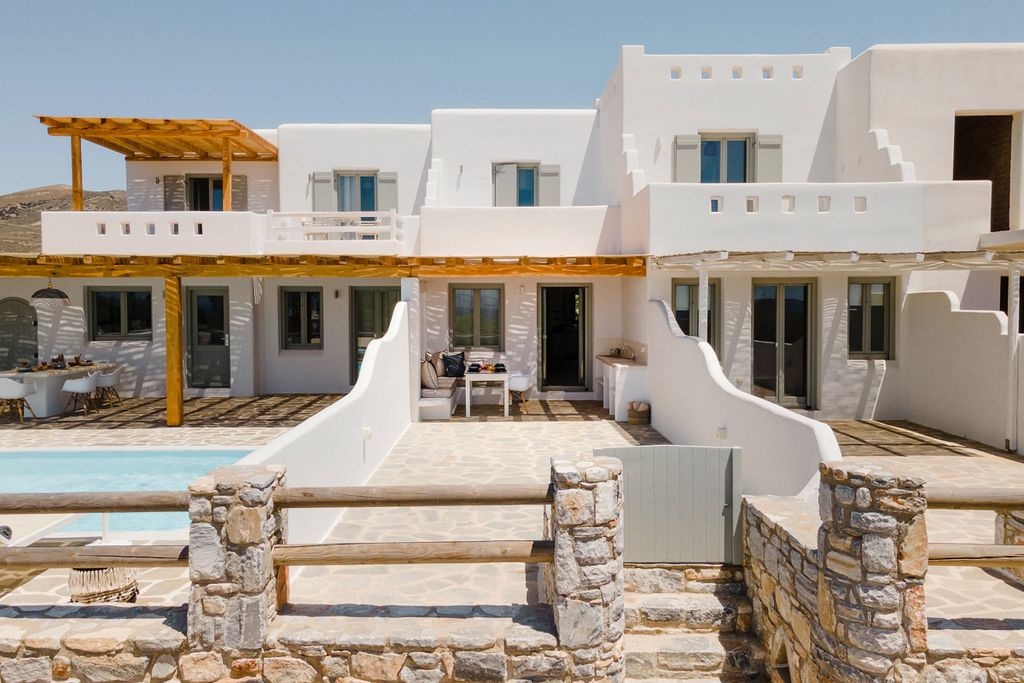
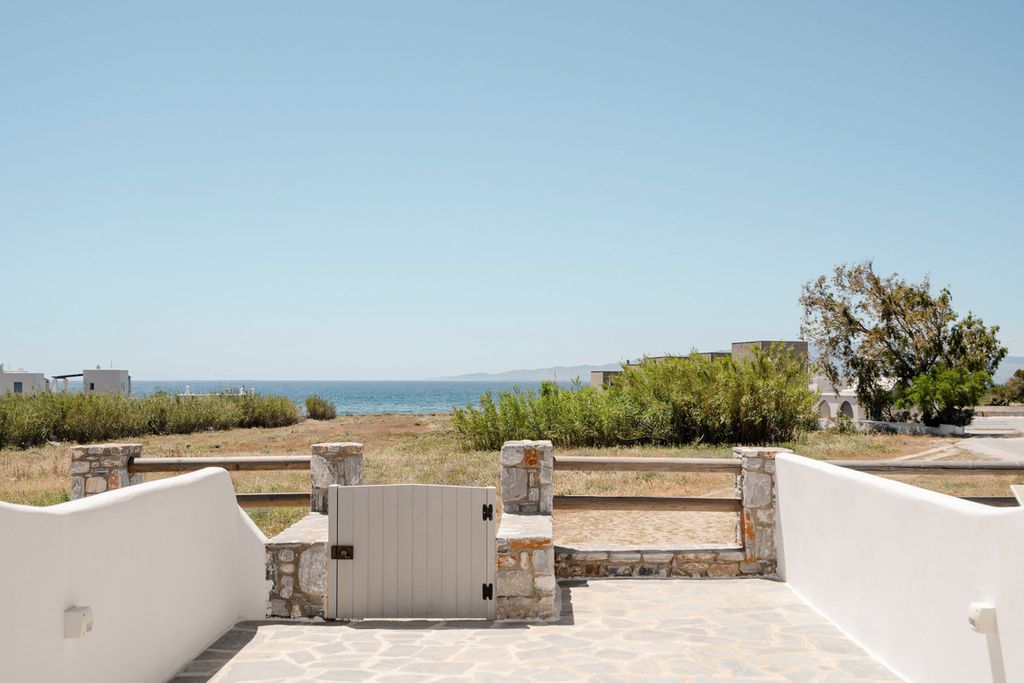
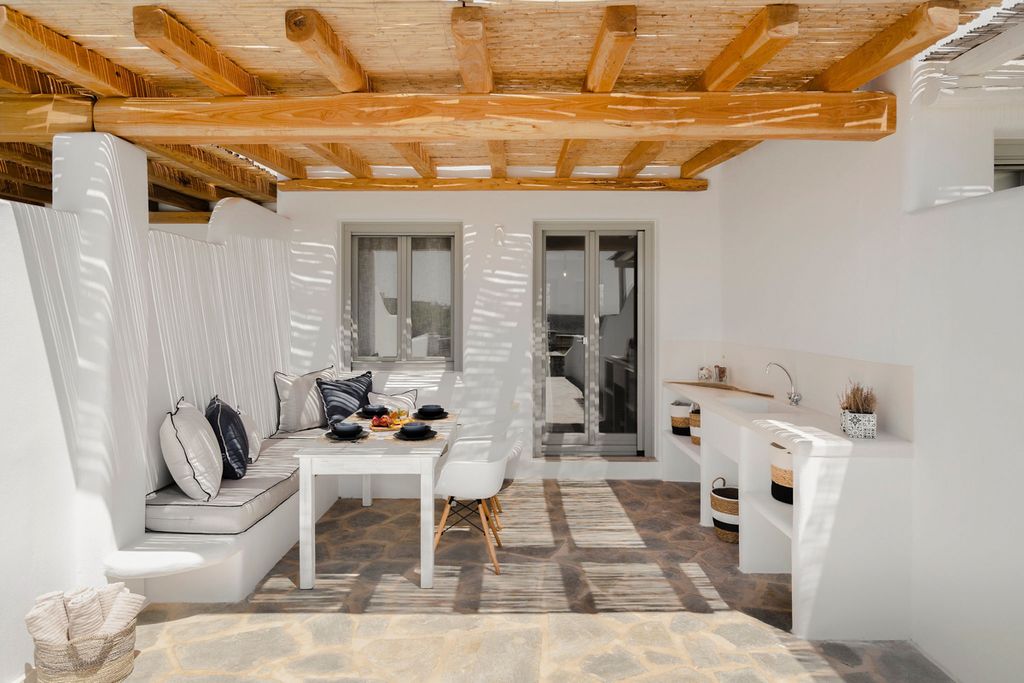
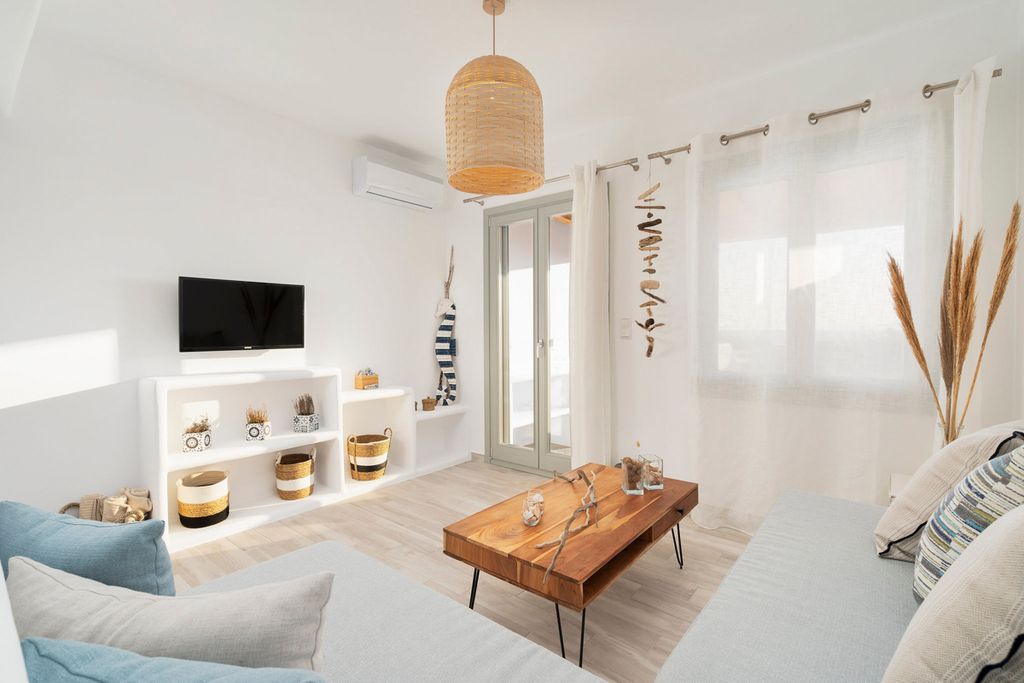
Villa Aithan is situated in the Kastraki area of Naxos, south of Mikri Vigla, offering views of the sea. Nearby beaches include Kastraki, Parthena, Mikri Vigla, Plaka, and Orkos. Kastraki Beach features fine white sand, clear water, and a selection of tavernas with waterfront views. It is relatively secluded and quiet. Mikri Vigla was named after an ancient observatory used to monitor activity between Naxos and Paros and to track ships along the ancient trade route from Crete to Athens.
Legend has it that the southern bay was a hideout for pirates. The beach is popular for watersports, with a kite surfing school and favourable wind conditions. Plaka Beach is also a great spot for watersports enthusiasts. Aliko Beach, backed by a protected cedar forest, offers natural beauty. Further north, Agios Prokopios Beach provides watersports, refreshments, and beautiful sands, with a small chapel dedicated to Saint Prokopios on the western side. Agios Anna Beach, nearby, offers a quieter alternative with pink salt lakes and local wildlife. Agios St George, near Naxos Town, features warm shallow water. On the east coast, Moutsouna harbour is known for its fresh fish, and the coastal route leads to Panermos Bay, a serene location. The island also has several hidden beaches and the Rina sea cave.
Naxos is known for its panoramic scenery, sandy beaches, lively main town, mountain villages, rich history, and excellent dining options. The island is associated with the myth of Dionysus, the God of Wine, and Ariadne, and is renowned for its marbles. Naxos is notable for its marble, emery mines, fertile land, geographic location, pottery, and cuisine, contributing to its prominence in the Cyclades.
Naxos Town is accessible from the villa and features a Venetian castle, narrow cobbled streets, white architecture, ancient churches, antique shops, bars, and restaurants. The Venetian emperor Marko Sanoudo II built the castle in 1207, and it served as the seat of power for the Cyclades for three centuries. During summer, the castle hosts music festivals and art exhibitions. The Archaeological Museum, located in the old Jesuit School of Commerce, showcases Cycladic art, marble monuments, and local ceramics. Notably, Nikos Kazantzakis wrote ‘Zorba the Greek’ there. The car-free old town, Kastro, within the castle's walls, features steep lanes adorned with bougainvillaea, churches, and Venetian mansions. The lanes lead to Bourgos, where Greeks lived during Venetian rule. The new town, near the port, has numerous restaurants, bars, and cafes. The Portara, a marble doorway from 522 BC, stands on a small islet and is a notable landmark, especially at sunset.
The island’s mountains and valleys are worth exploring, with charming villages such as Tripodes, Filoti, Halki, and Apeiranthos. Halki is known for its neoclassical architecture and quaint streets. Apiranthos, famous for its well-preserved marble structures, is the highest village in the Cyclades and offers excellent local meat dishes. Major sites include the Temple of Demeter, Kouros of Melanes, Kouros of Apollonas, Panagia Drossiani Church, Monastery of Fotodotis, Kalamitsia Monastery, Panayia Vlacherniotissa Church, Panayia Myrtidiotissa on a small islet in the port, and Theologaki Chapel in a cave.
Visitors often take luxurious catamaran trips to explore the island’s secluded beaches or travel to nearby Cycladic islands. A boat trip to Koufonisia takes just under two hours and offers fresh fish lunches and secluded naturist beaches.
The Region
As you sail into the island, be in awe of the Portara of Naxos, the vast marble gate to the Temple of Apollo. Crowds gather at the iconic emblem to admire the sun setting in this spectacular setting.
It’s not just Naxos’ rich history which attracts visitors to the largest island in the Cyclades. It may be relatively less known compared to Mykonos and Santorini yet those in the know come to Naxos for its glorious beaches, verdant landscapes and charming villages. Ferries arrive into Naxos town from Mykonos, Santorini, Piraeus and Rafina or you can fly into Naxos Airport from Athens.
Starting off in Naxos town, potter around the picturesque streets and soak up its rich heritage as you catch idyllic glimpses of the sea. Narrow lanes of bougainvillea-clad houses wind through the Kastro district towards the fortified Venetian castle. Get lost in the old town with its arched pathways, little shops and pretty cafes, spotting sleepy cats as you explore, and be enchanted by the authentic Greek charm all around you. As the evening approaches the town comes to life with its restaurants and cocktail bars, many with rooftop terraces and great views.
The sandy beaches near Naxos town are much loved by tourists and locals alike – hire summer sunbeds and parasols at the likes of Agios Prokopios and Agia Anna and make the most of the turquoise-coloured Aegean for snorkelling and diving. Seek slightly quieter shores further south as you come across the fine white sand of Plaka Beach and the more remote Hawaii Beach protected by rocks. Meanwhile, Mikri Vigla, also on the western coast, is popular with watersport enthusiasts (kite-surfing, windsurfing).
Then there’s the traditional villages dotted across the island amongst olive groves, citrus orchards, byzantine churches and mountains. Chalkio is often referred to as the most beautiful with its flower-filled lanes, white-washed houses, art galleries and traditional tavernas serving locally sourced dishes. Apeiranthos is another gem of Naxos with its unique architecture, marble alleys and museums alongside locally-owned shops and shady café terraces.
In spring and autumn, follow hiking trails between coast, mountains and historic villages, passing wild flowers, herbs, olive trees and ancient ruins, a fine way to appreciate Naxos’ incredible nature. Horse-riding excursions can be arranged with mountain and sea views (as well as donkey rides for younger guests) or explore the island by boat with day trips to visit the sea caves, rocky shores and even the neighbouring islands of Paros and Antiparos.